


Introduction
Global sourcing decisions in manufacturing are no longer shaped only by familiar Western and Japanese machine tool brands. A new generation of high-end Chinese CNC machines is changing that equation by pairing advanced capabilities, tighter precision, and stronger automation with a different cost structure and supply strategy. This article explains what now qualifies these machines as genuinely high-end, where their technical performance has improved most, and why buyers across OEM and contract manufacturing networks are rethinking equipment investments. From control systems to capital efficiency, the shift in CNC competitiveness is becoming a larger supply chain story.
What defines high-end Chinese CNC machines
The global manufacturing sector is currently experiencing a paradigm shift driven by the maturation of Chinese machine tool builders. Historically associated with commodity-level milling and turning centers, China’s machine tool industry has aggressively moved up the value chain. Today, high-end Chinese Computer Numerical Control (CNC) machines offer sophisticated 5-axis simultaneous machining, sub-micron precision, and robust automation capabilities. This evolution is fundamentally altering capital expenditure strategies for contract manufacturers and OEMs worldwide, transitioning the market from an exclusive reliance on legacy Western and Japanese brands to a more diversified, globally sourced equipment portfolio.
Technical specifications and control systems
Contemporary high-end Chinese CNC equipment rivals legacy brands in critical technical specifications. Builders are routinely achieving positioning accuracies of ±2.0 μm and repeatability of ±1.0 μm across full travel envelopes. Spindle configurations now frequently feature direct-drive or motorized spindles capable of 24,000 to 30,000 RPM, paired with robust active cooling systems to mitigate thermal expansion during prolonged cycles. Control architecture, long a barrier to entry, has also diversified. While top-tier models integrate industry-standard Siemens 840D sl, Heidenhain TNC 640, or FANUC 31i-B5 controllers to ensure a seamless transition for experienced machinists, domestic controllers have also advanced. These domestic options offer proprietary closed-loop feedback systems capable of complex toolpath interpolations and high-speed look-ahead processing.
Cost of ownership and lead times
The total cost of ownership (TCO) and rapid deployment cycles are primary catalysts for adoption. Initial capital expenditure for a premium Chinese 5-axis machining center typically runs 30% to 45% lower than comparable European or Japanese counterparts. For instance, a trunnion-style 5-axis mill that might cost $350,000 from a German builder can often be sourced for $190,000 to $220,000 from a top-tier Chinese manufacturer without sacrificing core rigidity or control sophistication. Furthermore, lead times present a significant competitive advantage. While legacy global brands frequently quote 24 to 36 weeks for delivery, Chinese OEMs routinely fulfill orders within an 8- to 12-week window, enabling manufacturers to rapidly scale capacity in response to sudden contract acquisitions.
Performance vs global competitors
Benchmarking high-end Chinese CNC machines against established global competitors reveals a narrowing performance gap. While legacy brands still hold a slight edge in ultra-precision applications—such as aerospace turbine blisks or micro-medical implants requiring sustained sub-micron volumetric accuracy—Chinese machines excel in high-volume, tight-tolerance production environments like electric vehicle (EV) component manufacturing and complex mold-making.
| Specification Metric | High-End Chinese CNC | Premium European/Japanese CNC |
|---|---|---|
| Positioning Accuracy | ±2.0 μm to ±3.0 μm | ±1.0 μm to ±2.0 μm |
| Typical Lead Time | 8 – 12 weeks | 24 – 36 weeks |
| CapEx (5-Axis Trunnion) | $180,000 – $250,000 | $350,000 – $500,000 |
| Controller Options | Siemens, FANUC, Proprietary | Siemens, Heidenhain, FANUC |
Why high-end Chinese CNC machines are reshaping global supply chains
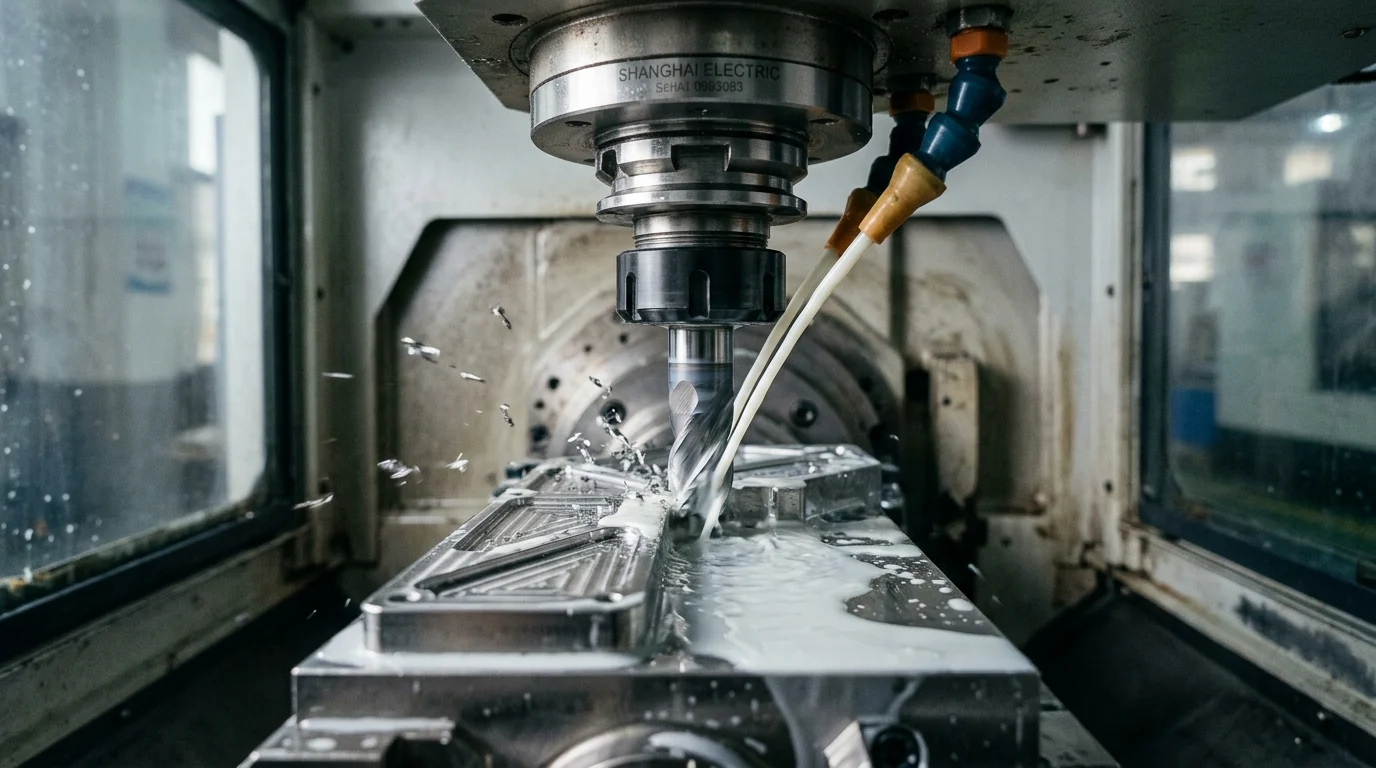
The integration of high-end Chinese CNC machinery into global supply chains is not merely a function of cost arbitrage; it is a structural realignment driven by ecosystem maturity. As supply chain volatility continues to challenge Western manufacturers, the agility and vertical integration of the Chinese machine tool sector offer a strategic counterweight, allowing global production networks to become more resilient and responsive.
Delivery speed and component ecosystems
The speed at which Chinese machine builders can deliver complex equipment relies heavily on a deeply integrated domestic component ecosystem. Unlike Western builders, who often rely on dispersed global supply networks for critical sub-assemblies, Chinese OEMs benefit from hyper-localized supply chains. Essential components such as mineral cast beds, C3-class ground ball screws, and heavy-duty roller guideways are manufactured and stocked within a tightly concentrated geographic radius. This localization insulates production from transcontinental shipping bottlenecks, allowing manufacturers to compress assembly and calibration timelines by up to 50% compared to their global peers.
Scale, vertical integration, and quality gains
Scale and vertical integration have driven unprecedented quality gains in the Chinese machine tool sector. By bringing foundry operations, precision grinding, and sheet metal fabrication in-house, top-tier builders maintain strict quality control over the entire machine chassis. This verticality, combined with immense economies of scale, allows for extensive burn-in testing and laser interferometry calibration on every unit before dispatch. Consequently, Mean Time Between Failures (MTBF) for premium export-grade Chinese CNC machines has surged, frequently exceeding 5,000 to 7,000 operational hours—a metric that places them squarely in the tier of highly reliable production equipment suitable for lights-out manufacturing environments.
Distributors and after-sales support
Recognizing that after-sales support is critical for capital equipment, leading Chinese CNC manufacturers have aggressively overhauled their distribution models. The traditional direct-from-factory export model has been largely replaced by the establishment of localized technical centers and strategic distributor partnerships across North America, Europe, and Southeast Asia. These regional hubs stock critical spare parts, including replacement spindles, rotary unions, and servo motors, while deploying factory-trained service engineers. Many now offer Service Level Agreements (SLAs) guaranteeing 24- to 48-hour on-site response times, effectively neutralizing the historical risk of prolonged machine downtime due to international support delays.
What risks and compliance issues should buyers evaluate
Despite the compelling advantages of cost and availability, integrating high-end Chinese CNC machines into a production floor requires rigorous risk management. Capital equipment procurement professionals must navigate a complex landscape of technical validation, regulatory compliance, and cross-border logistics to ensure the delivered asset meets precise operational expectations and regional safety mandates.
Due diligence and acceptance standards
Establishing stringent due diligence and acceptance standards is paramount. Buyers must verify that the OEM operates under ISO 9001 quality management systems and that the machinery complies with regional safety standards, such as CE marking for Europe or UL/CSA certifications for North America. Crucially, the procurement contract must mandate a comprehensive Factory Acceptance Test (FAT) prior to shipment. This test should involve cutting a standardized test part, such as a NAS 979 circle-diamond-square, to verify dynamic kinematics under load. Acceptance criteria should explicitly state geometric tolerances, such as requiring spindle run-out to remain under 0.005 mm and ensuring volumetric accuracy aligns meticulously with ISO 230-2 standards.
Application fit across industries
Evaluating application fit requires a granular understanding of the target industry’s metallurgical demands and part complexity. High-end Chinese CNC machines are exceptionally well-suited for machining aluminum alloys, cast iron, and standard tool steels, making them ideal for the automotive, consumer electronics, and general job shop sectors. However, when machining high-temperature superalloys like Inconel or titanium for aerospace applications, buyers must carefully evaluate the machine’s dynamic stiffness, spindle torque curves, and the controller’s look-ahead processing capabilities to prevent tool chatter and ensure acceptable surface finishes.
Sourcing steps to reduce risk
Structuring the sourcing process correctly mitigates financial and operational risks. Standard practice involves staggered payment milestones linked to verifiable deliverables, rather than large upfront deposits. Engaging independent third-party inspection agencies ensures objective validation of equipment before it leaves the port, and using escrow services can protect capital during transoceanic transit.
| Procurement Phase | Action Item | Risk Mitigation Focus | Payment Milestone |
|---|---|---|---|
| 1. Contract & Specs | Define ISO 230-2 tolerances, CE/UL needs | Prevents spec deviation and import blocks | 30% Down Payment |
| 2. Factory Acceptance | Third-party FAT (e.g., SGS/TÜV) | Verifies kinematics and ±2.0 μm accuracy | 60% Upon FAT Approval |
| 3. Shipping & Rigging | Secure CIF shipping, verify insurance | Protects asset during transit | N/A |
| 4. Site Acceptance | On-site installation and SAT | Ensures successful commissioning | 10% Post-SAT |
How should manufacturers decide whether to buy them
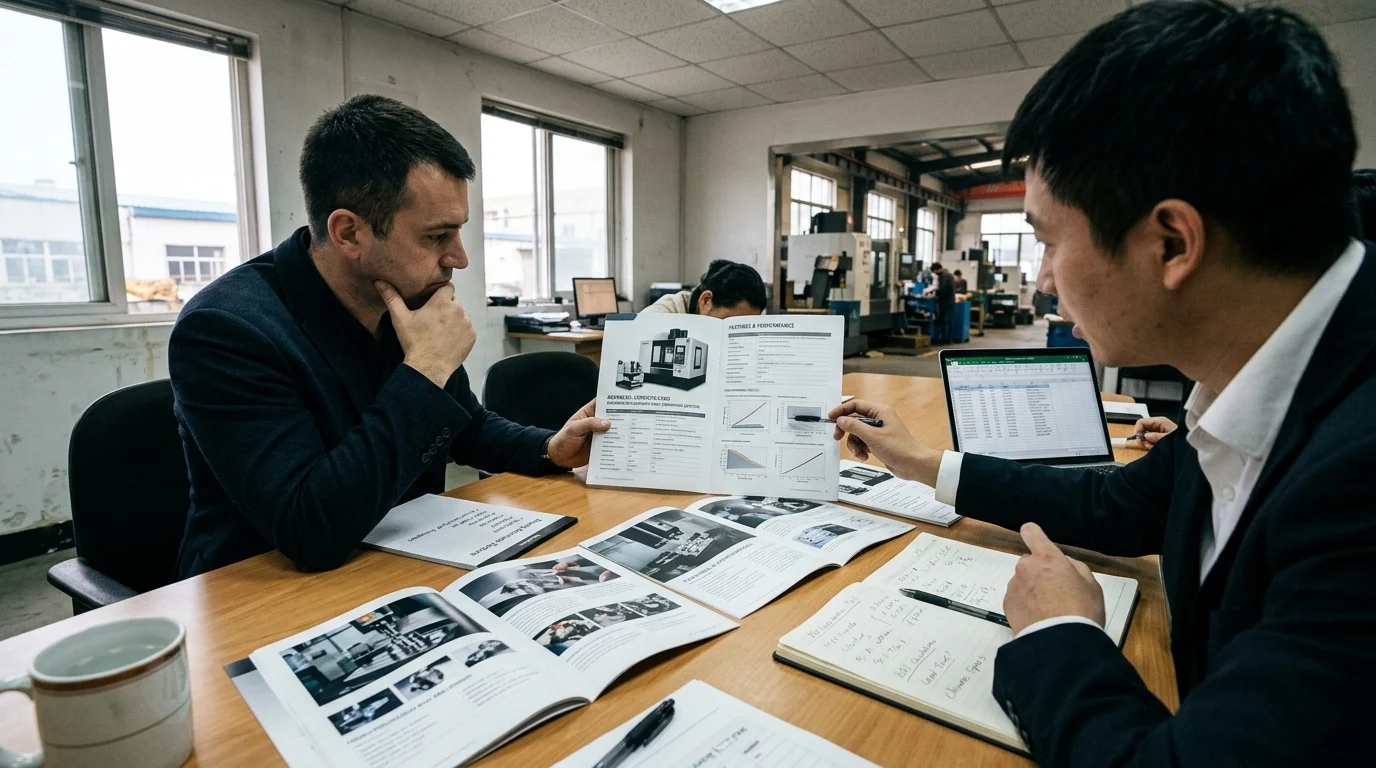
The decision to integrate high-end Chinese CNC machines into an existing manufacturing ecosystem demands a strategic analysis that goes beyond the initial purchase price. Manufacturing leaders must weigh the operational requirements against the financial metrics to determine if the equipment aligns with their long-term production goals and facility capabilities.
Decision framework for cost, uptime, and precision
The decision framework must center on calculating the Total Cost of Ownership (TCO) alongside uptime requirements and precision thresholds. While the initial CapEx may be 30% to 40% lower, buyers must project costs over a standard 5- to 7-year depreciation lifecycle. This includes modeling the cost of preventative maintenance, potential spindle rebuilds, and the energy efficiency of the machine’s drive systems. If the production environment demands ±5.0 μm tolerances on a 24/7 basis for mid-tier precision parts, the ROI equation often heavily favors the Chinese machine due to the rapid payback period. Conversely, if the shop requires continuous sub-micron 5-axis contouring with zero margin for thermal drift, the premium for a legacy European brand may still be mathematically justified.
Procurement and implementation steps
Executing procurement and implementation requires meticulous project management. Once a machine is selected, site preparation must begin immediately, accounting for foundation requirements, isolated grounding, and adequate clean air supply—typically requiring 85 to 100 PSI of dry, filtered air. Upon delivery, professional rigging and laser leveling are critical to achieving the machine’s stated geometric tolerances. Finally, manufacturers must invest in comprehensive operator training. Transitioning from 3-axis to simultaneous 5-axis machining, or adapting to a newly introduced controller interface, typically requires a minimum of 40 hours of intensive on-site training to ensure machinists can safely maximize the equipment’s material removal rates and avoid catastrophic spindle collisions.
Key Takeaways
- The most important conclusions and rationale for Why High-End Chinese CNC Machines are Reshaping the Global Supply Chain?
- Specs, compliance, and risk checks worth validating before you commit
- Practical next steps and caveats readers can apply immediately
Frequently Asked Questions
What makes high-end Chinese CNC machines different today?
They now combine rigid structures, advanced controls like Siemens or FANUC, and precision around ±2.0 μm, making them practical for demanding production, not just entry-level work.
How do Chinese CNC machines help shorten supply chain delays?
Top builders often deliver in 8–12 weeks because their component ecosystem is more localized, helping manufacturers add capacity faster than typical 24–36 week global lead times.
Are high-end Chinese CNC machines suitable for 5-axis production?
Yes. Many are built for simultaneous 5-axis machining, mold work, aerospace parts, and complex metal components, especially where strong rigidity, speed, and cost control matter.
How can OTURN Machinery support overseas buyers?
OTURN acts as a global sales and service bridge for Chinese group factories, helping buyers access suitable CNC solutions, lower investment costs, and overseas support more efficiently.
Which manufacturers benefit most from these machines?
Shops producing valves, wheel hubs, crankshafts, molds, flywheels, and aerospace or medical parts often benefit most, especially when they need faster ROI and reliable high-volume machining.
Post time: May-08-2026