


Introduction
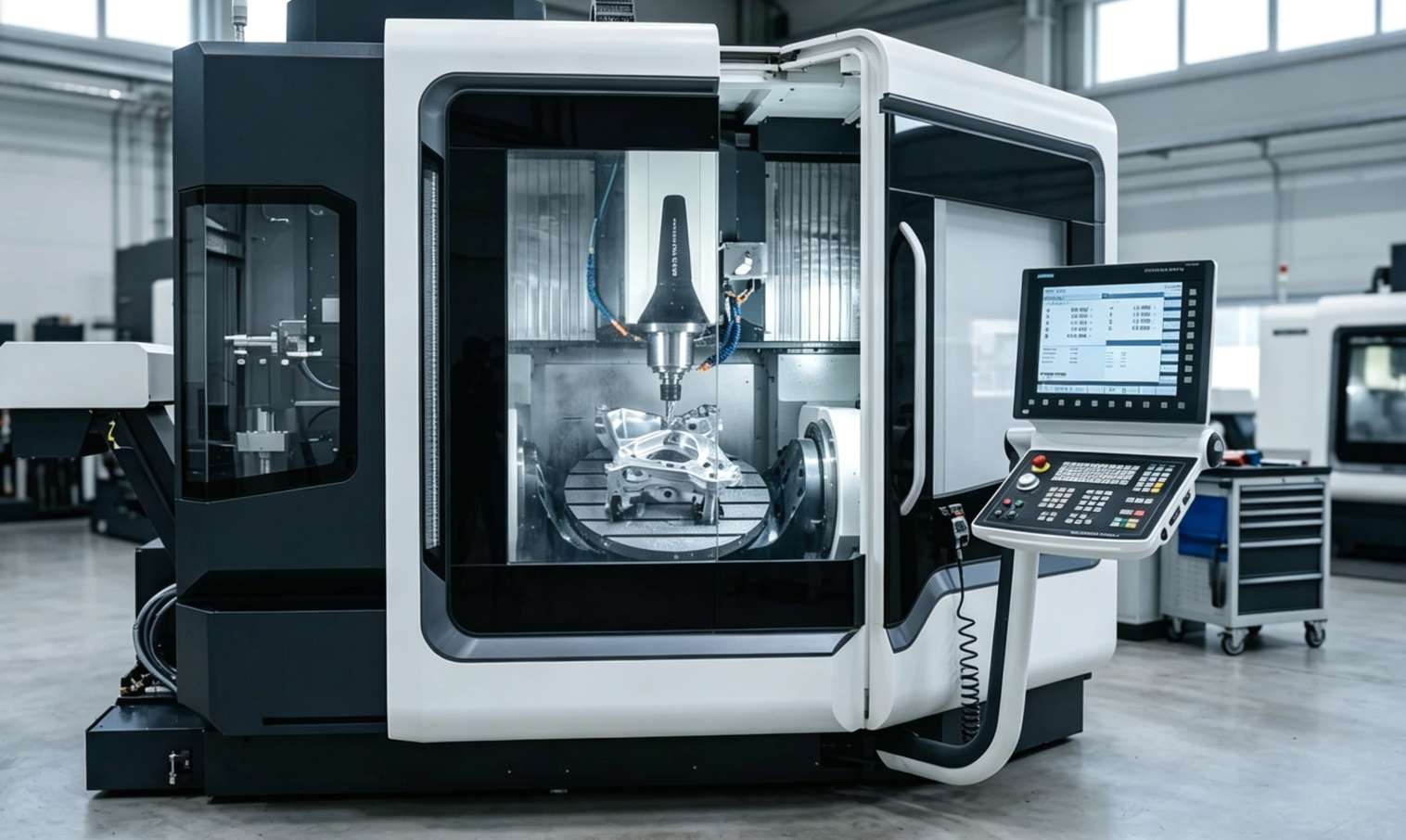
In aerospace mold making, the value of a 5-axis machining center goes far beyond adding two extra motions to a machine tool. It allows cutters to reach complex surfaces from optimal angles, reducing setups, improving dimensional accuracy, and shortening cycle times on molds for composite and metal aircraft components. This matters because aerospace tooling often includes deep cavities, tight tolerances, and demanding surface-finish requirements that are difficult to meet with conventional machining. The sections that follow explain where 5-axis machining is used, how it improves mold production efficiency and quality, and why it has become a core capability for advanced aerospace manufacturing.
How 5-Axis Machining Improves Aerospace Mold Making
The aerospace industry demands tooling and molds that can produce highly complex composite and metallic parts with uncompromising precision. A 5-axis machining center serves as the backbone of modern aerospace mold making, enabling the simultaneous movement of cutting tools across three linear (X, Y, Z) and two rotational (A, B, or C) axes. By allowing the cutter to approach the workpiece from virtually any angle, manufacturers can significantly streamline production.
Industry data indicates that transitioning from traditional sequential machining methods to full 5-axis capabilities can reduce part setup operations by up to 80%. This consolidation of setups minimizes human intervention, directly translating to higher throughput, reduced handling errors, and tighter overall geometric tolerances across large-scale aerospace molds.
Cycle Time, Surface Finish, and Complex Geometry
Simultaneous 5-axis machining fundamentally alters cycle times and surface finish capabilities for intricate molds. By continuously adjusting the tool vector to maintain optimal engagement with the material, manufacturers can achieve cycle time reductions of 30% to 50% compared to sequential 3+2 axis machining.
Furthermore, maintaining the ideal chip load and utilizing the optimal cutting edge of the tool—rather than relying solely on the ball tip—yields superior surface finishes. Aerospace molds frequently require surface roughness values of Ra 0.4 µm or better to ensure composite layups cure without surface defects. Simultaneous 5-axis contouring achieves this seamlessly, drastically reducing the need for manual polishing.
Business Case and Production Benefits
The business case for deploying a 5-axis machining center in mold making focuses on operational consolidation and stringent quality control. Every time a heavy, complex mold is manually repositioned on a standard machine, the risk of tolerance stacking increases.
5-axis machines eliminate these intermediate setups, driving scrap rates down from a typical 3% to 5% in complex multi-setup operations to well under 1%. While the initial capital expenditure is substantial, the combination of increased machine uptime, reduced labor hours per part, and near-zero defect rates accelerates the return on investment (ROI) for high-value aerospace tooling.
Applications of 5-Axis Machining in Aerospace
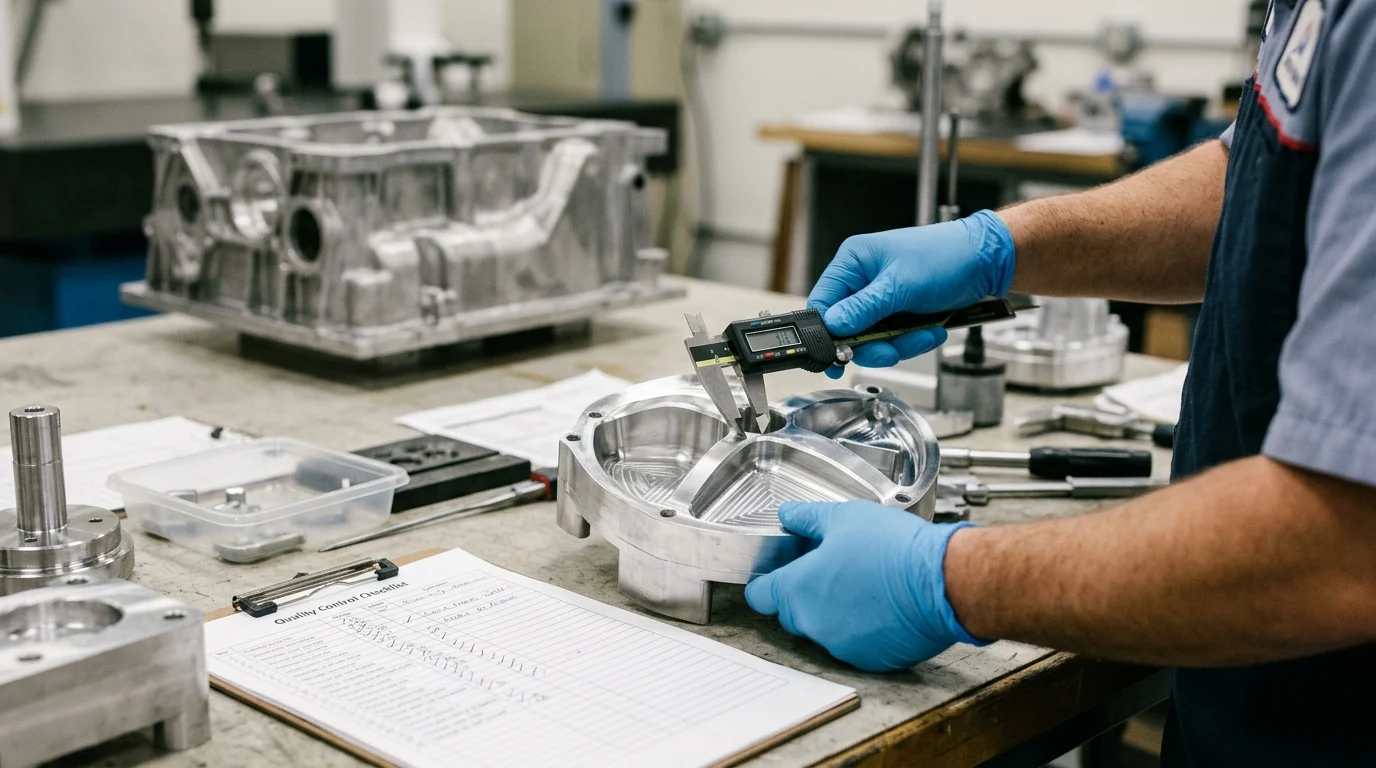
Aerospace molds are not monolithic; they vary drastically depending on the component being manufactured, ranging from interior cabin panels to critical structural elements like wing spars and fuselage sections. 5-axis machining centers are uniquely suited to handle the diverse scale and complexity of these applications, easily accommodating workpieces that span from a few centimeters to structural molds exceeding 3,000 mm in length.
Aerospace Molds and Tooling Components
The primary applications include machining molds for composite layups, Resin Transfer Molding (RTM) tools, and superplastic forming dies. 5-axis machines are heavily utilized to carve out massive Invar or aluminum blocks into precise molds used for carbon fiber reinforced polymer (CFRP) parts.
Because aerospace tooling often dictates the final aerodynamic properties of an aircraft, the molds themselves must be machined to volumetric accuracies often within 10 to 15 microns across their entire span. 5-axis centers equipped with linear scales and thermal compensation excel in this high-stakes environment.
Complex Surfaces and Contoured Cavities
Modern aircraft rely on blended wing bodies and continuously varying aerodynamic curves. Machining the contoured cavities for these designs is nearly impossible with standard 3-axis equipment due to severe undercuts and steep draft angles.
A 5-axis spindle can tilt and rotate to reach deep into contoured cavities, accessing blind spots without requiring the operator to pause the machine and re-fixture the block. This capability is critical for creating the deep ribbing and complex internal geometries required in advanced RTM molds.
Materials, Tolerances, and Finish Requirements
Aerospace molds utilize specialized materials that present unique machining challenges. Tooling materials must withstand the extreme heat and pressure of aerospace autoclaves without warping or degrading.
| Tooling Material | Coefficient of Thermal Expansion (CTE) | Machinability Rating | Typical Aerospace Application |
|---|---|---|---|
| Invar 36 | ~1.2 x 10^-6 /°C | Low (Tough, work-hardens) | High-precision CFRP wing/fuselage molds |
| Aluminum 7075 | ~23.6 x 10^-6 /°C | High | Prototype molds, lower-temp composites |
| P20 Tool Steel | ~12.8 x 10^-6 /°C | Medium | High-volume RTM and injection molds |
Machining Invar 36, for example, requires rigid 5-axis setups to prevent chatter and tool deflection. The ability of a 5-axis machine to use shorter, more rigid tooling ensures that the strict dimensional tolerances (often ±0.01 mm) and pristine surface finishes required for these exotic materials are consistently met.
5-Axis vs 3-Axis Machining for Aerospace Molds
While 3-axis machines remain a staple in general manufacturing, the rigorous demands of aerospace mold making often expose their limitations. The primary distinction lies in the addition of the A and B (or C) rotational axes, which fundamentally changes how the cutting tool interacts with the workpiece.
Accuracy, Reach, and Setup Efficiency
Accuracy in mold making is heavily dependent on tool length. 3-axis machines require long, extended cutting tools to reach the bottom of deep mold cavities, which inevitably leads to tool deflection and chatter. A 5-axis machining center allows the spindle head to tilt into the cavity, enabling the use of much shorter, stiffer tools.
This reduction in tool length can improve cutting stability by up to 75%, directly enhancing volumetric accuracy. Additionally, setup efficiency is drastically improved; a 5-axis machine can typically access five sides of a prismatic block in a single setup, whereas a 3-axis machine might require up to six separate manual repositioning steps for the same part.
Key Trade-Offs Between 3-Axis and 5-Axis
Choosing between the two technologies involves balancing upfront costs against long-term capabilities and operational efficiency.
| Evaluation Metric | 5-Axis Machining Center | 3-Axis Machining Center |
|---|---|---|
| Capital Investment | High ($250,000 – $1,000,000+) | Moderate ($80,000 – $150,000) |
| Setup Operations | Usually 1 to 2 setups | Often 3 to 6+ setups |
| Tool Deflection Risk | Minimal (allows short tooling) | High in deep cavities (requires long tools) |
| Programming Complexity | High (requires advanced CAM/simulation) | Low to Moderate |
The trade-off is clear: 5-axis machining requires a significantly higher initial investment and highly skilled programmers, but it drastically reduces per-part cycle times and setup errors. 3-axis machining is more accessible but incurs hidden costs in labor, slower feed rates, and higher scrap probabilities on complex geometries.
When 5-Axis Is Not Necessary
Despite the advantages of 5-axis technology, it is not universally required for all aerospace tooling. If a facility primarily produces flat vacuum fixtures, simple drill jigs, or 2.5D mold plates, the rotational axes of a 5-axis machine will remain underutilized.
For components that require three or fewer setups and feature shallow cavities with no undercuts, a high-speed, highly rigid 3-axis machining center is often more economical. Deploying a $500,000 5-axis asset on simple 2D contouring yields a poor ROI compared to utilizing a heavy-duty 3-axis bridge mill.
Key Technical Factors for 5-Axis Aerospace Machining
Successfully integrating a 5-axis machining center into an aerospace toolroom requires more than just purchasing the machine. The entire manufacturing ecosystem—from the spindle specifications to the software used for toolpath generation—must be optimized for high-value mold production.
Machine Specifications and Capabilities
Aerospace mold making requires machines with specific dynamic capabilities. For cutting aluminum tooling plates, a high-speed spindle operating between 20,000 and 30,000 RPM is necessary to achieve optimal feed rates and surface finishes.
Conversely, machining Invar or hardened tool steels requires a high-torque spindle, typically maxing out around 12,000 RPM, combined with robust boxways or heavy-duty linear guideways. Furthermore, the machine must feature active thermal compensation and glass scale feedback systems to maintain positioning tolerances of 2 to 5 microns throughout machining cycles that can last 40 hours or more.
CAD/CAM, Toolpaths, and Fixturing
The physical machine is only as capable as the code driving it. 5-axis machining requires advanced CAD/CAM software capable of generating smooth, collision-free simultaneous toolpaths. Because aerospace molds are highly expensive raw material blocks, digital twin simulation software is mandatory to verify toolpaths and prevent catastrophic spindle collisions before any metal is cut.
Additionally, workholding is a critical technical factor. Zero-point clamping systems are highly recommended in 5-axis operations, allowing operators to load and unload heavy mold blocks with a repeatability of under 5 microns, maximizing actual spindle cutting time.
Quality Assurance and Compliance
Aerospace manufacturing is strictly governed by quality management standards, most notably AS9100 Rev D. 5-axis machining centers support compliance by minimizing the manual interventions that typically introduce geometric deviations.
Mold verification often involves on-machine probing systems that inspect critical dimensions while the part is still fixtured. This in-process Quality Assurance (QA) ensures that the mold meets the stringent First Article Inspection (FAI) criteria before it is removed from the bed, preventing the costly rework of non-compliant tooling.
How to Decide on 5-Axis Investment or Outsourcing

Determining whether to invest in an in-house 5-axis machining center or to outsource aerospace mold production to a contract manufacturer is a critical strategic juncture. This decision hinges on capital availability, projected production volumes, and the core competencies of the organization.
Evaluation Steps for Manufacturers
Manufacturers must begin by conducting a rigorous capacity utilization analysis. A standard benchmark in the precision machining industry suggests that a 5-axis machine needs to be actively cutting material for at least 60% of available shift hours to justify the capital expense and depreciation.
Next, companies should evaluate the total cost of ownership (TCO), which includes not only the machine purchase but also advanced CAM software licenses, specialized tooling, maintenance contracts, and the cost of hiring or training elite 5-axis programmers. A typical ROI timeline for an in-house 5-axis system in aerospace runs between 36 and 60 months.
In-House vs Outsourced 5-Axis Machining
Bringing 5-axis capabilities in-house provides absolute control over production schedules, intellectual property, and quality assurance. It allows aerospace firms to rapidly iterate on prototype molds without waiting on external vendor lead times.
However, outsourcing to specialized aerospace tooling shops offers significant flexibility. Contract manufacturers amortize the cost of top-tier 5-axis equipment across multiple clients. Outsourcing is particularly advantageous for companies that require complex molds sporadically, allowing them to bypass the $500,000+ capital expenditure and the steep learning curve associated with simultaneous 5-axis programming.
Decision Guidelines and Final Takeaways
The decision ultimately rests on volume and strategic focus. If proprietary mold design and rapid, high-volume tooling iterations are central to a company’s competitive advantage, securing in-house 5-axis capability is a necessary investment.
Conversely, if mold making is ancillary to the primary business of assembling aircraft components, partnering with an AS9100-certified outsourced provider minimizes financial risk. By systematically weighing utilization rates, capital limits, and part complexity, aerospace manufacturers can deploy 5-axis technology—whether internally or externally—to maximum effect.
Key Takeaways
- The most important conclusions and rationale for 5-Axis Machining Center
- Specs, compliance, and risk checks worth validating before you commit
- Practical next steps and caveats readers can apply immediately
Frequently Asked Questions
What is a 5-axis machining center used for in aerospace mold making?
It machines complex aerospace molds, RTM tools, and forming dies in one setup, handling deep cavities, steep angles, and large contoured surfaces with high accuracy.
Why is 5-axis machining better than 3-axis for aerospace molds?
It reduces re-fixturing, reaches undercuts and blind areas, and improves tolerance control. This typically shortens cycle time and lowers scrap on complex mold work.
Which materials can a 5-axis machining center handle for aerospace tooling?
Common tooling materials include Invar 36, aluminum 7075, and P20 tool steel. A rigid machine setup is especially important for tough, work-hardening materials like Invar.
How does OTURN Machinery support aerospace mold manufacturers?
OTURN supplies rigid, precision-focused 5-axis machining centers and related CNC solutions, with configurations for high-speed or heavy-duty cutting plus overseas service support.
What accuracy and finish can be expected for aerospace mold machining?
For qualified setups, aerospace molds often target 10–15 micron volumetric accuracy and surface finish around Ra 0.4 µm, reducing manual polishing and helping ensure composite part quality.
Post time: Apr-23-2026