


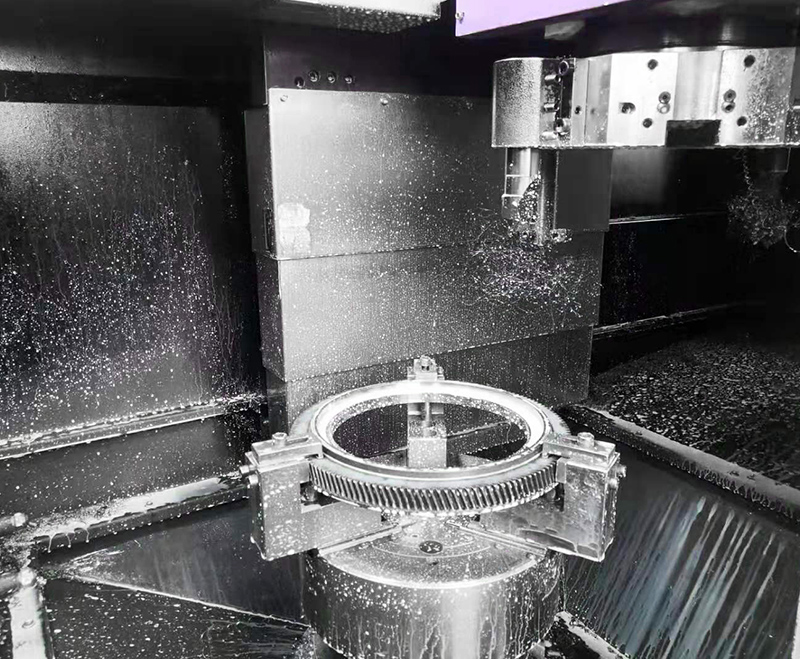
CNC vertical lathes offer significant benefits for large diameter workpieces. They enhance precision in machining, ensuring that you achieve accurate results every time. Additionally, these CNC vertical lathes improve efficiency, allowing for faster production cycles. Their cost-effectiveness makes them an excellent choice for businesses looking to optimize their operations.
Key Takeaways
- CNC vertical lathes enhance precision in machining large diameter workpieces, ensuring accurate results through advanced spindle technology and real-time monitoring.
- These machines improve efficiency by handling heavy components effectively, leading to faster production cycles and reduced downtime.
- User-friendly designs of CNC vertical lathes simplify operation, allowing quick adaptation for new operators and maximizing productivity.
Advantages of CNC Vertical Lathes
Precision in Machining
CNC vertical lathes excel in precision machining, making them ideal for large diameter workpieces. You benefit from advanced spindle technology that enhances machining capabilities, especially for complex operations. Automation plays a crucial role in this precision. It minimizes human intervention, which increases throughput and reduces the likelihood of errors. Additionally, control systems allow you to monitor and adjust machining parameters in real-time, ensuring consistent quality.
Key technological advancements contributing to precision include:
- Automation enhances productivity and precision.
- Advanced spindle technology improves machining capabilities.
- Control systems allow for better monitoring and adjustment.
- Real-time monitoring increases machine reliability.
Enhanced Efficiency
Efficiency is another significant advantage of CNC vertical lathes. These machines are designed to handle large-diameter and heavy workpieces effectively. Their stability allows for faster production cycles, which is essential in today’s competitive market. Compared to horizontal CNC lathes, vertical lathes provide excellent performance for short workpieces.
Here’s a comparison of features that highlight the efficiency of CNC vertical lathes:
| Feature | Vertical CNC Lathe | Horizontal CNC Lathe |
|---|---|---|
| Workpiece Handling | Large-diameter and heavy workpieces | Long, cylindrical parts |
| Stability | Excellent for heavy, short workpieces | Superior for long shafts and rotating parts |
| Chip Evacuation | Less effective, may require manual clearing | Gravity-assisted, reduces downtime |
| Precision | Good for face machining | High precision for tight tolerances |
| Application Suitability | Ideal for flat components like gears | Best for slender, cylindrical components |
User-Friendly Operation
CNC vertical lathes are designed with user-friendly operation in mind. Their intuitive interfaces make it easy for operators to set up and manage machining tasks. You can quickly access workpieces, which streamlines the entire process. Safety features are also integrated into the design, ensuring a secure working environment.
The combination of these factors not only enhances productivity but also reduces the learning curve for new operators. As a result, your team can adapt quickly to using CNC vertical lathes, maximizing your investment in this technology.
Applications of CNC Vertical Lathes
Aerospace Industry
In the aerospace industry, precision is paramount. You rely on CNC vertical lathes to manufacture critical components such as turbine housings and landing gear parts. These machines provide the accuracy needed for complex geometries and tight tolerances. The ability to handle large-diameter workpieces makes them ideal for producing components that require stability during machining.
CNC vertical lathes also facilitate the production of lightweight materials, such as titanium and aluminum alloys. These materials are essential for reducing aircraft weight while maintaining strength. By using CNC vertical lathes, you can achieve the necessary precision and efficiency in your aerospace manufacturing processes.
Oil and Gas Sector
The oil and gas sector demands robust machinery capable of withstanding extreme conditions. CNC vertical lathes play a crucial role in manufacturing components like valve bodies and flanges. These parts often require high precision and durability, making vertical lathes an excellent choice.
You benefit from the stability of CNC vertical lathes when machining large, heavy components. The machines allow for effective face machining, which is vital for producing flat surfaces on critical parts. This capability ensures that your components meet the stringent quality standards of the oil and gas industry.
Heavy Machinery Manufacturing
In heavy machinery manufacturing, CNC vertical lathes excel at machining large-diameter and heavy components. You can efficiently produce items such as gears and rotors, which require stable clamping and high precision. These machines are particularly effective for face machining large, flat items.
For example, CNC vertical lathes are ideal for creating large gear blanks and disc-shaped parts. This capability is essential in the energy and heavy machinery sectors, where precision and reliability are non-negotiable. By utilizing CNC vertical lathes, you enhance your production capabilities and ensure that your heavy machinery components meet industry standards.
Operational Considerations for CNC Vertical Lathes
Setup Requirements
Setting up a CNC vertical lathe involves several critical steps. First, ensure that the machine is level and securely anchored to the floor. This stability is essential for accurate machining. Next, you should align the workpiece correctly. Use precision tools to check alignment and avoid errors during machining. Finally, configure the machine settings according to the specifications of the workpiece. This includes selecting the appropriate spindle speed and feed rate.
Tooling Options
Choosing the right tooling is vital for maximizing the performance of your CNC vertical lathe. You can select from various tool types, including:
- Turning Tools: Ideal for shaping and finishing workpieces.
- Boring Tools: Used for enlarging holes with high precision.
- Grooving Tools: Perfect for creating grooves and recesses.
Each tool serves a specific purpose, so consider the requirements of your project when making selections. Additionally, ensure that your tooling is compatible with the machine’s specifications to achieve optimal results.
Maintenance Practices
Regular maintenance is crucial for the longevity and performance of your CNC vertical lathe. Implement a routine that includes:
- Daily Checks: Inspect for any signs of wear or damage.
- Lubrication: Keep moving parts well-lubricated to reduce friction.
- Calibration: Periodically calibrate the machine to maintain accuracy.
By adhering to these practices, you can prevent costly downtime and ensure consistent machining quality.
Comparison with Horizontal CNC Lathes
Key Differences
When comparing vertical and horizontal CNC lathes, several design features set them apart. The following table highlights these differences:
| Feature | Vertical CNC Lathe | Horizontal CNC Lathe |
|---|---|---|
| Spindle Orientation | Holds workpiece upright | Secures workpiece horizontally |
| Best for | Large-diameter, heavy, or short workpieces | Long, cylindrical parts |
| Stability | Excellent for face-machining | Superior for long shafts and rotating parts |
| Space Utilization | Larger footprint, accessible for loading | Requires less vertical clearance |
| Industry Suitability | Energy and heavy machinery | Aerospace and automotive |
When to Choose Vertical Over Horizontal
You should consider several factors when deciding between vertical and horizontal CNC lathes:
- Structural Design: Vertical lathes excel at face-machining large, flat components. Horizontal lathes provide stability for long shafts.
- Efficiency: Horizontal lathes benefit from gravity-assisted chip evacuation, which reduces downtime. In contrast, vertical lathes enhance clamping consistency for large parts.
- Space Utilization: Vertical lathes require more floor space but allow easier loading of bulky workpieces. Horizontal lathes need less vertical clearance and fit better in compact layouts.
- Material Applications: Vertical lathes are preferred in energy and heavy machinery for large gear blanks. Horizontal lathes are common in aerospace and automotive sectors for precise concentricity.
By evaluating these differences and considerations, you can make an informed decision that best suits your machining needs.
Vertical CNC lathes offer numerous advantages for your large diameter machining needs. They provide precision machining services on large workpieces. Advancements in automation and smart technology enhance efficiency and precision. Users consistently highlight the sturdy construction and modern CNC technology that make these lathes essential. Consider integrating vertical CNC lathes into your operations for improved productivity and quality.
FAQ
What is a vertical CNC lathe?
A vertical CNC lathe is a machine designed to efficiently machine large diameter workpieces while maintaining high precision and stability.
How does a vertical CNC lathe improve efficiency?
Vertical CNC lathes enhance efficiency by allowing faster production cycles and better handling of heavy, large-diameter components.
What industries benefit from vertical CNC lathes?
Industries such as aerospace, oil and gas, and heavy machinery manufacturing benefit significantly from the capabilities of vertical CNC lathes.
Post time: Jun-04-2026