


The integration of automotive CNC machining has become the definitive benchmark for productivity in modern industrial sectors. According to the 2026 Global Manufacturing Technology Trends Report, automated CNC systems have reduced operational cycle times by approximately 35% compared to conventional manual methods. High-speed multi-axis machining centers enable the simultaneous fabrication of complex geometries, ensuring that CNC production efficiency remains the cornerstone of competitive advantage while meeting the surging global demand for precision auto parts.
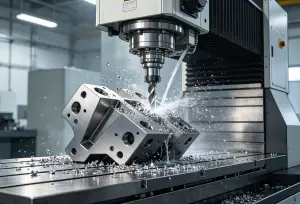
Technical Advantages of Automotive CNC Machining in 2026
Automotive CNC machining utilizes Computer Numerical Control systems to drive factory tools and machinery with micron-level precision. The primary technical advantage lies in the synchronization of 5-axis movements, which allows for the creation of intricate engine blocks and transmission housings from a single workpiece. This methodology eliminates the need for multiple setups, significantly reducing the risk of human error and enhancing the structural integrity of precision auto parts.
Modern CNC systems leverage real-time data feedback loops to adjust cutting parameters dynamically. This “Smart Machining” capability ensures that tool wear is monitored continuously, allowing for intervention before defects occur. Consequently, the reliability of CNC production efficiency is bolstered by predictive maintenance algorithms. Data from the MIT Department of Mechanical Engineering indicates that such technologies can extend tool life by up to 25% in high-volume automotive environments.
Quantifying Improvements in CNC Production Efficiency
To accurately measure productivity gains, manufacturers must analyze throughput rates and material utilization. Transitioning from 3-axis to 5-axis CNC machining centers allows for higher material removal rates (MRR) without sacrificing surface finish quality. In 2026, the industry standard for CNC spindle speeds has surpassed 20,000 RPM for aluminum alloy components, directly correlating to faster production cycles for precision auto parts.
The following table illustrates the comparative efficiency gains between traditional machining and modern automotive CNC machining standards based on recent industry benchmarks:
| Performance Metric | Traditional Machining | Modern Automotive CNC (2026) | Improvement % |
|---|---|---|---|
| Dimensional Accuracy | ±0.05 mm | ±0.001 mm | 98% |
| Prototype Lead Time | 14 Days | 2 Days | 85% |
| Material Waste Rate | 15–20% | < 5% | 70% |
| Labor Hours per Unit | 4.5 Hours | 0.8 Hours | 82% |
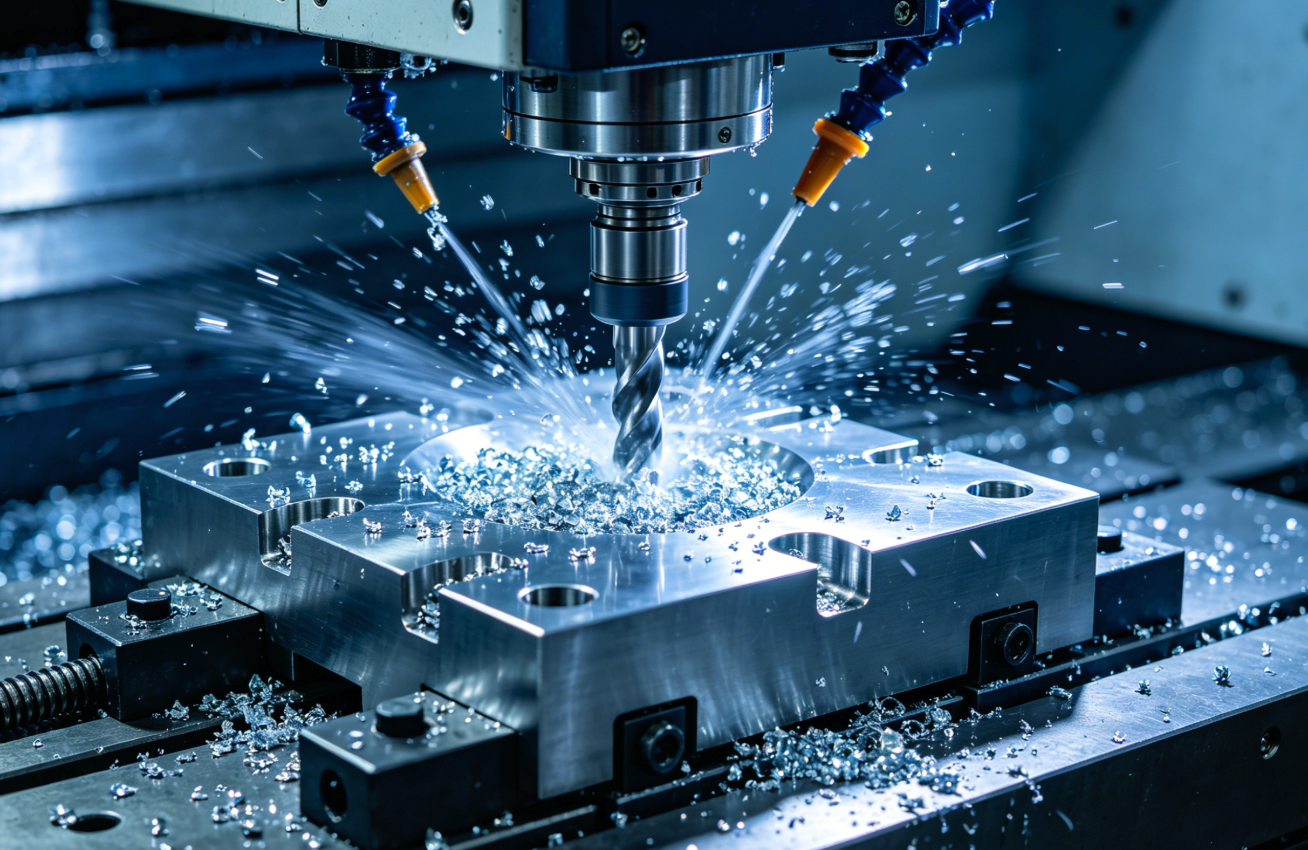
Role of Precision Auto Parts in Vehicle Performance
The demand for precision auto parts is driven by the tightening tolerances required for electric vehicle (EV) drivetrains. EV motors operate at significantly higher RPMs than internal combustion engines, necessitating components like rotor shafts and gearboxes to be machined with extreme accuracy. Utilizing high-performance CNC turning parts ensures that rotational vibration is minimized, which directly impacts vehicle range and cabin acoustics.
Furthermore, lightweighting strategies in the automotive sector rely heavily on automotive CNC machining. By processing aerospace-grade aluminum and magnesium alloys, CNC machines can produce thin-walled structures that maintain high strength-to-weight ratios. Research from the U.S. Department of Energy indicates that a 10% reduction in vehicle weight can result in a 6–8% fuel economy improvement, highlighting the economic value of precision milling.
Streamlining Workflows to Maximize CNC Production Efficiency
Achieving optimal CNC production efficiency requires the integration of Computer-Aided Design (CAD) and Computer-Aided Manufacturing (CAM) software. This digital thread allows engineers to simulate the machining process virtually, identifying potential tool collisions or inefficient paths before the first cut is made. The use of custom CNC milling sequences ensures that “air-cut” time is minimized, keeping the spindle active for the maximum percentage of the production shift.
Another critical factor is the adoption of automated pallet changers and robotic loading systems. These “Lights-Out” manufacturing capabilities allow automotive CNC machining centers to operate 24/7 with minimal supervision. By reducing the idle time between workpieces, the cost-per-part for precision auto parts is lowered, allowing manufacturers to scale production rapidly to meet global market fluctuations and supply chain demands.
Material Versatility in Automotive CNC Machining Applications
The versatility of materials compatible with automotive CNC machining is a significant driver of its industry dominance. From hardened steel for crankshafts to carbon fiber reinforced polymers for specialized racing components, CNC centers handle diverse substrates with consistent results. In modern electric platforms, the ability to produce aluminum CNC parts with high thermal conductivity is particularly vital for battery cooling plate efficiency.
The following list details common materials processed for precision auto parts and their specific applications:
Stainless Steel (304/316): Utilized for exhaust manifolds and fuel pressure regulators due to superior corrosion resistance.
- Aluminum Alloys (6061/7075): Ideal for engine pistons and structural brackets to reduce overall vehicle mass.
- Brass and Copper: Frequently machined for electrical connectors, sensors, and radiator cores.
- Titanium: Reserved for high-performance valves and turbocharger components in premium or racing vehicles.
Future Trends in Precision Auto Parts Manufacturing
Looking toward the latter half of 2026, the convergence of additive manufacturing and automotive CNC machining is creating “Hybrid Manufacturing” nodes. This process involves 3D printing a near-net-shape component and then using 5-axis CNC machining to finish critical mating surfaces. This approach combines the geometric freedom of 3D printing with the surface integrity and tolerance control of traditional CNC technology.
Additionally, the International Organization for Standardization (ISO) has updated guidelines for digital twin integration in machine tools. Digital twins provide a virtual replica of the CNC machine, allowing for real-time optimization of CNC production efficiency through AI-driven analysis. This ensures that the production of precision auto parts is not only fast but also sustainable, reducing energy consumption by optimizing motor torque during the cutting process.
FAQ
What are the primary benefits of using 5-axis CNC machining for automotive components?
5-axis machining allows the cutting tool to approach a part from five different directions simultaneously. For automotive parts, this reduces the number of setups required, improves surface finish quality, and enables the creation of complex shapes like turbocharger impellers with high dimensional stability and significantly reduced lead times.
How does CNC machining ensure the quality of safety-critical auto parts?
CNC machines operate via pre-programmed software that eliminates human manual error. Integrated probing systems and CMM (Coordinate Measuring Machine) integration provide real-time verification of tolerances. This ensures every component, such as brake system valves, meets the rigorous safety standards required by global automotive regulators.
Can CNC machining support the production of lightweight electric vehicle (EV) parts?
Yes, CNC machining is essential for EV lightweighting. It can precisely mill high-strength aluminum and magnesium alloys into complex, thin-walled structures. This capability allows manufacturers to reduce the weight of battery enclosures and motor housings, directly extending the driving range and overall energy efficiency of electric vehicles.
What is the difference between CNC turning and CNC milling in automotive production?
CNC turning rotates the workpiece while a stationary tool removes material, making it ideal for cylindrical parts like axles and shafts. CNC milling moves the cutting tool against a stationary workpiece, which is better suited for complex, non-cylindrical components like cylinder heads and suspension brackets.
How does “Smart Machining” impact the cost of precision auto parts?
Smart Machining uses sensors and AI to monitor tool health and vibration. By predicting tool failure and optimizing feed rates in real-time, it reduces scrap rates and prevents expensive machine downtime. This optimization lowers the total cost of ownership and reduces the per-unit price for high-volume production runs.
Post time: Apr-14-2026