


Introduction:
Choosing the right CNC equipment is a critical decision that directly impacts a factory’s throughput, precision, and long-term return on investment (ROI). Vertical machining centers (VMC) and horizontal machining centers (HMC) represent the two primary configurations in modern metalworking, each offering distinct advantages depending on part geometry and production volume.
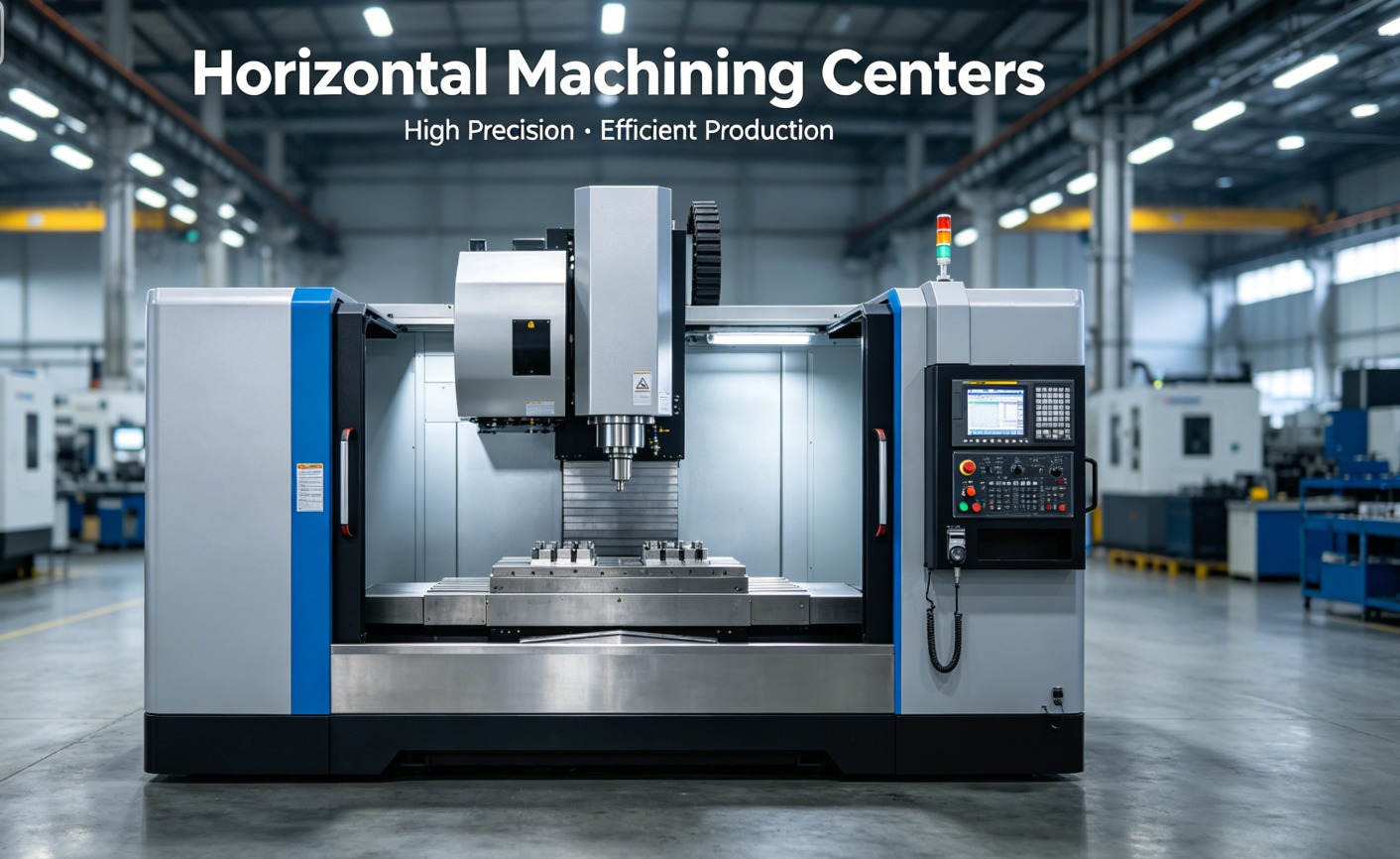
Structural Fundamentals of Vertical and Horizontal Machining Centers
The primary distinction between vertical and horizontal machining centers lies in the spindle orientation and the way the cutting tool engages the workpiece. A vertical machining center features a vertically oriented spindle, where the cutting tool moves up and down along the Z-axis, making it ideal for flat parts that require machining on a single side.
Conversely, a horizontal machining center utilizes a horizontal spindle orientation. This configuration often incorporates a rotary table or pallet changer, allowing the machine to access multiple sides of a workpiece in a single setup. According to industry standards defined by ISO 230-1:2012, the geometric accuracy of these machine axes is fundamental to achieving high-precision tolerances in complex aerospace and automotive components.
Chip Management and Operational Efficiency
Efficient chip evacuation is a decisive factor in maintaining surface finish and tool life. In a vertical machining center, chips often accumulate on the workpiece surface or within deep pockets, requiring high-pressure coolant or manual intervention to clear. This can lead to “re-cutting” of chips, which accelerates tool wear.
Horizontal machining centers excel in this domain because gravity naturally pulls chips away from the cutting zone and into the chip conveyor. This “gravity-assisted” chip removal makes the CNC horizontal machining center a superior choice for high-volume production where downtime for manual cleaning must be minimized. High-efficiency production lines often favor horizontal configurations to ensure continuous operation without thermal deformation caused by chip buildup.
Comparative Analysis: VMC vs. HMC Key Specifications
When evaluating which machining center fits your facility, it is essential to compare technical parameters such as spindle speed, torque, and footprint.
| Feature | Vertical Machining Center (VMC) | Horizontal Machining Center (HMC) |
|---|---|---|
| Spindle Orientation | Vertical (Z-axis) | Horizontal (Y-axis/B-axis) |
| Best For | Flat parts, plates, single-side work | Heavy parts, 4-axis work, multi-sided parts |
| Chip Evacuation | Challenging (requires coolant) | Excellent (gravity-assisted) |
| Initial Cost | Lower (Affordable entry point) | Higher (Significant capital investment) |
| Floor Space | Smaller footprint | Larger footprint (due to pallet changers) |
Part Complexity and Multi-Axis Capabilities
The geometry of your components should dictate your choice of vertical and horizontal machining centers. VMCs are the industry standard for three-axis milling on parts like dies, molds, and brackets. However, for complex parts requiring machining on four or more sides, a horizontal setup is significantly more productive.
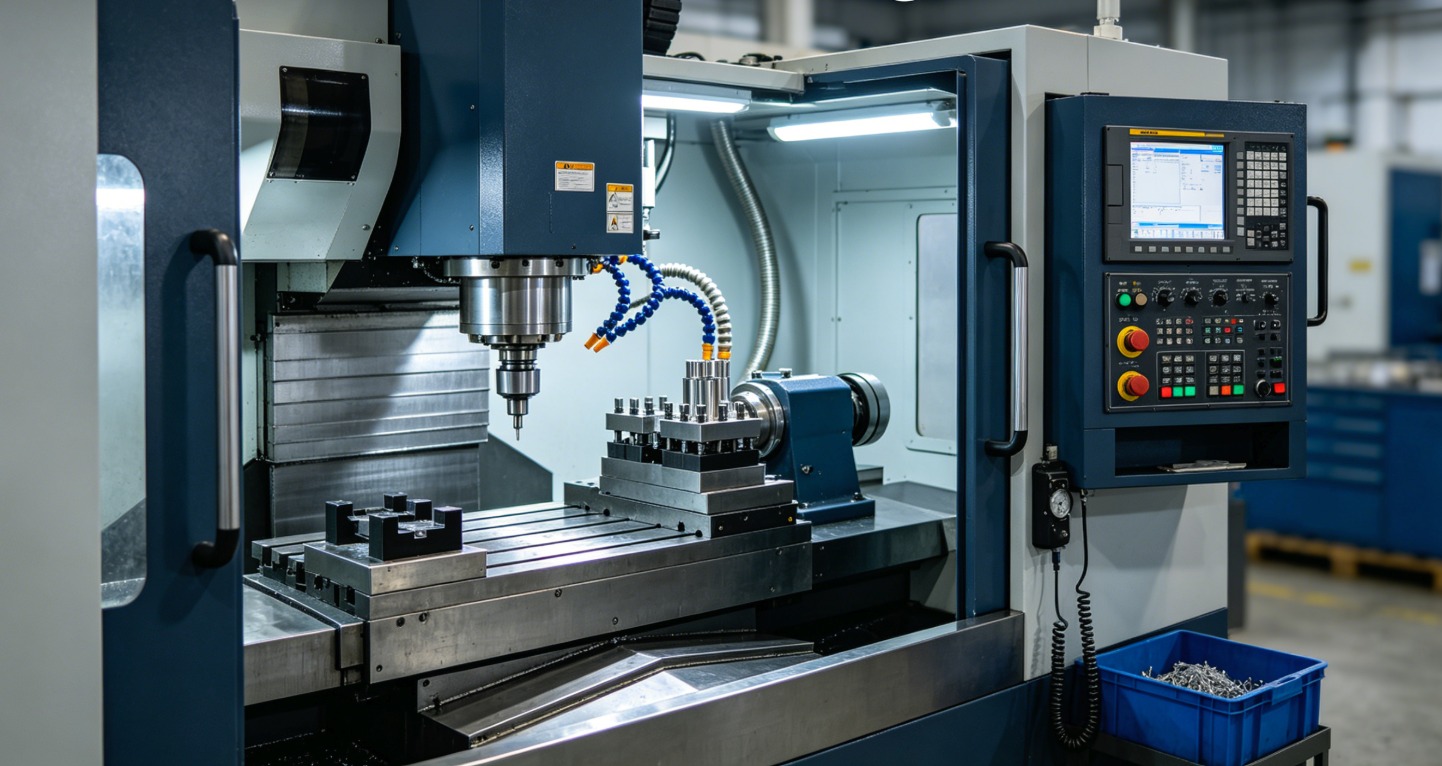
Many advanced 5-axis CNC machining centers bridge the gap between these two, but traditional HMCs often include an integrated 4th-axis rotary table. This allows for the completion of a part in one or two setups, whereas a VMC might require four or five. Reducing setups not only saves time but also eliminates the cumulative errors associated with manual part re-positioning, ensuring higher part-to-part consistency.
Tooling and Spindle Power Considerations
Spindle rigidity and horsepower are vital for heavy-duty material removal. Horizontal machining centers are generally built with more robust structures and higher-torque spindles, making them suitable for milling tough materials like titanium or stainless steel in the oil and gas industry.
While a CNC vertical machining center offers excellent visibility and ease of use for operators, its structural design is sometimes less rigid than the box-like frame of an HMC. For high-speed machining of aluminum or light alloys, a high-performance VMC is often sufficient and more cost-effective. According to Association for Manufacturing Technology (AMT) reports from 2024, shops are increasingly adopting hybrid layouts to balance the agility of VMCs with the raw power of HMCs.
Choosing Based on Production Volume and ROI
The decision to invest in vertical and horizontal machining centers often comes down to the “Cost Per Part.” Although an HMC has a much higher initial purchase price, its ability to run unattended—thanks to automatic pallet changers (APC)—can result in a lower cost per part in high-volume environments.
- Low Volume / High Variety: Choose a VMC for its versatility and quick setup times.
- High Volume / Consistent Geometry: Choose an HMC to maximize spindle “on-time” and reduce labor costs.
- Limited Budget: Start with a high-quality CNC lathe or VMC to establish a foundation before scaling to horizontal systems.
Summary Checklist for Factory Selection
To determine the best fit for your production floor, utilize the following selection criteria:
- Workpiece Size: Can it fit within the travel limits of a standard VMC?
- Setup Frequency: Will reducing setups on an HMC pay for the machine’s premium price?
- Operator Skill: Does your team have experience with the horizontal programming logic?
- Material Type: Does the material produce long, stringy chips that require the superior evacuation of a CNC gantry machining center or HMC?
Frequently Asked Questions (FAQ)
1. Is a vertical or horizontal machining center better for mold making?
Vertical machining centers are generally preferred for mold making due to their superior visibility and ability to handle large, flat plates. The vertical spindle allows for easier access to deep cavities. However, for very large molds, a gantry-type center may be required to maintain structural rigidity over long travel distances.
2. How much more productive is an HMC compared to a VMC?
In high-volume scenarios, an HMC can be 300% more productive than a VMC. This is primarily due to the integrated pallet changers that allow for part loading and unloading while the spindle is cutting, effectively eliminating “spindle idle time” which is common in VMC operations.
3. What are the space requirements for horizontal machining centers?
Horizontal machining centers typically require 1.5 to 2 times the floor space of a vertical center. This extra room is necessary to accommodate the pallet changing system, larger chip conveyors, and the horizontal movement of the column. Factories must ensure their layout supports these larger footprints and specialized maintenance access.
4. Can I perform 5-axis machining on a horizontal center?
Yes, many modern horizontal centers are configured with a tilting table or a B-axis and A-axis to provide full 5-axis capability. These are often used for complex aerospace components where gravity-assisted chip removal is vital for internal cooling channels and deep-hole drilling operations.
5. Which machine type has a better resale value in the used market?
Vertical machining centers often have a more active resale market because they are affordable for small-to-medium job shops. However, well-maintained horizontal machining centers from reputable brands retain a high percentage of their value due to their heavy-duty construction and essential role in Tier 1 manufacturing facilities.
Post time: May-14-2026