


Introduction
Railway vehicles operate under conditions that demand exceptional mechanical reliability. Wheelsets, axles, brake discs, and traction motor shafts must withstand dynamic loads, thermal stress, and continuous cyclic loading over tens of thousands of kilometers. According to FutureMarketInsights, the global railway CNC wheel lathe market is projected to reach USD 720 million by 2034, driven by fleet expansion, maintenance modernization, and increasingly stringent safety regulations across freight and passenger rail networks. As railway operators and contract manufacturers seek to meet these requirements at scale, CNC lathes designed specifically for railway applications have become a foundational piece of production and maintenance equipment.
This article outlines the key features that distinguish CNC lathes built for railway vehicle component manufacturing and remanufacturing, with attention to the technical, operational, and regulatory factors that shape equipment selection in this sec
What Is a CNC Lathe for Railway Vehicles?
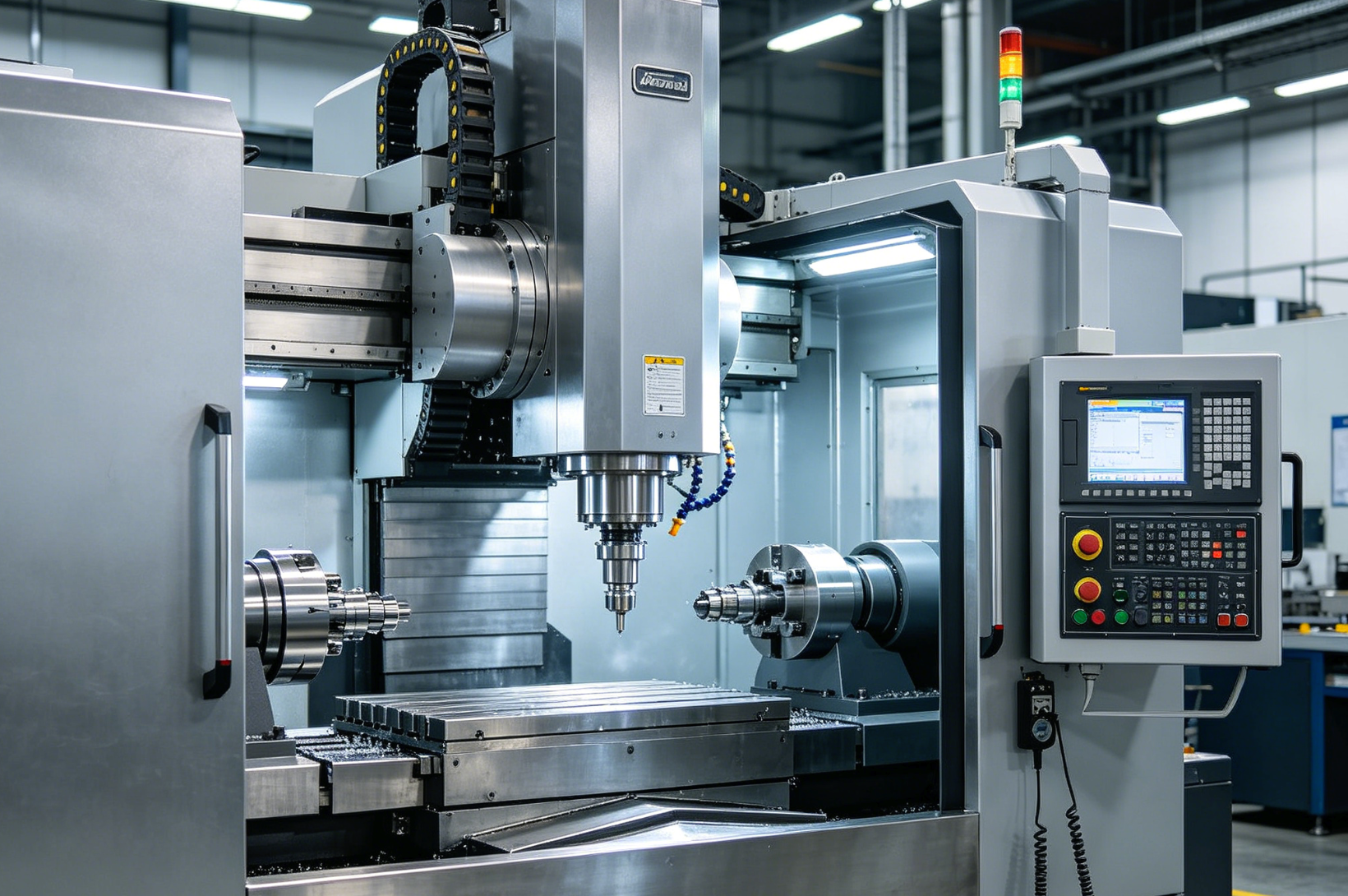
A CNC lathe designed for railway vehicle components is a precision turning machine engineered to machine parts specific to rail vehicles—primarily wheelsets, axles, brake discs, gear blanks, and shaft assemblies. Unlike general-purpose CNC lathes used across metalworking industries, railway-specific models emphasize heavy-duty spindle power, extended bed travel, enhanced thermal stability, and compliance with railway safety and interoperability standards.
The Association of American Railroads (AAR) publishes detailed specifications governing the dimensional tolerances, material properties, and qualification testing for machined components used in North American freight and passenger rail service. In Europe and internationally, the UN ECE Regulation 137 and the EN 13232 series establish wheel and axle machining tolerances that CNC lathes in this sector must consistently achieve. These standards define not only target dimensions but also surface finish requirements, hardness ranges, and nondestructive testing protocols that complement the geometric precision delivered by the machine tool itself.
For rail operators maintaining CNC lathes for railway axle machining, the ability to meet these specifications within a single setup is a non-negotiable performance criterion.
Spindle Power and Rigidity for Heavy Railway Components
Railway components are substantially heavier and larger than typical machined parts in other industries. A loaded wheelset for a freight car can exceed 1,200 kg, with wheel diameters ranging from 750 mm to over 1,000 mm. This geometry demands a machine with high torque output at low spindle speeds—a performance profile fundamentally different from high-speed small-part machining.
CNC lathes designed for railway applications typically feature spindle powers of 50 kW or higher, with hydraulic or AC servo-driven main spindles capable of delivering steady cutting forces across extended periods. The machine bed and guideway construction must resist cutting forces without perceptible deflection, as any flex during a heavy roughing pass translates directly into geometric errors on finished surfaces.
Heavy-duty precision CNC lathes for railway use commonly incorporate induction-hardened, precision-ground guideways; box-way or linear roller guide configurations; and large-diameter spindle bearings engineered for radial and thrust loads characteristic of railway wheel and axle machining. This structural rigidity ensures that CNC turning accuracy is maintained throughout the full depth-of-cut cycles required to remove material from worn or oversized components prior to resizing.
Precision Machining and Tolerance Compliance
Railway wheelsets operate as a mated pair with a fixed gauge dimension—nominally 1,435 mm standard gauge—between wheel rolling circles. Any deviation in wheel diameter, axle journal diameter, or taper profile introduces tracking instability, uneven wear, or safety-critical dynamic loads. UN ECE Regulation 137 specifies wheel load categories and associated dimensional limits that wheelset machining must satisfy before installation.
CNC lathes serving this sector must achieve and reproduce tolerances on the order of ±0.05 mm on critical journal and pitch diameters, with surface finishes typically required to Ra 1.6 μm or better on bearing journals and wheel tread profiles. The Federal Transit Administration’s Rail Vehicle Qualification Test Compendium provides testing protocols that verify machine performance against these requirements across production batches.
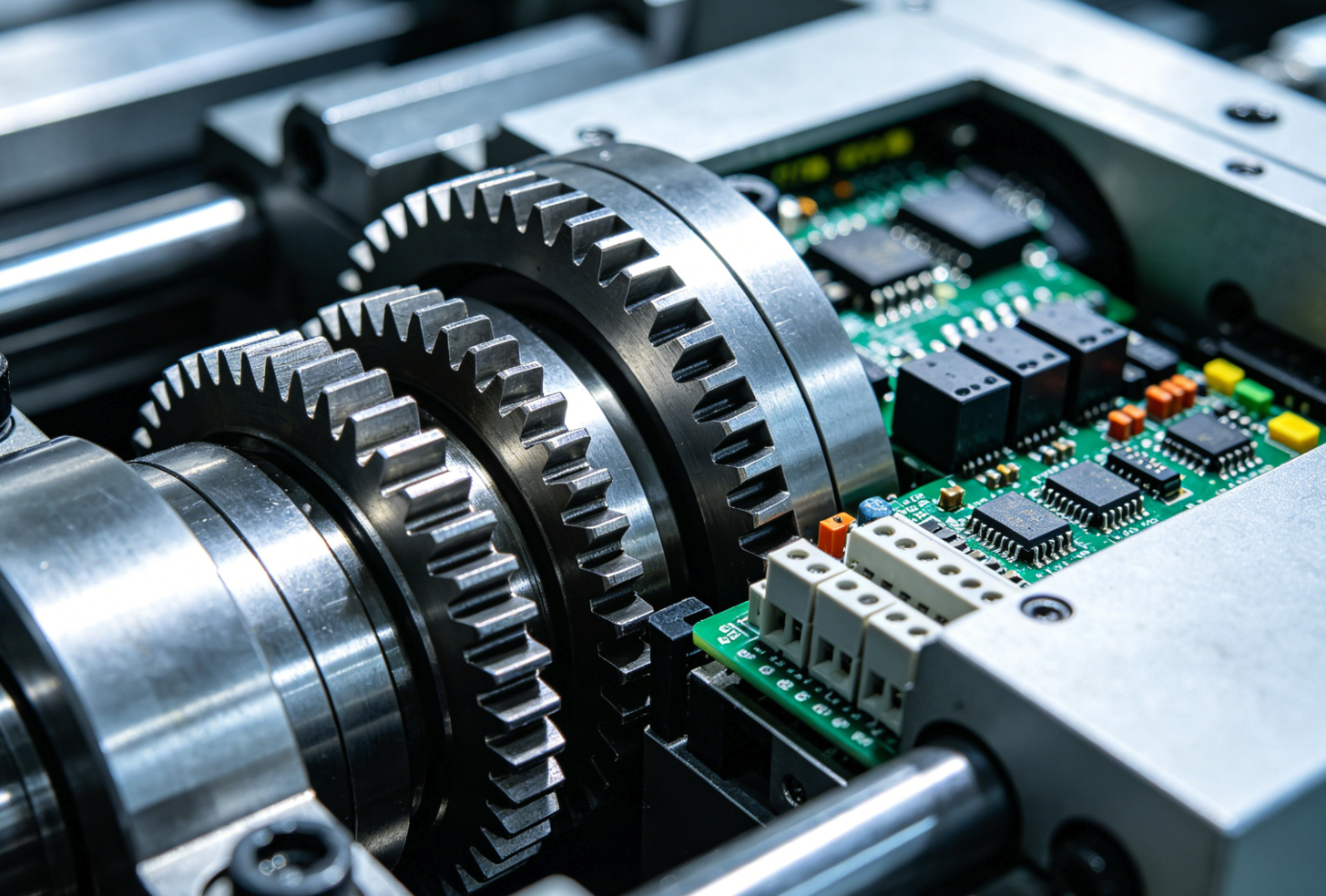
Modern CNC systems with closed-loop feedback control, linear scale position verification, and in-process force monitoring enable railway-specific CNC lathes to sustain these tolerances across hundreds of machining cycles without operator intervention. This level of reproducibility is essential for maintenance shops that must certify each machined component against official drawings before returning it to service.
Automation and Unattended Machining Capability
Railway maintenance environments increasingly prioritize minimizing vehicle downtime. A wheelset change or axle re-machining that requires extended manual setup and supervision directly impacts fleet availability. CNC lathes designed for railway use frequently incorporate features that support automated or semi-automated operation cycles.
Key automation features include hydraulic or motorized tailstock and steady rests sized for the full range of axle lengths encountered in rail fleets; automatic tool measurement and compensation systems that verify cutting edge position without operator involvement; and part clamping systems compatible with railway-specific fixture interfaces. For automated CNC wheel machining, some systems integrate wheel nut runners, automatic wheel pullers, and conveyor or rail-embedded part handling that enable a single operator to supervise multiple machines simultaneously.
Unattended machining capability reduces labor cost per component while ensuring that cutting parameters established during setup are maintained consistently throughout the production run—eliminating the variability introduced by manual feed rate adjustment during extended operations.
Wheel Profile and Form Accuracy
Railway wheel tread profiles are not simple cylinders. They incorporate multiple radii transitions, flange geometries, and taper zones that control vehicle steering behavior, reduce hunting oscillation, and manage wheel-rail contact stresses. Reprofiling a worn wheelset to restore the correct tread geometry is one of the most frequent machining operations in railway maintenance.
CNC lathes equipped with dedicated wheel profiling software can execute complex tapered and radiused tool paths that reproduce the exact profile specified by the applicable standard. The EN 13232 series defines the geometric parameters for wheel-rail interaction profiles, and CNC systems capable of importing these profile definitions directly ensure compliance without manual interpretation of drawn specifications.
For rail workshops performing CNC wheel lathe operations on a scheduled maintenance basis, profile accuracy directly affects subsequent vehicle dynamics behavior—making the CAD/CAM integration of the CNC lathe as important as its mechanical precision.
Setup Flexibility for Multiple Component Types
A railway maintenance facility typically services a mixed fleet encompassing multiple axle configurations, wheel diameters, brake disc sizes, and shaft lengths. A single versatile CNC lathe capable of handling these varied geometries reduces the capital footprint and setup complexity of the machining department.
Key flexibility features include extended X-axis and Z-axis travel envelopes that accommodate the longest rail vehicle axles; modular chuck and clamping systems that adapt quickly between component types; and tool magazine configurations with sufficient capacity for the range of cutting tools—roughing bars, finishing inserts, threading heads, and grooving blades—required across the component mix.
Modern multi-purpose CNC lathes for rail applications address this need by combining turning capability with live tooling and C-axis indexing, enabling drilling, keyway cutting, and bolt hole machining on axle components without transferring the part to a secondary machine.
Safety and Compliance Features
Railway component machining takes place within a heavily regulated safety environment. Personnel working near moving heavy components face pinch point hazards, suspended load risks, and high-power cutting tool exposure. CNC lathe manufacturers serving the railway sector incorporate safety features that exceed general-purpose machine tool provisions.
These include enclosed machining zones with interlocked guards that prevent access during spindle operation; chip and coolant management systems that reduce slip hazards around the work envelope; and emergency stop systems with redundant motion shutdown circuits that comply with machinery safety standards applicable in rail maintenance environments. ISO certification requirements for railways—particularly ISO 9001 and ISO/TS 22163 for rail industry quality management—further mandate documented process control and traceability that CNC lathe systems must support through machine monitoring, cycle logging, and inspection reporting capabilities.
Conclusion
CNC lathes engineered for railway vehicle components address a distinct combination of requirements: heavy material removal capacity, micron-level dimensional accuracy, strict regulatory compliance, and operational features that minimize vehicle downtime in maintenance environments. The market growth trajectory documented by FutureMarketInsights confirms sustained investment in railway machining capability as fleets modernize and safety expectations tighten.
For railway operators, maintenance contractors, and component manufacturers, selecting a CNC lathe that matches the specific geometry and compliance demands of the target fleet is a decision with direct implications for safety certification, operational efficiency, and total cost of ownership.
FAQ
Q1: What types of railway components are machined on CNC lathes?
CNC lathes in railway applications machine wheelsets, axles, brake discs and brake drums, traction motor shafts, gear blanks, axle journals, and wheel tread profiles. These components require precise dimensional control and surface finish to meet safety-critical railway standards for vehicle dynamics and structural integrity.
Q2: What tolerance do CNC lathes for railway applications need to achieve?
For critical journal and bearing seat diameters, railway CNC lathes must typically hold tolerances of ±0.05 mm or tighter. Wheel tread profile tolerances are defined by applicable standards such as EN 13232, with surface finish requirements on bearing journals generally at Ra 1.6 μm or better. The specific tolerance band depends on the component type and governing standard in the operating region.
Q3: How do railway CNC lathes differ from standard industrial CNC lathes?
Railway-specific CNC lathes feature substantially higher spindle power and torque ratings, extended bed travel to accommodate full-length axles, enhanced thermal stability for extended production runs, and compliance-oriented features such as profile accuracy verification, process documentation, and safety guarding systems designed for heavy component handling. They are engineered to meet railway industry standards such as AAR M-1001 or EN 13232, which do not apply to general-purpose machining.
Post time: Apr-14-2026