


Introduction
Selecting CNC machine tools is less about comparing catalogs and more about matching machine capability to the parts, tolerances, and production volumes your operation must support. The right choice affects dimensional accuracy, surface finish, cycle time, setup efficiency, and long-term operating cost, while the wrong one can lock in quality issues and bottlenecks. This article explains the key factors behind a sound decision, including machine rigidity, axis configuration, controller performance, thermal stability, and workflow fit, so you can evaluate options against real manufacturing demands and move into procurement with clearer technical and commercial criteria.
Why CNC Machine Tool Selection Shapes Precision Manufacturing
The procurement of CNC machine tools is the foundational investment that defines a manufacturer’s capability, capacity, and competitive positioning within the precision engineering sector. Rather than treating machining centers as generic commodities, engineering and procurement teams must align machine architecture with exact production requirements. The structural rigidity, controller processing power, and thermal management systems of a chosen machine directly dictate the achievable dimensional accuracy and surface finish of the final components.
Tolerance Targets, Part Complexity, and Production Mix
Achieving tight manufacturing tolerances requires matching the machine’s kinematic capabilities to the specific part complexity and the anticipated production mix. For aerospace or medical device components requiring tolerances of ±0.0001 inches (2.54 microns) or tighter, standard cast-iron frames often yield to polymer concrete or heavily ribbed Meehanite castings that dampen vibration. The mass and geometry of the base casting define the static stiffness, which resists deflection under heavy cutting loads.
Furthermore, the production mix—whether High-Mix Low-Volume (HMLV) or Low-Mix High-Volume (LMHV)—dictates the necessity for rapid changeover capabilities. HMLV environments benefit from zero-point clamping systems and multi-axis configurations that minimize setups, whereas LMHV lines prioritize absolute cycle time reduction, dedicated hydraulic fixturing, and high-speed linear guideways.
Commercial Risks of Poor Machine Selection
Misjudging the required specifications of CNC machine tools introduces severe commercial risks that compound over the asset’s lifecycle. Deploying an under-specified machine for heavy roughing of superalloys like Inconel or titanium accelerates spindle wear and degrades guideways. This mismatch frequently leads to premature spindle failures, necessitating rebuilds that typically cost between $15,000 and $30,000 per incident.
Additionally, machines lacking adequate thermal compensation will experience significant axis drift during extended production runs. This thermal instability can elevate scrap rates beyond the acceptable 3% to 5% threshold, directly eroding profit margins, wasting expensive raw materials, and jeopardizing just-in-time delivery schedules for critical clients.
Key CNC Machine Tool Specifications to Compare
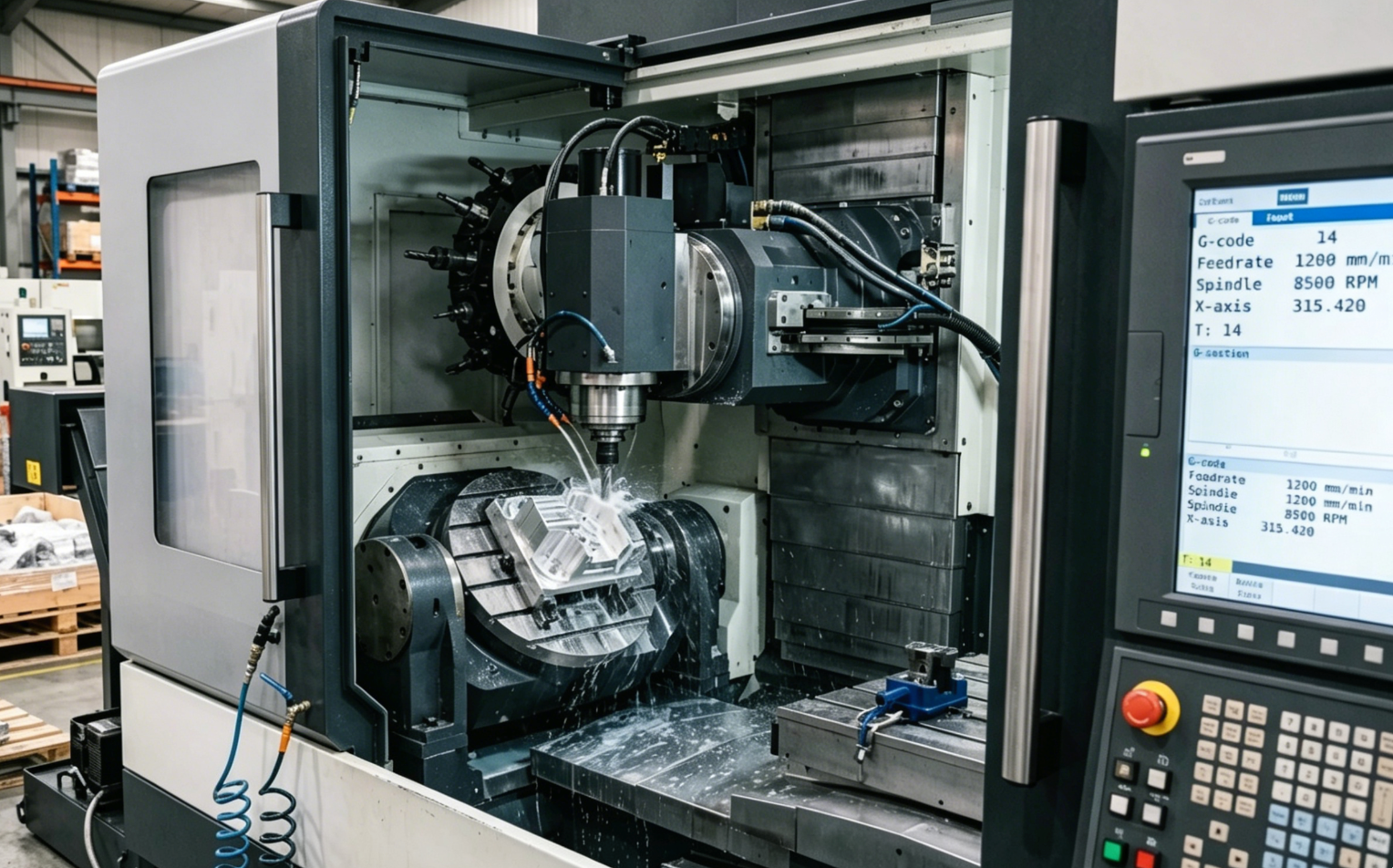
Evaluating CNC machine tools requires a rigorous analysis of mechanical, electrical, and control specifications. Beyond the physical footprint, the interplay between axis kinematics, tooling interfaces, and automated material handling determines the true operational envelope and efficiency of the equipment.
Axis Configuration and Work Envelope
The configuration of axes and the physical work envelope are the primary filters in machine selection. While a standard 3-axis Vertical Machining Center (VMC) suffices for prismatic parts, complex geometries necessitate 4-axis or full 5-axis continuous machining. The work envelope, defined by X, Y, and Z travels (e.g., 750 mm × 500 mm × 500 mm), must accommodate not only the raw billet but also the workholding apparatus and safe tool clearance.
| Configuration | Kinematic Complexity | Typical Precision (Positioning) | Setup Reduction Potential |
|---|---|---|---|
| 3-Axis VMC | Linear X, Y, Z | ±0.0002 inches | Baseline |
| 4-Axis Horizontal | Linear + 1 Rotary (B) | ±0.0002 inches | Moderate (Multi-sided) |
| 5-Axis Trunnion | Linear + 2 Rotary (A, C) | ±0.0001 to ±0.0002 inches | High (Done-in-one) |
| Mill-Turn Center | Lathe + Milling Spindle | ±0.0001 inches | Very High |
Tooling Interface, Probing, and Thermal Stability
The tooling interface is critical for power transmission, rigidity, and concentricity. For high-speed machining exceeding 15,000 RPM, the HSK-63A or HSK-100A interfaces are vastly superior to traditional steep-taper (CAT40/50) holders, as the dual-contact HSK design increases clamping force under centrifugal load and limits Z-axis pull-in.
Precision machining also demands integrated part probing and laser tool presetting to automate coordinate offsets and detect tool breakage mid-cycle. Furthermore, thermal stability is paramount; elite CNC machine tools utilize chilled ball screws, thermally symmetrical bridge designs, and absolute linear glass scales with 0.1-micron resolution to maintain positional accuracy regardless of ambient shop floor temperature fluctuations.
Chip Management, Automation, and Throughput
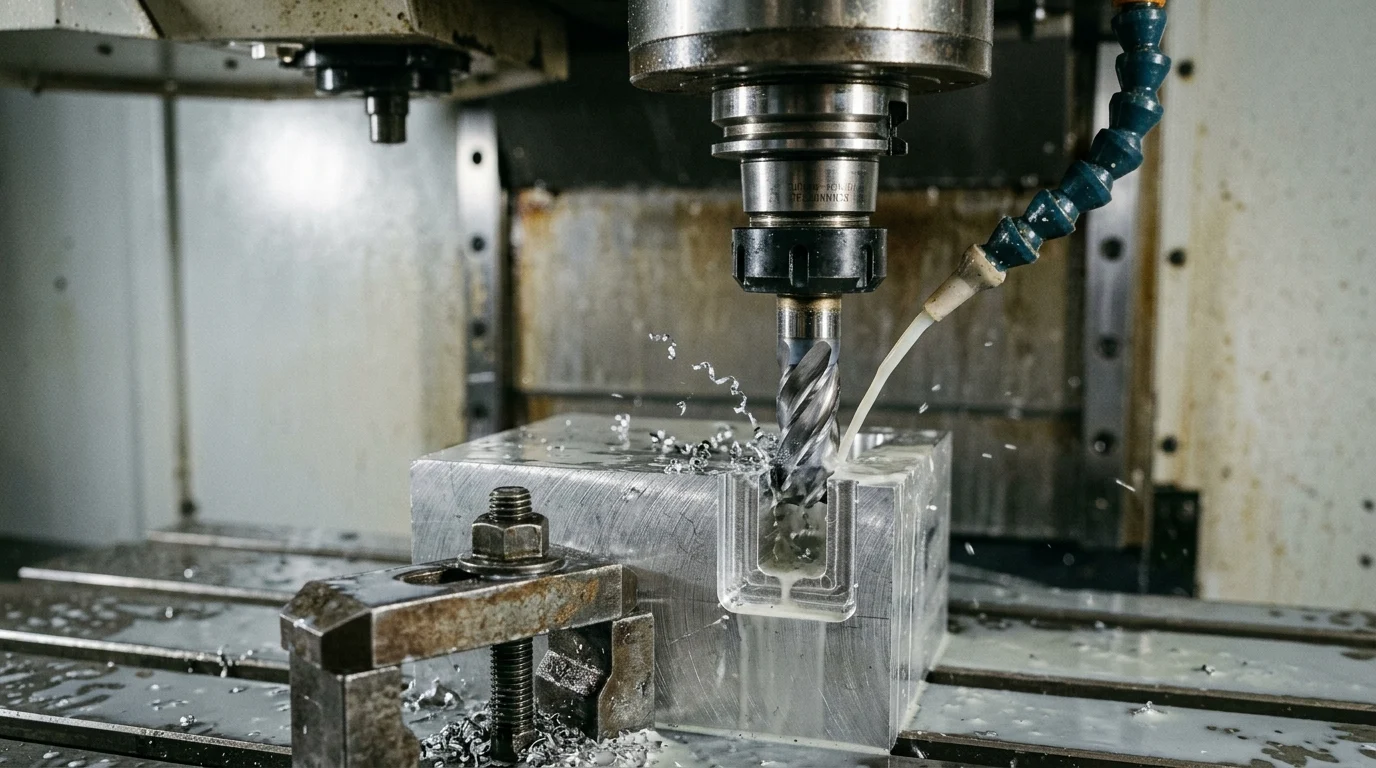
Effective chip evacuation and thermal management are essential for uninterrupted throughput and predictable tool life. Coolant-through-spindle (CTS) systems operating at high pressures—typically between 300 and 1,000 PSI—are necessary for evacuating chips during deep-hole drilling and preventing thermal shock in hardened alloys.
To maximize throughput and limit operator intervention, automation interfaces such as automatic pallet changers (APC) or robotic machine tending integration are increasingly standard. Implementing a twin-pallet system can reduce spindle idle time by up to 40%, ensuring the machine remains in cut while the operator safely stages the subsequent workpiece outside the machining envelope.
How to Assess CNC Machine Tool Suppliers and Compliance
Procuring capital equipment establishes a long-term operational partnership with the Original Equipment Manufacturer (OEM) or regional distributor. Assessing the supplier’s service infrastructure, compliance with international metrology standards, and calibration transparency is just as critical as reviewing the machine’s mechanical design.
Supplier Due Diligence Criteria
Thorough supplier due diligence focuses on aftermarket support metrics rather than just the initial capital outlay. Procurement teams must evaluate the supplier’s Mean Time to Repair (MTTR) Service Level Agreements (SLAs), targeting guaranteed on-site response times of under 24 hours for critical downtime events.
Another crucial metric is the regional spare parts network; top-tier suppliers maintain a localized first-pass fill rate exceeding 95% for consumable and high-wear components. Additionally, reliability engineers should review the OEM’s expected Mean Time Between Failures (MTBF) for major rotary subsystems, demanding a minimum of 10,000 spindle cutting hours before requiring major intervention or bearing replacement.
Certification, Calibration, Safety, and Traceability
Compliance and calibration dictate the verifiable accuracy of CNC machine tools before they ever reach the production floor. Before factory acceptance, machines must be tested against rigorous international standards such as ISO 230-2, which governs the determination of accuracy and repeatability of positioning of numerically controlled axes.
Verification involves laser interferometry and ball-bar testing to map volumetric accuracy, detect servo mismatch, and compensate for pitch error. Furthermore, electrical and safety compliance, indicated by CE, UL, or CSA marks, ensures seamless integration with regional power grids and occupational safety regulations.
| Standard | Focus Area | Typical Acceptance Threshold |
|---|---|---|
| ISO 230-2 | Axis Positioning & Repeatability | < 5 microns per 300mm travel |
| ISO 230-4 | Circular Tests (Ball-bar) | < 3 microns radial deviation |
| CE / UL / CSA | Electrical & Operator Safety | 100% compliance required |
| VDI/DGQ 3441 | Statistical Accuracy Mapping | Manufacturer specific tolerances |
A Practical CNC Machine Tool Selection Process
Executing a successful procurement strategy for CNC machine tools requires a structured, multi-disciplinary approach. By integrating stringent engineering requirements with comprehensive financial modeling, organizations can objectively evaluate competing platforms, mitigate risk, and justify the required capital expenditure.
Step-by-Step Evaluation Process
The evaluation process begins with a detailed capability matrix derived from the most complex parts in the manufacturing portfolio. Engineers must define the maximum part envelope, required material removal rates (MRR), and target cycle times. Following a desktop evaluation of specifications, conducting physical test cuts at the supplier’s technical center is mandatory.
These test cuts must be subjected to independent Coordinate Measuring Machine (CMM) inspection and Statistical Process Control (SPC) analysis, targeting a Process Capability Index (Cpk) of 1.33 or greater. Finally, procurement must build a Total Cost of Ownership (TCO) model spanning a standard 5- to 7-year depreciation lifecycle, factoring in localized energy consumption, tooling packages, preventive maintenance contracts, and required floor space.
Procurement and Engineering Questions
During the technical review, engineering teams must pose highly specific questions to the OEM to uncover hidden limitations. Inquiries should address the dynamic stiffness of the machine structure during interrupted cuts and the controller’s processing capabilities.
Specifically, buyers must evaluate the control’s high-speed look-ahead capacity—such as processing 1,000+ blocks per second—to prevent data starvation and axis stuttering during complex 3D surfacing operations. Additionally, software integration is a critical checkpoint; teams must confirm the availability and cost of proven post-processors that bridge the company’s existing Computer-Aided Manufacturing (CAM) software with the machine’s specific kinematic mapping.
Comparing Cost, Precision, and Capacity
The final decision rests on balancing upfront capital costs against long-term precision and capacity gains. An entry-level 3-axis vertical mill requires a Capital Expenditure (CapEx) of roughly $50,000 to $80,000, suitable for standard aluminum components and low-complexity job shop work.
In contrast, a fully automated, high-precision 5-axis machining center represents an investment ranging from $350,000 to over $750,000. To justify this premium, the financial model must demonstrate a superior Return on Investment (ROI) driven by reduced setup times, elimination of secondary operations, and increased spindle utilization. World-class manufacturing operations target an Overall Equipment Effectiveness (OEE) of 80% or higher, turning the higher upfront cost into a significantly lower cost-per-part over the machine’s operational life.
Key Takeaways
- The most important conclusions and rationale for CNC machine tools
- Specs, compliance, and risk checks worth validating before you commit
- Practical next steps and caveats readers can apply immediately
Frequently Asked Questions
How do I choose between a 3-axis, 4-axis, or 5-axis CNC machine tool?
Match the machine to part geometry and setup count. Use 3-axis for simple prismatic parts, 4-axis for multi-sided work, and 5-axis for complex parts needing fewer setups and tighter accuracy.
What CNC machine features matter most for precision manufacturing?
Prioritize rigidity, thermal stability, spindle/tool interface, probing, and guideway quality. For tight tolerances, look for vibration damping, thermal compensation, and accurate feedback systems such as linear scales.
When should I choose a turning center instead of a machining center?
Choose a CNC turning center for shafts, hubs, valves, and other round parts. Pick a machining center for prismatic parts, molds, and multi-face milling or drilling operations.
Can OTURN Machinery help with industry-specific CNC machine selection?
Yes. OTURN offers CNC lathes, machining centers, 5-axis machines, gantry drilling machines, and special-purpose solutions for flywheels, valves, wheel hubs, crankshafts, aerospace, and medical parts.
How can I reduce ROI risk when buying CNC machine tools?
Select capacity based on actual materials, tolerances, and volume. OTURN supports lower investment costs with broad machine options, application matching, and overseas service to help reduce downtime and speed payback.
Post time: Apr-29-2026