


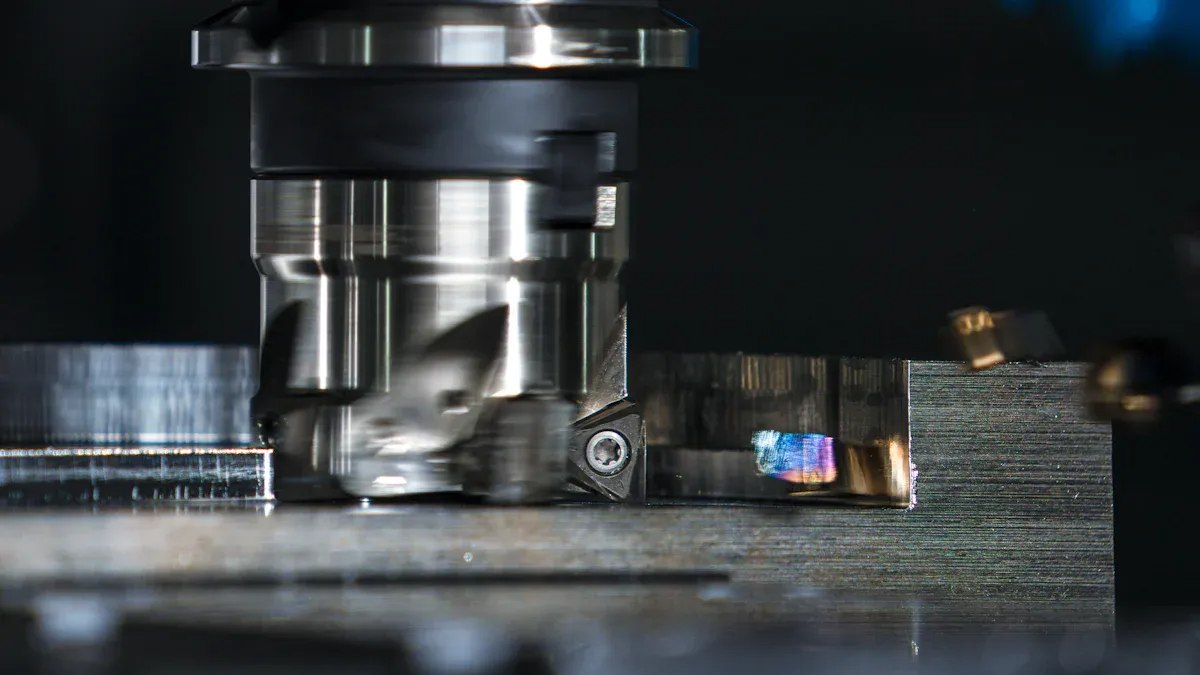
Why CNC Turning Center Selection Matters for Precision Parts
Selecting the optimal CNC turning center is a critical capital allocation decision that directly dictates a manufacturer’s capability to produce high-tolerance components. When machining aerospace, medical, or advanced automotive parts, the structural and dynamic characteristics of the equipment determine the baseline scrap rate and overall equipment effectiveness (OEE).
Procurement errors at this stage lead to cascading failures in production, where inadequate machine rigidity or insufficient thermal stability makes holding tight tolerances impossible, regardless of tooling or programming optimization. A rigorous evaluation must transcend basic marketing specifications to ensure the asset aligns with long-term manufacturing objectives.
Define Precision Part Requirements Before Comparing Machines
Before evaluating specific machine brands, engineers must conduct a rigorous analysis of the target workpiece geometries, material properties, and required tolerances. Processing superalloys like Inconel 718 or Titanium Grade 5 requires significantly higher spindle torque at lower RPMs compared to machining Aluminum 6061. For instance, hard turning hardened steel components exceeding 60 HRC demands exceptional machine stiffness to utilize Cubic Boron Nitride (CBN) inserts effectively, whereas softer non-ferrous metals prioritize high spindle speeds and rapid traverse rates.
Precision requirements dictate the machine tier; standard commercial components may tolerate deviations of ±0.025 mm, while fluid dynamic or optical components frequently demand tolerances tighter than ±0.002 mm. Part length-to-diameter (L/D) ratios also fundamentally alter equipment requirements. Workpieces with an L/D ratio exceeding 3:1 typically necessitate a programmable tailstock for support, while ratios over 10:1 require specialized steady rests or a shift toward Swiss-style kinematics rather than traditional fixed-headstock turning centers.
Balance Cost, Risk, and Throughput
Capital expenditure (CAPEX) must be weighed against operational expenditure (OPEX), risk mitigation, and projected throughput. A basic 2-axis CNC turning center may require an initial investment of $45,000 to $65,000, offering a low barrier to entry but requiring multiple secondary operations for complex geometries.
Conversely, investing $250,000 to $400,000 in a multi-axis mill-turn center with a sub-spindle dramatically increases upfront costs but can reduce total setup times by up to 60%. This “done-in-one” machining philosophy minimizes the risk of tolerance stacking errors introduced when operators manually transfer parts between distinct turning and milling stations, ultimately driving down the cost-per-part over high production volumes.
Which CNC Turning Center Specifications Affect Precision Most
The inherent precision of a CNC turning center is governed by its architectural specifications, kinematic design, and the quality of its motion control components. Analyzing the spec sheet requires looking beyond maximum RPM and footprint to understand how the machine will behave under heavy cutting loads and extended operational shifts.
Compare Spindle, Turret, Axis Configuration, and Bar Capacity
The spindle and turret are the heart of the turning process. High-precision spindles utilize ultra-precision angular contact bearings to minimize radial runout, often keeping it below 0.001 mm under load. Turret indexing speed is another critical metric; servo-driven turrets capable of indexing adjacent tools in under 0.2 seconds significantly reduce non-cutting cycle times.
Bar capacity determines the maximum raw stock diameter that can be fed through the spindle drawtube. Common industrial capacities are 42 mm, 51 mm, and 65 mm. Selecting the correct bar capacity ensures compatibility with automated bar feeders, maximizing unattended machining hours.
| Configuration | Primary Application | Setup Time Impact | Estimated Cost Premium |
|---|---|---|---|
| 2-Axis Standard | Symmetrical cylindrical parts, shafts | Baseline | None (Baseline) |
| Y-Axis Capability | Off-center milling, cross-drilling | -20% | +15% to +25% |
| Sub-Spindle Mill-Turn | Complex parts requiring back-work | -50% to -70% | +50% to +80% |
Assess Accuracy, Repeatability, and Thermal Stability
Positioning accuracy and repeatability define a machine’s ability to hit programmed coordinates consistently. Advanced CNC turning centers typically feature positioning accuracies of ±0.003 mm and repeatability of ±0.002 mm across their full stroke, often achieved through the integration of absolute linear glass scales rather than relying solely on standard rotary encoders. Furthermore, the choice between box ways and linear guideways dictates dynamic behavior. Box ways provide superior vibration damping for heavy, interrupted cuts, whereas linear guideways facilitate high-speed rapid traverse rates exceeding 30 m/min.
Thermal stability is equally vital, as thermal displacement can account for up to 80% of volumetric machining errors. Heavy cast-iron beds with 30-degree or 45-degree slants offer excellent vibration damping and chip evacuation, while integrated coolant chillers and spindle-cooling jackets prevent the casting from warping during continuous 24/7 operation. Advanced control systems also utilize thermal compensation algorithms, adjusting axis positions dynamically based on real-time sensor data from the machine casting.
How to Evaluate and Choose a CNC Turning Center
Transitioning from theoretical specifications to a final purchase order requires a highly structured evaluation methodology. Manufacturers must validate OEM claims through empirical testing and align the machine’s capabilities with their internal quality management systems and facility infrastructure.
Use Clear Comparison Criteria
Creating a weighted decision matrix allows procurement and engineering teams to objectively score competing CNC turning centers. Criteria should include spindle horsepower, torque curves at specific RPM bands, and control system ecosystem compatibility (e.g., Fanuc, Siemens, or Heidenhain). Additionally, assess the machine’s readiness for Industry 4.0 integration. Compatibility with protocols like MTConnect allows for seamless extraction of spindle loads, override statuses, and alarm histories into centralized ERP software.
Beyond physical specifications, evaluate the supplier’s service infrastructure. A CNC machine with a high Mean Time Between Failures (MTBF) is desirable, but a guaranteed service technician response time of under 24 hours is mandatory to prevent catastrophic disruptions to tight production schedules. Spare parts availability within the local region should carry a heavy weight in the final matrix.
Follow a Practical Selection Process
The final selection phase must involve a physical runoff. Buyers should provide the OEM with a complex, representative part program and the actual raw material intended for production. Observing the test cut provides critical insight into the machine’s rigidity, user interface ergonomics, and chip management efficacy under real-world conditions.
Following the runoff, demand rigorous Coordinate Measuring
Key Takeaways
- The most important conclusions and rationale for CNC turning center
- Specs, compliance, and risk checks worth validating before you commit
- Practical next steps and caveats readers can apply immediately
Frequently Asked Questions
What should I define before comparing a CNC turning center?
List part material, tolerance, size range, and production volume first. For long slender parts, confirm tailstock or steady-rest support; for tight tolerances, prioritize rigidity and thermal stability.
Which machine specs affect precision the most?
Focus on spindle runout, positioning accuracy, repeatability, turret stability, and thermal control. For precision parts, check whether the machine can maintain consistency under load, not just peak RPM.
When do I need a Y-axis or sub-spindle CNC turning center?
Choose Y-axis for off-center milling or cross-drilling. Add a sub-spindle when parts need back-working, as it reduces re-clamping and helps avoid tolerance stack-up.
How do I choose the right bar capacity for my turning center?
Match bar capacity to your common stock sizes and feeder setup. Typical options are 42 mm, 51 mm, and 65 mm; selecting too small limits jobs, while too large may raise machine cost unnecessarily.
Can OTURN Machinery help match a CNC turning center to my parts?
Yes. Share your drawings, material, tolerance target, and batch size with OTURN Machinery to narrow the best spindle, axis configuration, and automation options for your application.
Post time: Jul-07-2026