


Introduction
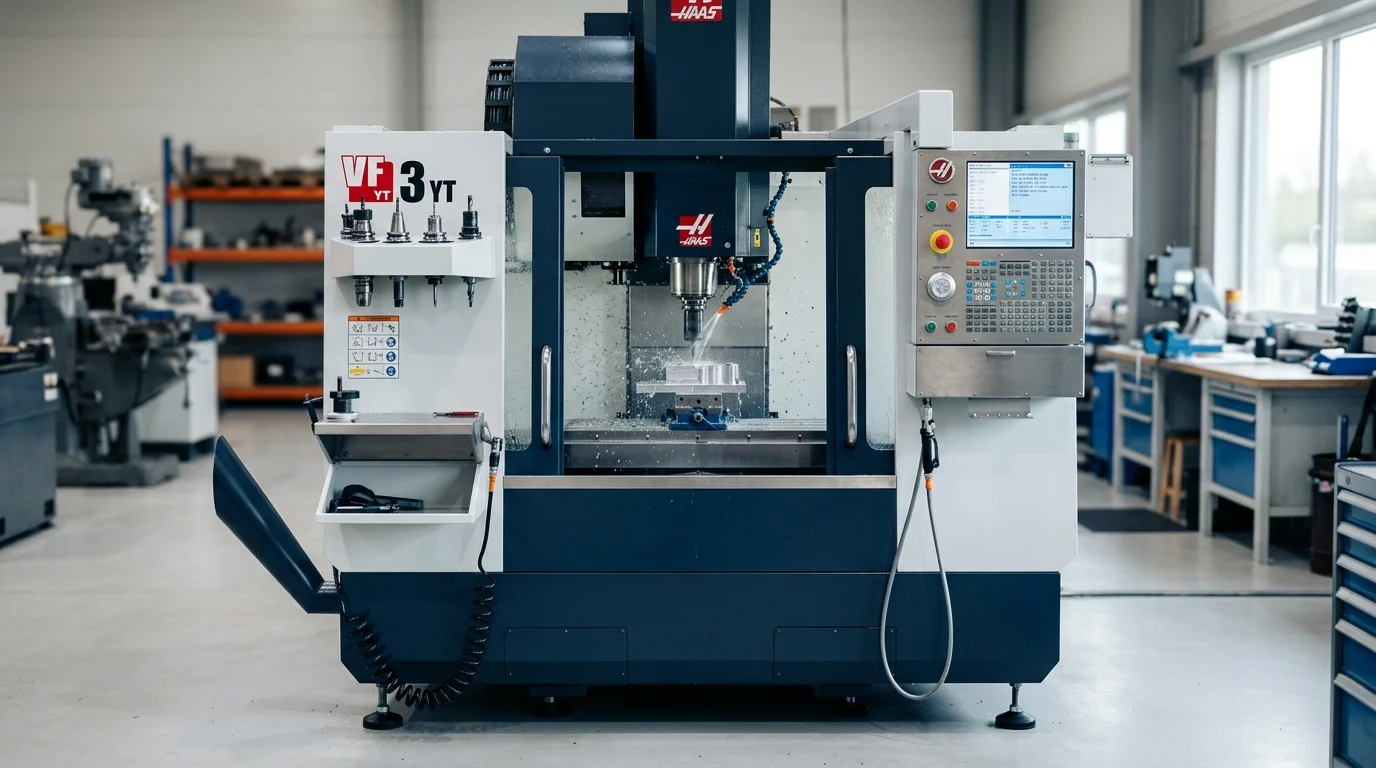
Choosing a CNC machining center for precision parts starts with more than spindle speed or travel range. The machine’s structure, thermal behavior, control system, and rigidity all affect whether tight tolerances, repeatability, and surface finish can be maintained in real production. This article explains how to match machine capabilities to part requirements, materials, and process demands, while also weighing business factors such as uptime, scrap risk, and future capacity. By the end, readers will have a practical framework for evaluating machining centers with the accuracy standards and operating conditions that precision manufacturing requires.
Why the right CNC machining center determines precision
Procuring a CNC machining center for precision manufacturing requires rigorous alignment between a facility’s engineering specifications and the equipment’s exact capabilities. In sectors such as aerospace, medical device manufacturing, and high-performance automotive, the machining center serves as the foundational variable in the production equation. Selecting the correct architecture dictates not only the fundamental geometric accuracy of the finished parts but also the thermal stability and long-term repeatability of the manufacturing process.
Define precision part requirements
Establishing precise part requirements is the mandatory first step before evaluating any machine tool. Engineers must analyze the expected Geometric Dimensioning and Tolerancing (GD&T) callouts, particularly true position, flatness, and cylindricity. For example, producing hydraulic valve spools or aerospace turbine components often requires maintaining IT5 to IT7 tolerance grades, which translates to positional accuracies of ±0.002 mm (2 microns) or better. Additionally, material hardness—such as machining Inconel 718 at 40-45 HRC—dictates the spindle torque and structural rigidity needed to prevent tool deflection.
Understand business risks of poor machine selection
Deploying an inadequate CNC machining center introduces severe operational and financial risks. When a machine lacks the necessary dynamic stiffness or thermal compensation, manufacturers face escalating scrap rates. In high-value alloy processing, scrap rates exceeding 3% to 5% can entirely erase profit margins. Furthermore, excessive vibration from a structurally deficient machine accelerates tool wear, potentially increasing consumable tooling costs by 20% to 30% annually while simultaneously degrading surface finish and causing unpredictable machine downtime.
Key CNC machining center specifications for precision parts
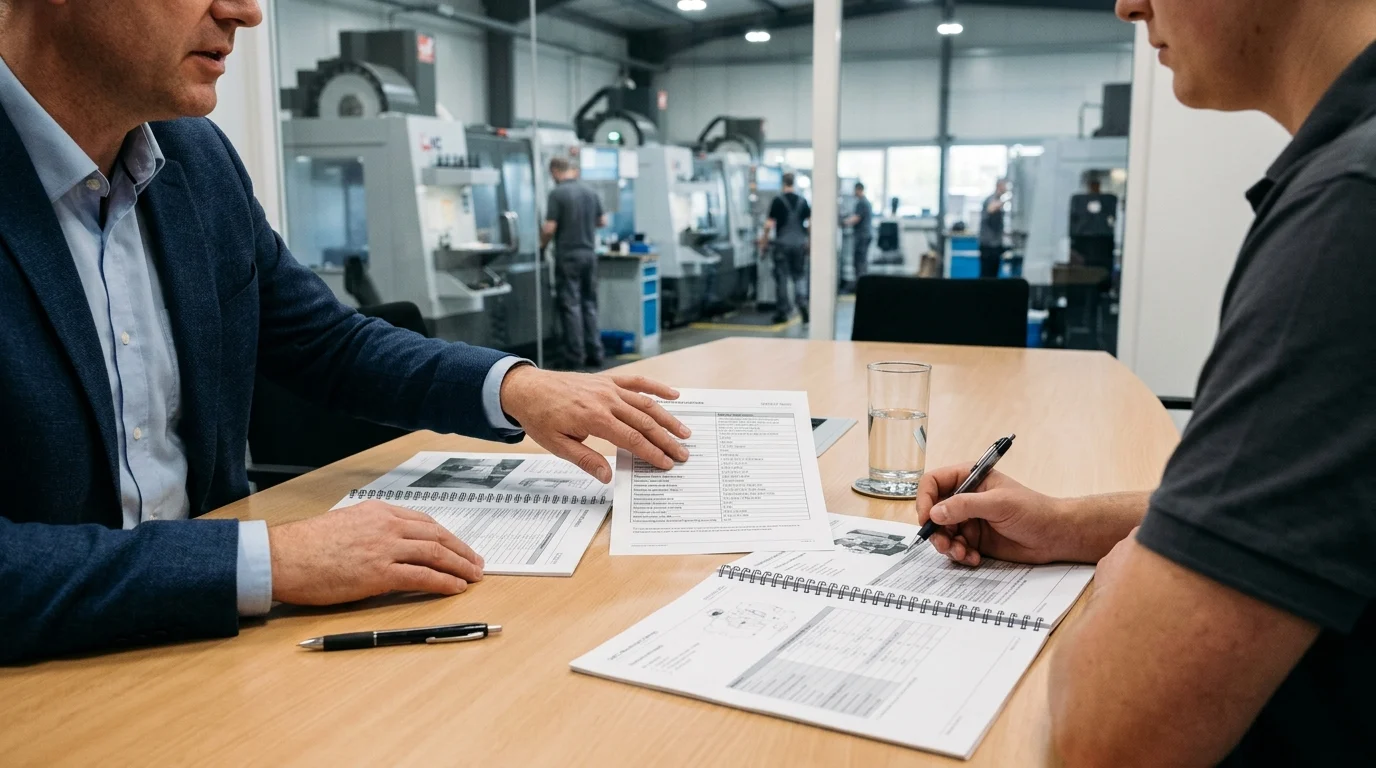
Translating precision requirements into machine specifications requires evaluating the core sub-assemblies of the CNC machining center. Every mechanical and electronic component must operate in unison to maintain micron-level accuracy under heavy cutting loads.
Match tolerance, spindle, and axis requirements
The correlation between tolerance requirements and machine kinematics is absolute. Spindle runout must be scrutinized; micro-machining applications demand runout of less than 1 micron at the tool tip to prevent premature micro-tool breakage. Spindle speed and torque must match the material: aluminum hogging benefits from 20,000+ RPM direct-drive spindles, whereas titanium requires high-torque, geared or heavy-duty inline spindles peaking around 6,000 to 8,000 RPM. Axis configuration also plays a role, as full simultaneous 5-axis machining reduces the stacking errors inherent in multiple setups on a traditional 3-axis machine.
Evaluate machine structure, control, tooling, and probing
Machine structure determines vibration damping and thermal stability. High-precision centers frequently utilize polymer concrete or heavily ribbed Meehanite cast iron bases, which offer superior vibration damping compared to standard welded steel. On the control side, advanced CNC processors must feature high look-ahead block processing—often exceeding 1,000 blocks—to execute smooth 3D toolpaths without data starvation. Furthermore, integrating in-machine probing systems is critical for automated zero-point positioning and in-process tool wear compensation, keeping dimensions within a strict 5-micron control limit.
Compare vertical and horizontal machining centers
The choice between Vertical Machining Centers (VMC) and Horizontal Machining Centers (HMC) fundamentally alters production flow and part handling.
| Feature | Vertical Machining Center (VMC) | Horizontal Machining Center (HMC) |
|---|---|---|
| Spindle Orientation | Vertical (Z-axis) | Horizontal (Z-axis) |
| Chip Evacuation | Poor to Moderate (gravity works against deep pockets) | Excellent (chips fall away naturally) |
| Spindle Utilization | Typically 40% – 60% | Typically 75% – 85% (due to standard dual-pallet systems) |
| Initial Capital Cost | Lower ($60,000 – $150,000 average) | Higher ($250,000 – $500,000+ average) |
| Best Use Case | Single-sided parts, heavy plates, mold making | High-volume production, multi-sided complex prismatic parts |
How to assess process capability and quality assurance
Theoretical specifications published in a brochure must be validated through empirical testing. Quality assurance protocols dictate that a CNC machining center must prove its capability to hold tolerances reliably over extended production runs.
Verify capability with tests, samples, and metrics
Procurement teams must demand physical validation of a machine’s capability before final acceptance. This is typically executed by cutting standard test geometries, such as the NAS 979 circle-diamond-square test part, to measure interpolation accuracy and axis reversal spikes. Statistically, the machine should demonstrate a Process Capability Index (Cpk) and Process Performance Index (Ppk) that align with industry requirements. While a Cpk of 1.33 (equivalent to 4 sigma) is standard for general precision machining, critical aerospace and medical components frequently mandate a minimum Cpk of 1.67 (5 sigma) during runoff testing.
Review materials, surface finish, traceability, and calibration
Quality assurance also extends to surface finish capabilities and machine calibration standards. A high-precision CNC machining center should be capable of achieving a surface roughness (Ra) of 0.4 µm (16 µin) or better in typical steels, eliminating the need for secondary grinding or polishing operations. To guarantee long-term traceability and accuracy, the machine must be calibrated using laser interferometry and ballbar testing in accordance with ISO 230-2 standards. This ensures volumetric accuracy and verifies that pitch, yaw, and roll errors are compensated for within the CNC control’s pitch error compensation tables.
Total cost, sourcing, and service considerations
Evaluating a CNC machining center strictly on its initial purchase price obscures the true financial impact of the asset. A comprehensive Total Cost of Ownership (TCO) model must incorporate sourcing channels, operational expenditures, and lifecycle maintenance.
Compare capital, tooling, maintenance, and operating costs
Capital expenditure (CapEx) for precision CNC machines varies widely, ranging from $80,000 for an entry-level 3-axis VMC to well over $600,000 for a premium 5-axis trunnion machine with automation. However, buyers must budget an additional 15% to 20% of the machine’s base price for essential accessories, including high-pressure coolant systems, tool holders, and automated workholding. Operating expenses (OpEx) must also be calculated, factoring in power consumption, compressed air usage, and preventative maintenance, which historically averages 2% to 5% of the initial machine value annually.
Assess supplier support, installation, and training
The reliability of the supplier’s service infrastructure is just as critical as the machine’s mechanical design. Precision manufacturers must evaluate the Service Level Agreement (SLA) offered by the vendor. Key metrics include guaranteed technician response times (ideally under 24 hours) and local spare parts availability. For example, a catastrophic spindle failure can cost thousands of dollars a day in lost production; ensuring the supplier stocks replacement spindles locally for 48-hour delivery is a mandatory risk mitigation strategy. Furthermore, the purchase should include 3 to 5 days of intensive on-site applications training to ensure operators can maximize the machine’s control features.
Compare OEM, distributor, and reseller channels
Sourcing channels heavily influence support, pricing, and warranty terms. Buyers must weigh the trade-offs between direct OEM purchases, authorized distributors, and the secondary market.
| Sourcing Channel | Lead Time | Warranty & Support | Cost Profile |
|---|---|---|---|
| OEM Direct | 3 to 6 months (often built-to-order) | Comprehensive 12-24 month factory warranty, direct engineering support | Highest initial CapEx, lowest risk |
| Authorized Distributor | 1 to 4 weeks (from local stock) | Standard factory warranty, localized technician support | Moderate to High CapEx, strong regional support |
| Used Equipment Reseller | Immediate | Typically sold “As-Is” or with a limited 30-day guarantee | Lowest CapEx (up to 50% discount), highest maintenance risk |
How to make the final CNC machining center decision
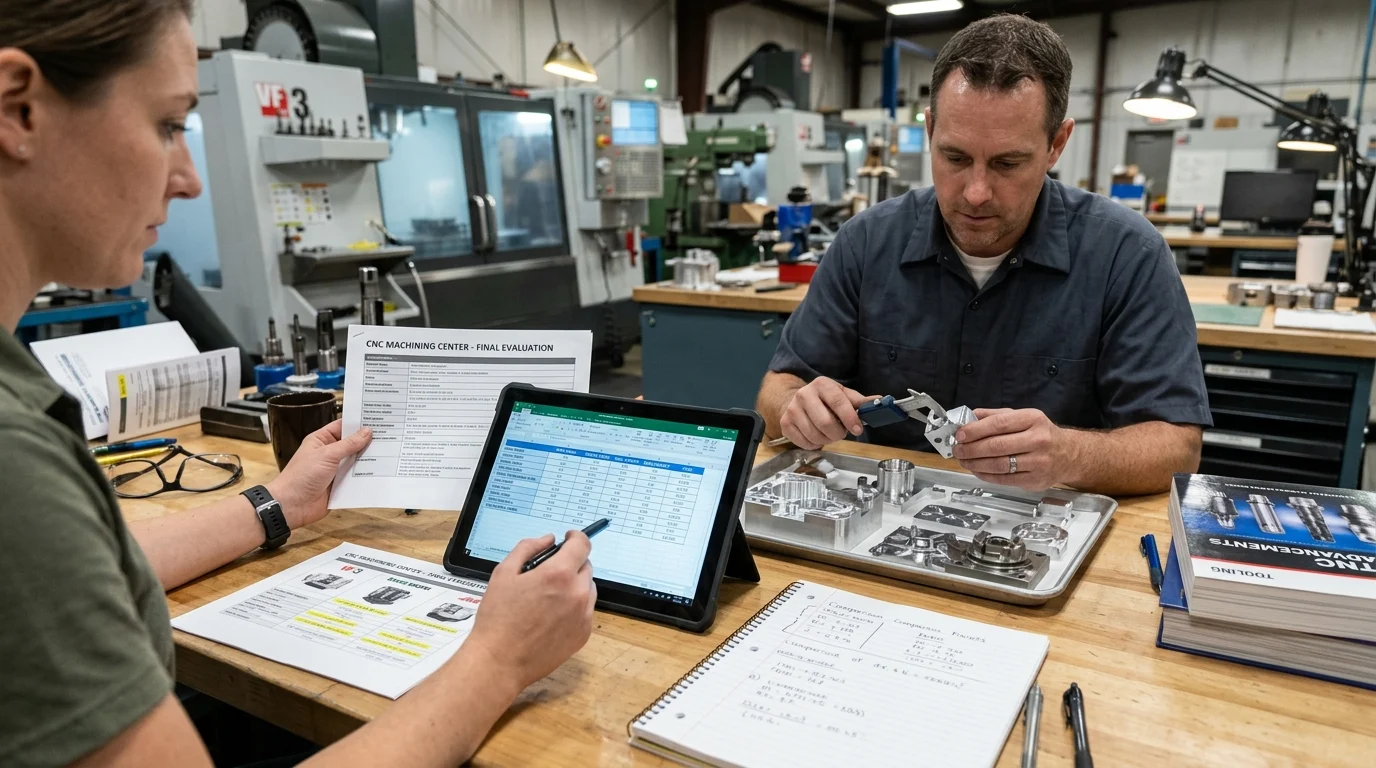
Finalizing the procurement of a CNC machining center requires synthesizing technical data, financial modeling, and operational strategy into a cohesive decision matrix. This process ensures the chosen asset aligns with both current production demands and future capacity scaling.
Follow a structured shortlist and evaluation process
To navigate the crowded machine tool market, engineers should utilize a weighted evaluation matrix to score shortlisted candidates. A standard matrix might allocate 40% of the total score to technical capabilities (such as volumetric accuracy, spindle torque, and thermal stability), 30% to the Total Cost of Ownership (including initial price, tooling, and energy consumption), and 30% to vendor support and service SLAs. This structured approach removes brand bias and forces a data-driven comparison, ensuring that the selected machine demonstrably meets the required ±0.002 mm precision thresholds while fitting the capital budget.
Balance precision capability, cost, and long-term support
Ultimately, the final decision must balance raw precision capability with long-term financial viability. Over-specifying a machine can trap unnecessary capital, while under-specifying guarantees missed tolerances and lost contracts. The optimal CNC machining center will empower a facility to achieve an Overall Equipment Effectiveness (OEE) of 85% or higher. By rigorously verifying specifications, demanding physical test cuts, and securing ironclad support agreements, manufacturers can confidently deploy a machining center that delivers uncompromising precision over a 10 to 15-year operational lifecycle.
Key Takeaways
- The most important conclusions and rationale for CNC machining center
- Specs, compliance, and risk checks worth validating before you commit
- Practical next steps and caveats readers can apply immediately
Frequently Asked Questions
What should I check first when choosing a CNC machining center for precision parts?
Start with part tolerances, material, size, and batch volume. Match these to spindle speed/torque, machine rigidity, travel, and axis configuration before comparing brands or price.
When is a 5-axis machining center the better choice?
Choose 5-axis when parts need complex angles, fewer setups, and tighter positional accuracy. It is especially useful for aerospace, medical, and mold components with multi-face features.
Should I choose a vertical or horizontal machining center?
Use a VMC for lower-cost, single-side, or mold work. Choose an HMC for multi-sided prismatic parts, better chip evacuation, and higher output in repeat production.
How can I verify a machine will hold precision in real production?
Ask for sample cutting, accuracy reports, spindle runout data, repeatability results, and probing demonstrations. A practical trial on your part material is the safest validation step.
Why consider OTURN Machinery for a CNC machining center?
OTURN offers vertical, horizontal, gantry, and 5-axis machining centers with support for precision metalworking, special solutions, and overseas service aimed at faster ROI and reliable production.
Post time: May-18-2026