


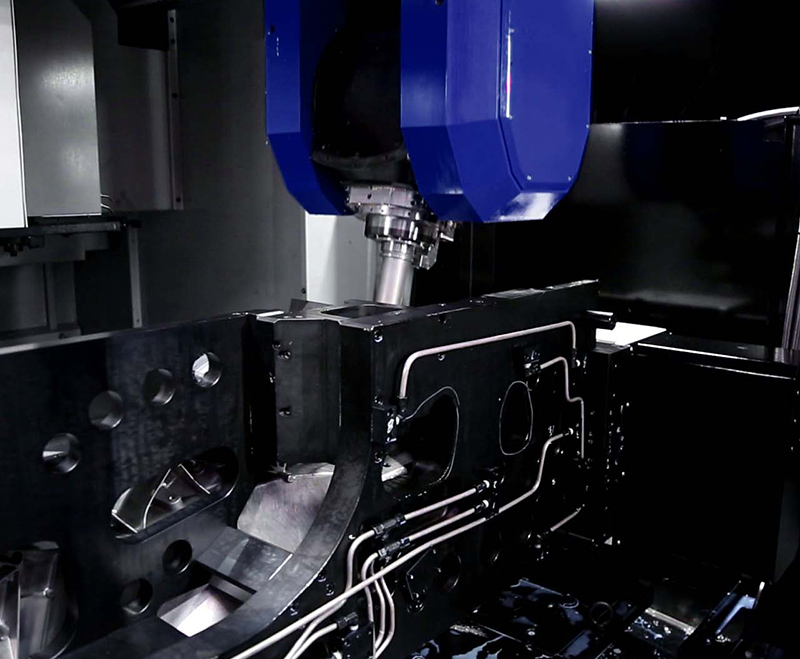
Selecting the optimal CNC machining center is crucial for your manufacturing success. You achieve high precision and produce complex components with excellent surface finishes. These versatile machines handle diverse materials, from plastics to metals, meeting stringent quality standards for your parts.
Key Takeaways
- Vertical Machining Centers (VMCs) are good for small jobs and making prototypes. They cost less money to buy and are easier to use.
- Horizontal Machining Centers (HMCs) are best for making many parts quickly. They can work on many sides of a part at once and clear metal chips better.
- Choose your machine based on what you need to make. Think about how complex your parts are, how many you need, and your budget.
Vertical vs. Horizontal CNC Machining Center: Core Differences
Spindle Orientation and Its Impact
The primary distinction between vertical and horizontal CNC machining centers lies in their spindle orientation. This fundamental difference dictates how your machine approaches the workpiece. It also impacts various aspects of your machining operations. Understanding this core concept helps you choose the right machine for your specific production needs.
Understanding Vertical Machining Centers
Vertical machining centers (VMCs) feature a vertically oriented spindle. The cutting tool extends downwards from the spindle, approaching the workpiece from above. This design offers excellent visibility of the machining process. You often find VMCs in environments requiring versatility and ease of setup. They are particularly well-suited for:
· Small batch production
· 3-axis work
· Molds and dies, such as injection molds or stamping dies
· Flat parts
· Prototyping and smaller production runs are ideal for high-mix, low-volume environments
· Parts machined primarily on one face, including 2.5D or 3D surfacing
· Large plates or blocks
· Low-to-medium volume production runs
· Job shops need versatility without high capital outlay
· Environments where simplicity, ease of use, and cost-effectiveness are paramount. A vertical CNC machining center provides a straightforward solution for many common tasks.
![cnc-vertical-machine-center2[1]](https://www.oturnmachinery.com/uploads/cnc-vertical-machine-center21.jpg)
Understanding Horizontal Machining Centers
Horizontal machining centers (HMCs) position their spindle horizontally. The cutting tool extends sideways, engaging the workpiece from the side. This orientation offers distinct advantages, especially for complex parts and high-volume production. HMCs typically feature pallet changers. This allows you to load new workpieces while the machine processes another. This design significantly enhances efficiency and throughput.
![cnc-horizontal-machine-center2[1]](https://www.oturnmachinery.com/uploads/cnc-horizontal-machine-center21.jpg)
Performance and Productivity of CNC Machining Centers
You need to understand how different machining centers perform to maximize your production. Each machine offers distinct advantages in efficiency and output.
Chip Evacuation Efficiency
Chip evacuation significantly impacts your machining process. In horizontal CNC machines, chips fall away from the workpiece due to gravity. This keeps the cutting area clear. You get smoother surface finishes and longer tool life. Conversely, vertical CNC machines often accumulate chips on the part. This requires you to stop the machine to clear them. This slows down your work and can affect part quality. Horizontal machines generally need less maintenance for chip clearing.
Multi-Sided Machining Capability
Horizontal machining centers excel at multi-sided machining. They often feature a 4th axis, which greatly enhances their capabilities. Many models include a tilting spindle head (B-axis) and a horizontal-axis rotary table (A-axis). These are crucial for 5-axis machining of complex components. A dual-axis rotary table allows for 3+2 machining and simultaneous 5-axis operations. This reduces setup times, improves part accuracy, and shortens cycle times for intricate parts.
Rigidity and Accuracy Comparison
Rigidity is vital for precision and accuracy. Horizontal machining centers often feature robust designs. Their structure supports heavy-duty cutting and minimizes vibration. This design ensures stable operations, even during demanding tasks. You achieve high precision and consistent part quality with a rigid machine.
Productivity for Long Production Runs
For long production runs, horizontal machining centers offer superior productivity. One horizontal machining center can achieve the same output as three vertical machines. You see spindle utilization rates of 85% on HMCs, compared to 25% on VMCs. HMCs produce more than three times as many parts. Their pallet changers allow you to set up a new workpiece while another is being machined. This makes HMCs 25-30% more productive. They are faster due to minimized fixturing and quick pallet swaps. This makes them ideal for high-volume, repetitive production and multi-faced machining.
Operational Aspects of Each CNC Machining Center
Workpiece Access and Setup
Workpiece access and setup efficiency directly impact your production schedule. Vertical machining centers (VMCs) offer straightforward loading. You place the workpiece on a flat table beneath the spindle. This design provides easy visual access to both the tool and the workpiece. Horizontal machining centers (HMCs) often feature rotary pallets. These allow for multi-part fixturing. Setting up an HMC is more complex. It requires skilled operators and detailed upfront planning. Programming is also more involved.
Here is a comparison of workpiece access and setup:
| Feature/Aspect | Vertical Machining Centers (VMCs) | Horizontal Machining Centers (HMCs) |
|---|---|---|
| Workpiece Access | Simple loading; workpiece placed on a flat table below the spindle. | Often equipped with rotary pallets for multi-part fixturing. |
| Visual Access | Easy visual access to the tool and workpiece. | Less direct visual access due to the enclosed nature. |
| Setup Complexity | Simpler setup and programming; it doesn’t require extensive effort. | Complex setup, requiring more skilled operators and better upfront planning. Programming is more complicated. |
| Multi-sided Ops | Requires changing setups for complex parts, leading to lower productivity. | Ideal for multi-sided operations in a single setup; minimizes fixturing. |
| Productivity (Setup) | Frequent part handling leads to idle time. | 25-30% more productive for complex work due to a single setup, less downtime. |
Machine Footprint and Space Utilization
Consider the physical space each machine requires in your facility. Vertical machining centers generally have a smaller footprint. They are often taller but occupy less floor space. This makes them suitable for shops with limited room. Horizontal machining centers typically require more floor space. This is especially true when they include pallet changers or automated systems. You must account for the machine’s overall dimensions and the space needed for material handling.
Tool Change and Pallet Changer Integration
Efficient tool changes and workpiece handling boost your productivity. Both VMCs and HMCs feature automatic tool changers. These systems quickly swap cutting tools. Horizontal machining centers often integrate pallet changers. This allows you to load a new workpiece onto one pallet while the machine processes a part on another. This continuous operation minimizes downtime. It significantly increases the throughput of your CNC machining center.
Cost and Investment for a CNC Machining Center
Initial Purchase Price Comparison
You will find a significant difference in the initial purchase price. Vertical machining centers (VMCs) typically cost less. They offer a more accessible entry point for many businesses. Horizontal machining centers (HMCs) represent a larger upfront investment. Their complex design and advanced features contribute to this higher cost. Consider your budget and production goals when evaluating these initial expenses.
Tooling and Fixturing Costs
Tooling and fixturing costs also vary. VMCs often use simpler fixtures. You might need more fixtures if you perform multiple setups for complex parts. HMCs can utilize more elaborate, multi-sided fixtures. These fixtures allow you to machine several faces in one setup. While these fixtures can be more expensive initially, they reduce overall setup time. This efficiency can save you money in the long run.
Operating and Maintenance Expenses
Operating and maintenance expenses impact your long-term costs. HMCs often have higher energy consumption due to their larger size and more powerful components. However, their higher productivity can lower the energy cost per part. VMCs generally consume less power. Maintenance for an HMC can be more complex. This requires specialized technicians. A vertical CNC machining center typically has simpler maintenance needs. You should factor in labor costs for operation and maintenance for both machine types.
Advantages and Disadvantages of Each CNC Machining Center
Benefits and Drawbacks of Vertical Machining Centers
You will find that vertical machining centers (VMCs) offer several clear advantages. They typically have a lower initial cost, making them an accessible option for your business. Setting up and programming a VMC is often simpler. You also get excellent visibility of the machining process. VMCs are ideal for small batch production. For example, flexible centers like the BTM FL series provide maximum performance with minimum investment for medium and small batches. You gain a wide range of machining capabilities and reduce production costs. VMCs also offer high security and reliability. They can free up production areas by reducing equipment units. However, VMCs have some drawbacks. Chip evacuation is less efficient, as chips can accumulate on the workpiece. You often need multiple setups for multi-sided parts, which lowers productivity.
Benefits and Drawbacks of Horizontal Machining Centers
Horizontal machining centers (HMCs) bring significant benefits, especially for high-volume work. Their horizontal design ensures superior chip evacuation. Chips fall away naturally, keeping your cutting area clear. HMCs excel at multi-sided machining in a single setup. This saves you time and improves accuracy. For long production runs, HMCs offer exceptional productivity. One HMC can match the output of three VMCs, with spindle utilization reaching 85%. You benefit from a robust design and enhanced stability during machining. This leads to high material throughput. HMCs offer high flexibility for various production needs. They provide durability and longevity, making them a smart investment. However, HMCs come with a higher initial purchase price. Their setup and programming are more complex. They also require a larger footprint in your facility.
Ideal Applications for Each CNC Machining Center
You must align your machine choice with your specific manufacturing goals. Each type of machining center excels in different production environments. Understanding these ideal applications helps you make an informed decision.
Best Fit for Vertical Machining Centers
Vertical machining centers (VMCs) are highly versatile. You find them in many different industries. They are an excellent choice for shops needing flexibility. You can use VMCs for prototyping. They also suit small to medium batch production. When you machine parts primarily on one face, a VMC is often the most cost-effective solution.
Consider VMCs for:
- Prototyping and Toolroom Work: You can quickly set up and machine one-off parts or small batches.
- Mold and Die Making: VMCs excel at creating intricate molds, dies, and fixtures.
- Flat Parts and Plates: You easily machine large, flat components.
- Job Shops: Their versatility allows you to handle a wide range of customer orders.
- Industries requiring diverse capabilities: Companies like OTTURN, which produce both horizontal and vertical machining centers, provide equipment for sectors such as oil and gas, power, chemical, extraction, and processing industries. These industries often require the adaptability that VMCs offer for various components.
You benefit from the lower initial investment and simpler operation of a VMC. This makes them a popular choice for businesses starting or expanding their machining capabilities.
Best Fit for Horizontal Machining Centers
Horizontal machining centers (HMCs) are powerhouses for high-volume production. They shine when you need to machine complex parts with multiple features. Their design allows for continuous operation and superior chip management. This makes them ideal for demanding manufacturing environments.
You should consider HMCs for:
- High-Volume Production: HMCs offer unmatched productivity for long runs of identical parts.
- Complex Parts with Multiple Faces: You can machine several sides of a part in a single setup. This reduces errors and improves efficiency.
- Automated Production Lines: HMCs integrate well into automated systems. Their pallet changers support continuous operation.
- Heavy Material Removal: Their robust construction handles aggressive cutting.
- Industries with stringent precision requirements: For example, a turning-milling machining center is specifically designed for complex precision parts. You find these machines utilized in the aerospace industry, medicine, and semiconductor manufacturing. These sectors demand the highest levels of accuracy and multi-axis capability that HMCs provide.
HMCs represent a significant investment. However, their ability to produce parts faster and with greater consistency often leads to a lower cost per part in high-volume scenarios.
Key Decision Factors for Your CNC Machining Center
Choosing the right machining center significantly impacts your operational efficiency and profitability. You must carefully evaluate several factors before making your investment. These considerations help you align your machine choice with your specific manufacturing goals.
Part Complexity and Geometry
The complexity and geometry of your parts heavily influence your machine selection. If you primarily produce flat parts or components requiring machining on only one or two faces, a vertical machining center (VMC) often provides the most straightforward solution. You gain excellent visibility and easy access for these types of jobs. However, when your parts feature intricate designs, require machining on multiple sides, or demand complex contours, a horizontal machining center (HMC) becomes a more compelling choice. HMCs excel at multi-sided machining in a single setup. This capability reduces the need for frequent re-fixturing. It also minimizes potential errors from multiple setups.
Production Volume and Throughput
Your required production volume and throughput directly impact the economic viability of each machine type. For lower volume production, prototyping, or jobs requiring frequent setup changes, vertical machining centers (VMCs) are often preferred. Their simpler fixturing and accessibility make them adaptable for varied, smaller batches. Conversely, horizontal machining centers (HMCs) are generally favored for higher production volumes. They machine multiple sides of a part in a single setup. This reduces non-cutting time and significantly increases throughput. This efficiency becomes more pronounced as your batch sizes increase. HMCs become a more cost-effective investment for continuous or large-scale production runs. You achieve higher spindle utilization and faster cycle times with an HMC in high-volume scenarios.
Budget Constraints and Cost-Effectiveness
Your budget plays a critical role in your decision. Vertical machining centers typically have a lower initial purchase price. This makes them an attractive option if you have tighter budget constraints or are just starting your operations. However, you must consider the total cost of ownership. While HMCs demand a higher upfront investment, their superior productivity for complex, high-volume work can lead to a lower cost per part over time. You also need to factor in tooling and fixturing costs. VMCs often use simpler, less expensive fixtures, but you might need more of them for multi-sided parts. HMCs utilize more complex, multi-sided fixtures. These fixtures can be more expensive initially but reduce overall setup time and improve efficiency.
Operator Skill and Training Requirements
The skill level of your operators and your training capabilities are also important considerations. Vertical machining centers are generally easier to operate and program. Their direct visibility of the workpiece simplifies setup and monitoring. This makes them suitable for shops with less experienced staff or those looking to minimize training time. Horizontal machining centers, with their complex multi-axis capabilities and pallet changers, require more specialized skills. You need operators and programmers with advanced knowledge for efficient setup, programming, and troubleshooting. Investing in an HMC often means investing more in operator training. This ensures you maximize the machine’s advanced capabilities and maintain optimal performance.
Your manufacturing goals dictate the best machine. VMCs suit versatility and prototyping. HMCs excel in high-volume, complex production. Align your choice with part complexity, production volume, budget, and operator skill. Carefully evaluate these factors to select your ideal machining solution.
FAQ
Which CNC machining center is better for a limited budget?
Choose a Vertical Machining Center (VMC) for a limited budget. They have a lower initial purchase price. This makes them more accessible for your investment.
Can a Vertical Machining Center handle high-volume production efficiently?
VMCs are less efficient for high-volume production. They often require multiple setups. This reduces throughput compared to Horizontal Machining Centers.
What is the main advantage of a Horizontal Machining Center for complex parts?
HMCs excel at machining complex parts. They perform multi-sided operations in a single setup. This saves you time and improves accuracy.
Post time: Jun-25-2026