


You need to understand your specific machining requirements. Identify the critical factors influencing your purchase decision for a new CNC machining center. Navigate essential steps to make an informed selection. This ensures you choose the best model for your operations.
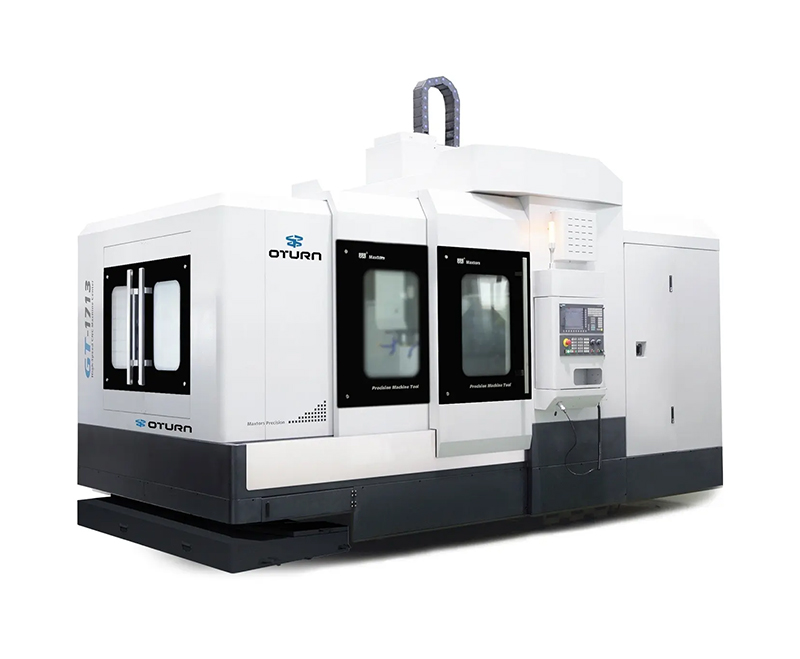
Key Takeaways
- First, know what you need to make. Think about the materials you will use and the shapes you want to create.
- Next, look at the machine’s parts. Check the spindle speed, how many directions it can move, and its computer system.
- Finally, consider the total cost. This includes the price, how much it costs to run, and the company’s support after you buy it.
Defining Your Needs for a CNC Machining Center
Before you invest in a new machine, clearly define your operational needs. This crucial first step ensures you select a model that perfectly aligns with your production goals.
Assess Workpiece Characteristics and Material Compatibility
You must first understand the materials you plan to machine. Different materials require specific machine capabilities and tooling. Consider the size, weight, and complexity of your typical workpieces. Your CNC machining center needs to handle these physical attributes effectively.
CNC machining centers process a wide range of materials. These include:
- Aluminum and other non-ferrous metals
- Hard materials like iron, stainless steel, and titanium
- Steel alloys and special alloys
- Graphite, ceramics, and sintered materials
- Soft metals such as bronze, magnesium (Mg) alloys, zinc (Zn) alloys, lead (Pb), and brass
- Compounds
- Non-ferrous abrasive materials and non-metallic materials
- Abrasive alloys of Silicon (Si) and Aluminum (Al)
Knowing your primary materials helps you choose a machine with the right power, rigidity, and cooling systems.
Identify Required Machining Operations and Precision
Next, identify the specific machining operations you will perform. Your chosen machine must execute these tasks efficiently. Common operations include:
- Turning: This involves rotating the workpiece against a tool. It removes material and shapes the part. You use turning for reshaping and resizing.
- Milling: A cutter or grinder removes material from a fixed workpiece. The tool moves to create the desired form.
- Drilling: A rotating cutter with precise edges creates detailed holes in metal.
- Boring: This process enlarges an existing hole in a material. It focuses on the internal diameter and surface rather than depth.
You also need to determine your required precision levels. Modern CNC machining centers achieve very high precision. For example, medical applications often demand tolerances within microns. This exactness is vital for producing safe and reliable medical devices. It also creates components with tight tolerances, complex geometries, and consistent quality for both custom and high-volume production. Define your tolerance requirements clearly to ensure the machine meets your quality standards.
Understand Different Types of CNC Machining Centers
You should familiarize yourself with the various types of CNC machining centers available. Each type offers distinct advantages for specific applications. For instance, vertical machining centers (VMCs) excel at flat work and mold making. Horizontal machining centers (HMCs) are often better for high-volume production of complex parts. Gantry-style machines handle very large workpieces. Understanding these fundamental differences helps you narrow down your options. This knowledge ensures you select a machine designed for your primary tasks.
Evaluating Technical Specifications of a CNC Machining Center
You must carefully examine the technical specifications of any CNC machining center you consider. These details directly impact the machine’s performance, capabilities, and suitability for your specific production needs.
Spindle Performance and Tooling Options
The spindle is the heart of your CNC machining center. Its performance dictates cutting speed, material removal rates, and surface finish quality. You need to consider several key factors:
- Spindle Speed (RPM): Higher RPMs allow for faster material removal and better finishes, especially with smaller tools or softer materials.
- Spindle Power and Torque: These determine the machine’s ability to cut through tough materials. High power is essential for heavy-duty cutting, while high torque is vital for larger tools and deeper cuts.
- Tool Interface: Common interfaces include CAT, BT, HSK, and Capto. Your choice depends on the tools you use and the rigidity required for your operations.
- Automatic Tool Changer (ATC): An ATC significantly boosts productivity by quickly swapping tools without manual intervention. Evaluate the tool capacity and change time to match your production volume and complexity.
Axis Configuration and Travel Capacity
The number of axes and their travel capacity define the complexity of parts you can machine and the size of your workpieces.
- Axis Configuration: You will find machines with various axis configurations. Standard options include 3-axis, 4-axis, and 5-axis CNC machines. Some specialized gantry-type machines even offer up to 6 axes for highly complex operations. Five-axis grinding machines and 5-axis machining centers provide exceptional versatility.
- Travel Capacity: This refers to the maximum distance the machine can move along each axis (X, Y, Z). It directly limits the physical size of the parts you can process.
The number and type of axes on a CNC machining center directly determine its capabilities. A 3-axis machine, with movement along X, Y, and Z, is limited to machining parts from a single orientation. Adding a 4th axis, typically a rotary axis, allows for machining multiple sides of a part without re-fixturing. This increases efficiency and part complexity. A 5-axis machine, with two rotary axes, provides even greater flexibility. It enables the machining of highly complex geometries and undercuts in a single setup, significantly reducing setup time and improving accuracy.
Consider this table to understand the impact of axis configuration:
| Axis Configuration | Key Capabilities | Limitations | Benefits |
|---|---|---|---|
| 3-Axis | Basic milling, drilling, and tapping on flat surfaces. | Requires multiple setups for multi-sided parts; limited part complexity. | Cost-effective for simple parts; widely available. |
| 4-Axis | Machining multiple sides of a part; cylindrical interpolation. | Still requires some re-fixturing for complex undercuts. | Increased efficiency; improved accuracy for multi-sided parts. |
| 5-Axis | Machining complex geometries, undercuts, and impellers in a single setup. | Higher cost; more complex programming. | Maximum flexibility; reduced setup time; superior surface finish. |
Control System and Software Integration
The control system acts as the brain of your CNC machining center. It translates your design into machine movements.
- Control System Type: Leading control systems include Fanuc 0i-M (often standard), Heidenhain, Siemens, Mitsubishi, and Fagor (often optional). You should choose a system that your operators are familiar with or one that offers intuitive programming. For instance, Yamasaki Giken’s YMZ 850 CNC Machining Center uses FANUC control for its vertical CNC system, emphasizing ease of use and maintenance.
- Software Integration (CAD/CAM): Seamless integration with CAD (Computer-Aided Design) and CAM (Computer-Aided Manufacturing) software is crucial for modern manufacturing. This integration offers significant advantages:
- It reduces delivery times, sometimes from 8-12 weeks to as little as two days.
- You can increase margins, allowing for investment in future innovations.
- It reduces reliance on highly skilled experts.
- It minimizes administrative burdens, letting you focus on core machining operations.
- It standardizes development procedures and enables hardware standardization in production.
- It provides transparent pricing and direct feedback on producibility and finishing options to customers.
- It eliminates the need for customers to submit extensive 2D technical drawings.
Advanced CAD/CAM integration offers best-in-class application programming capabilities. It supports web integration using the JT™ data format. NX Open API provides an open environment and strong CAD connection for programming and customization. You achieve end-to-end digitalization of processes. Synchronous modeling allows direct editing of component geometry regardless of the source CAD system, eliminating manual modification of original CAD designs. Feature-based machining automatically creates numerical control (NC) programs based on component model features. A machine knowledge editor (MKE) records rules and tools for automated NC programming.
Machine Rigidity and Accuracy for a CNC Machining Center
Machine rigidity and accuracy are fundamental to producing high-quality parts consistently. A robust machine structure minimizes vibration and deflection during cutting.
- Construction Materials: Look for machines built with high-quality, stable materials like robust Meehanite cast iron. This material enhances stability and vibration resistance.
- Thermal Stability: Temperature fluctuations can affect accuracy. Features like forced cooling systems for the spindle minimize thermal displacement, maintaining precision.
- Absolute Coordinate Feedback System: This system provides precise positioning feedback, crucial for maintaining tight tolerances.
- Sources of Inaccuracy and Mitigation: You should understand potential sources of inaccuracy and how manufacturers address them:
- Material Constitutive Models: Experimental material testing data, used to define constant parameters in software libraries, do not cover every strain and temperature condition. This leads to approximations. The damage model for material rupture, based on plastic deformation accumulation and temperature-dependent strain at failure, also contributes to errors.
- Mesh Refinement: Errors can occur if elements deform excessively between iterations, causing simulations to stop. Temperature divergence or failure in contact regions, depending on element size, also causes errors. Mitigation involves changing mesh parameters like minimum element size and the mesh refinement factor. Software automatically re-meshes the workpiece to refine large and distorted areas and coarsen small, non-distorted areas, reducing calculation load.
- Simulation Geometry Simplification (2D vs. 3D): Using 2D geometry for simplification enables faster simulations. However, this restricts analysis to a single cutting action from one edge. This simplification neglects strain hardening effects on the machined surface after each pass and thermal effects from consecutive intermittent cuts. These omissions can lead to discrepancies in predicted cutting power and temperatures.
- Friction Modeling: The Coulomb friction model poorly represents friction at the tool-chip interface. This leads to friction stresses higher than the material’s shear yield strength and physically incorrect analyses.
Financial and Support Considerations for Your CNC Machining Center
You must look beyond the initial price tag when selecting a CNC machining center. Financial and support aspects significantly impact your long-term operational success.
Analyze Initial Purchase Price and Operating Costs
Consider the total cost of ownership. The initial purchase price is just one part. You must also account for installation, training, and setup services. Operating costs include energy consumption, tooling, and consumables. Evaluate these expenses to understand the true financial commitment.
Calculate Potential Return on Investment (ROI)
Calculating your potential ROI is crucial. Many factors influence this. Visible costs include the acquisition price, transportation, installation, training, and warranty. Hidden costs cover maintenance, potential downtime, repairs, labor, material waste, and tooling. You also need to consider process adjustments. Introducing new machines can temporarily impact productivity. Savings from improved cutting conditions and extended tool life also affect ROI. Unscheduled downtime from poor maintenance can quickly increase costs. High-performance machines often have lower maintenance needs. Finally, consider machine lifetime and decommissioning. A quality CNC machining center can extend component life and retain higher value.
Evaluate Supplier Reputation and After-Sales Support
Choose a supplier with a strong reputation. Look for certifications like ISO 9001:2015 and AS9100D. A good supplier offers consistency in price and adds value. They deliver products on time and introduce new services.
Understand Warranty and Maintenance Agreements for a CNC Machining Center
Thoroughly review warranty and maintenance agreements. A comprehensive warranty protects your investment against unexpected failures. Understand what the warranty covers and its duration. Maintenance agreements ensure your CNC machining center receives regular servicing. This prevents costly breakdowns and extends machine life. Clarify response times for service calls and parts availability.
Prioritize your specific needs. This guides your CNC machining center selection. Balance technical specifications with your budget and support requirements. Evaluate all factors carefully. Make a well-informed decision for your next CNC machining center investment. This ensures long-term success.
FAQ
What is the most important first step when buying a CNC machining center?
You must first define your specific machining needs. This includes workpiece characteristics, materials, and required operations.
How does axis configuration affect a CNC machining center’s capabilities?
More axes allow you to machine more complex parts. A 5-axis machine offers maximum flexibility for intricate geometries in one setup.
Why is calculating ROI important for a CNC machining center?
Calculating ROI helps you understand the total cost of ownership. It also shows the long-term financial benefits of your investment.
Post time: Jun-30-2026