


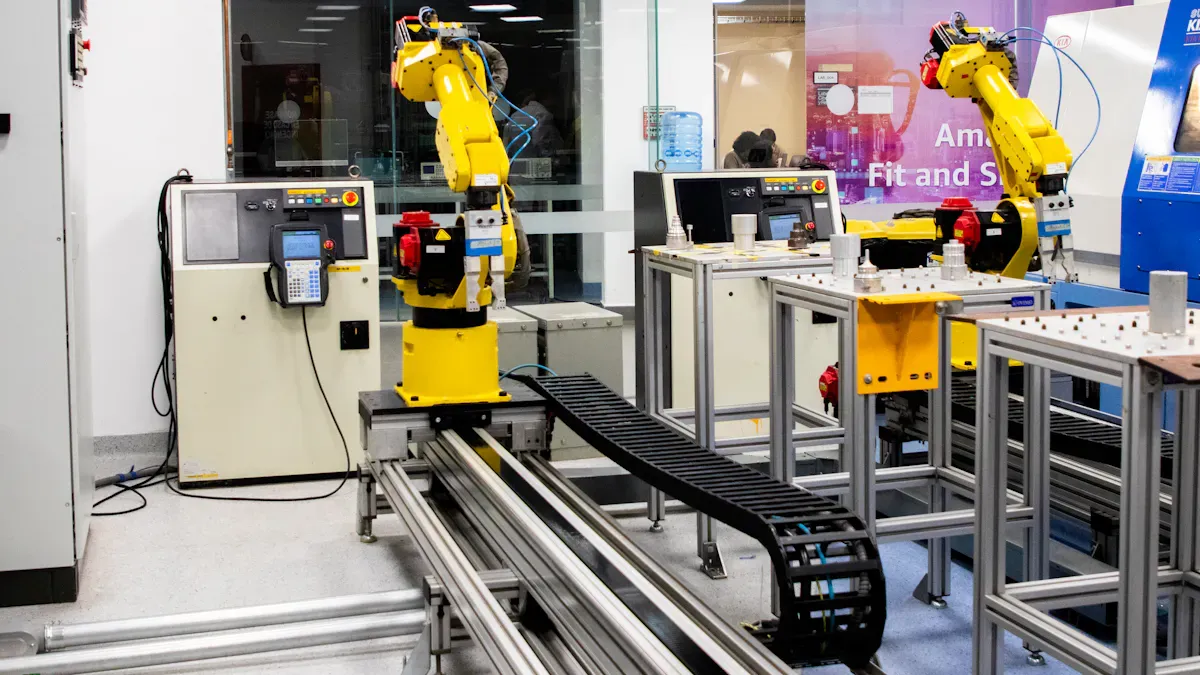
5-axis CNC machining centers revolutionize several industries by enhancing precision and efficiency. In the aerospace sector, manufacturers utilize 5-axis CNC machines for aerospace machining to create complex components, such as turbine blades. The medical field benefits from CNC turning centers, which allow for the production of intricate parts for surgical instruments. In automotive manufacturing, the demand for high-quality, precise components drives the adoption of CNC lathe machines. The energy sector leverages CNC gantry milling machines for large parts, creating efficient turbine components. Furthermore, defense applications require precision in manufacturing parts for military equipment, which is facilitated by advanced CNC machining centers. Lastly, tool manufacturing sees significant advantages from reduced setup times and improved accuracy, making 5-axis CNC machines essential for modern production.
The adoption of 5-axis machining is increasing due to the demand for complex shapes and smaller batch sizes.
Key Takeaways
- 5-axis CNC machining enhances precision and efficiency in industries like aerospace, medical, automotive, energy, defense, and tool manufacturing.
- This technology allows for the production of complex components in a single setup, reducing errors and improving surface finishes.
- Manufacturers benefit from faster production times and lower costs due to reduced setup requirements and scrap rates.
- The demand for customized and high-quality components drives the adoption of 5-axis CNC machining in various sectors.
- As industries evolve, the role of 5-axis CNC machining will expand, supporting innovation and meeting future market needs.
Aerospace
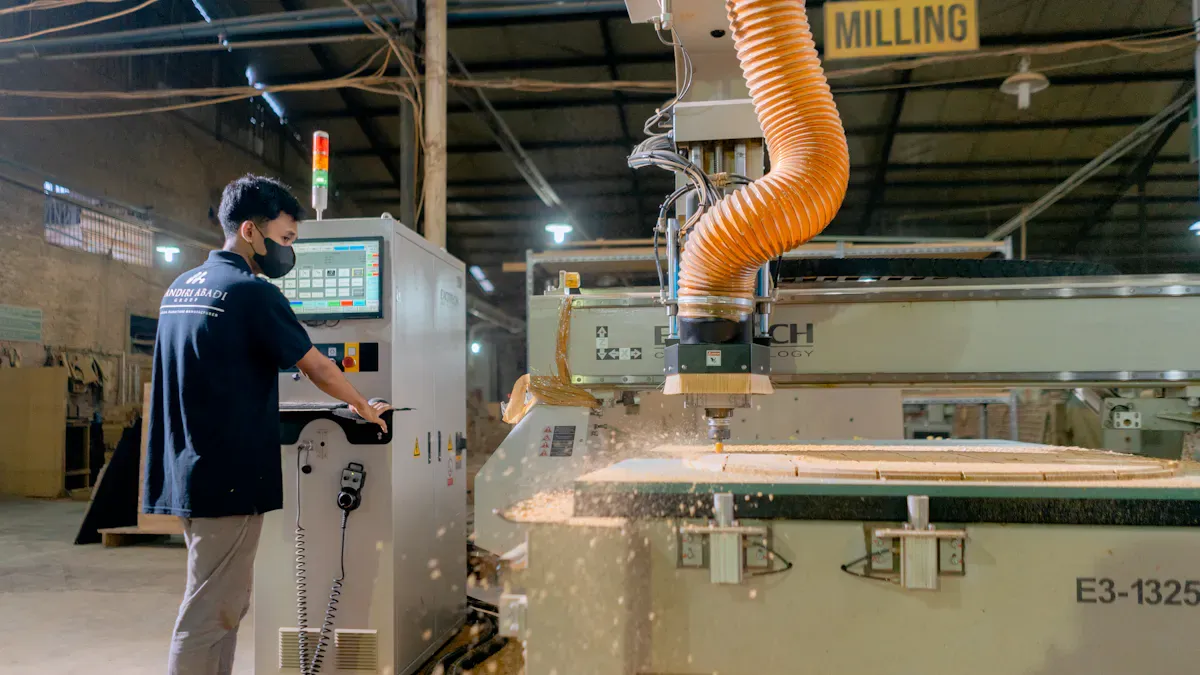
The aerospace industry significantly benefits from 5-axis CNC machining due to its ability to produce complex components with high precision. Manufacturers rely on this technology to create parts that meet stringent safety and performance standards.
Key components produced using 5-axis CNC machining include:
| Component Type | Description |
|---|---|
| Turbine Blades | These parts feature complex curved surfaces and are made from heat-resistant superalloys, ensuring optimal engine performance. |
| Structural Components | This category includes bulkheads, wing ribs, and landing gear brackets, designed for lightweight strength with complex geometries. |
| Engine Parts | These require high precision and accuracy, often machined in a single setup to reduce errors. |
| Airframe Parts | Structural components that meet stringent accuracy requirements, benefiting from 5-axis machining. |
5-axis CNC machining enhances efficiency in aerospace manufacturing by allowing complex geometries to be completed in a single setup. This capability eliminates the need for multiple setups, which can lead to errors and misalignment. Additionally, the continuous tool movement results in improved surface finishes, essential for parts that must perform under extreme conditions.
The precision achieved through 5-axis CNC machining is crucial for aerospace components that require tight tolerances. By reducing human error and misalignment, manufacturers can ensure that each part meets the high standards necessary for safety and performance in flight.
Medical
The medical industry greatly benefits from 5-axis CNC machining due to its ability to produce highly precise and customized components. Manufacturers utilize this technology to create intricate parts for surgical instruments, implants, and diagnostic equipment. The precision offered by 5-axis CNC machining centers ensures that medical devices meet strict regulatory standards.
Key advantages of 5-axis CNC machining in the medical field include:
| Quality Advantages | Customization Benefits |
|---|---|
| Precision Engineering | Design Flexibility |
| Superior Surface Finish | Rapid Prototyping |
| Enhanced Material Integrity | Cost Savings |
These benefits contribute to the overall quality and customization of medical products. For instance, precision engineering allows for the creation of components that fit perfectly within the human body, enhancing patient outcomes. Additionally, the design flexibility enables manufacturers to develop unique solutions tailored to individual patient needs.
The adoption of 5-axis CNC machining centers among medical device manufacturers is on the rise. There is a significant demand for these machines, particularly for the production of custom implants, surgical instruments, and diagnostic equipment. The trend towards personalized healthcare and minimally invasive procedures drives the need for specialized machining solutions.
As the medical industry continues to evolve, the role of 5-axis CNC machining will likely expand. This technology not only improves efficiency but also enhances the quality of medical devices, ultimately benefiting patients and healthcare providers alike.
Automotive
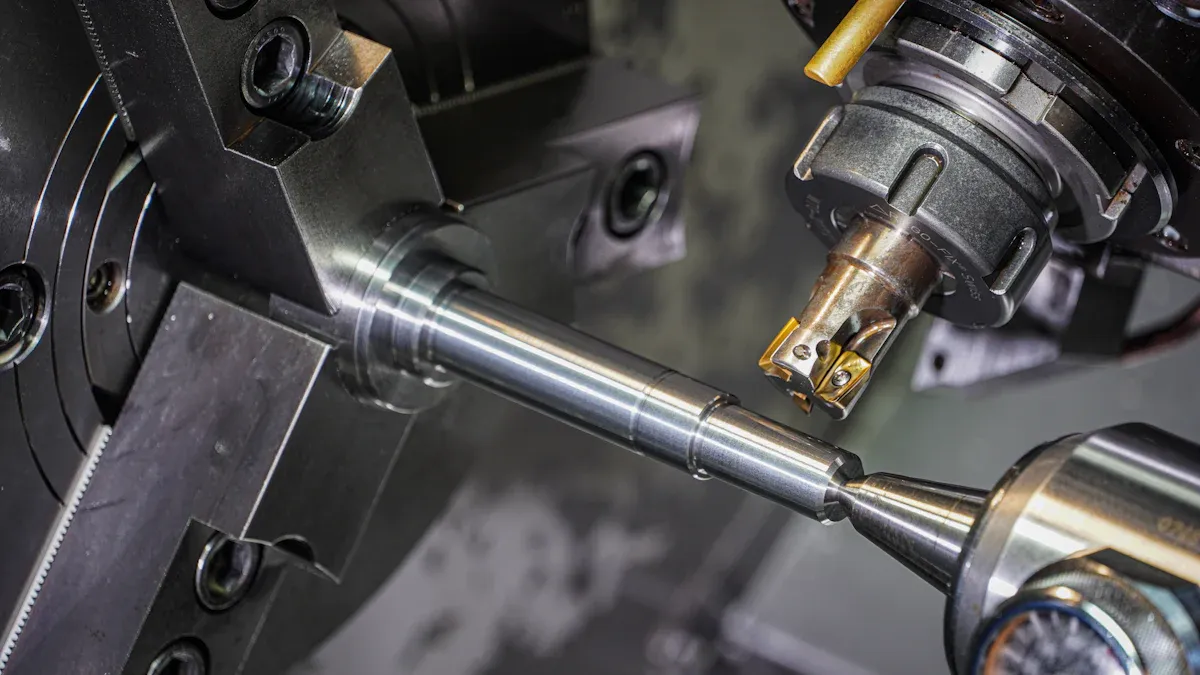
The automotive industry greatly benefits from 5-axis CNC machining due to its ability to produce high-quality components with precision. Manufacturers utilize this technology to create a variety of parts essential for vehicle performance and safety. Key automotive components produced using 5-axis CNC machining include:
- High-performance engine components
- Specialized parts for racing vehicles
- Luxury car components
- Engine parts
- Transmission housings
- Custom bodywork
- Prototype development
5-axis CNC machining significantly impacts production speed and cost. By reducing the number of setups required for complex parts, manufacturers achieve quicker lead times. Cycle times can be 25-50% faster for intricate components, which increases machine capacity and lowers the cost per part. Additionally, manufacturers report a remarkable 50-75% reduction in scrap rates for complex parts, leading to lower rework costs.
Approximately 60% of automotive tooling suppliers employ 5-axis CNC machining for both prototyping and production. This technology not only enhances efficiency but also improves surface finish, which is crucial for aesthetic and functional components. The ability to produce complex geometries in a single setup allows manufacturers to innovate and respond to market demands swiftly.
Energy
The energy industry relies heavily on 5-axis CNC machining to produce components that meet rigorous performance standards. This technology allows manufacturers to create large and complex parts with high accuracy. Such precision is essential for ensuring the reliability and performance of critical components used in wind turbines, gas turbines, and nuclear reactors.
Key benefits of 5-axis CNC machining in the energy sector include:
- Durability: Components must endure extreme operating conditions. 5-axis CNC machining produces parts that can withstand these challenges, ensuring safety and security in energy applications.
- High Performance: The technology enables the creation of high-performance parts, such as turbine blades and pressure fittings, which are vital for efficient energy production.
- Efficiency: 5-axis CNC machining provides high precision and efficiency, supporting advancements in energy efficiency and sustainability. This capability allows for the production of complex components that enhance overall system reliability.
Manufacturers in the energy sector increasingly adopt CNC machining centers to streamline production processes. By reducing setup times and improving accuracy, they can produce components faster and with less waste. This efficiency not only lowers costs but also contributes to the development of innovative energy solutions.
As the demand for renewable energy sources grows, the role of 5-axis CNC machining will likely expand. The ability to produce intricate and reliable components will be crucial for meeting future energy needs.
Defense
The defense industry relies heavily on 5-axis CNC machining to produce high-precision components essential for various applications. This technology ensures that manufacturers create parts that meet stringent military standards. The reliability of these components is critical, as any errors can lead to severe consequences in operational scenarios.
Key applications of 5-axis CNC machining in the defense sector include:
- Aerospace components, such as parts for the F-35 aircraft.
- Weapons development components, including missile guidance system housings and fin assemblies.
- Military vehicle parts, like high-strength drivetrain gears.
- Lightweight machined aluminum parts for advanced fighter jets.
- Custom heat sinks for radar and communication systems.
- Rugged components for weapon systems, including gun barrels and trigger mechanisms.
The ability to produce complex parts accurately is vital for ensuring operational effectiveness and safety. For instance, the production of missile guidance system housings and fin assemblies requires exceptional precision. These components must withstand extreme conditions while maintaining functionality.
5-axis CNC machining centers play a crucial role in this process. They allow manufacturers to create intricate geometries in a single setup, reducing the risk of misalignment and errors. This capability enhances the overall quality of defense components, ensuring they perform reliably in critical situations.
As the defense industry continues to evolve, the demand for advanced machining solutions will likely increase. The integration of 5-axis CNC machining will remain essential for producing components that meet the rigorous standards of modern military applications.
Tool Manufacturing
The tool manufacturing industry greatly benefits from 5-axis CNC machining due to its ability to produce high-quality tools with exceptional precision. This technology allows manufacturers to create complex geometries that traditional machining methods struggle to achieve. As a result, tool manufacturers can enhance their product offerings and meet the increasing demands of various sectors.
Key advantages of 5-axis CNC machining in tool manufacturing include:
- Quality Improvement: 5-axis CNC machining significantly enhances production quality by reducing setup time and handling. This leads to better geometric accuracy and surface finish.
- Production Time Reduction: The simultaneous movement along multiple axes allows for the completion of complex tasks in one setup. This capability significantly reduces production time.
- Setup Elimination: Using a single setup eliminates costly downtime from manual adjustments, leading to increased productivity.
- Improved Accuracy: The ability to approach a workpiece from any angle ensures precise machining of hard-to-reach areas.
- Error Reduction: Flexibility in machining eliminates potential errors from multiple setups required by traditional methods.
- Surface Finish Quality: Consistent tool-to-surface contact angles during cutting result in superior surface finishes and tighter tolerances.
- Tool Life Improvement: Enhanced surface finish and overall part quality contribute to better tool life and performance.
The integration of 5-axis CNC machining centers into tool manufacturing processes allows for the production of intricate designs and custom tools. This technology not only streamlines production but also fosters innovation in tool design. Manufacturers can respond quickly to market demands, producing specialized tools that meet specific customer needs.
As the tool manufacturing industry continues to evolve, the adoption of 5-axis CNC machining will likely expand. This technology will remain essential for producing high-quality tools that meet the rigorous standards of modern manufacturing.
5-axis CNC machining plays a pivotal role in several key industries, including aerospace, medical, automotive, energy, defense, and tool manufacturing. Each sector benefits from the precision and efficiency that this technology offers.
The importance of 5-axis CNC machining continues to grow as industries demand more complex geometries and high-quality components. This technology enhances production capabilities, allowing manufacturers to meet stringent standards and adapt to evolving market needs.
Looking ahead, the future of 5-axis CNC machining appears promising. As advancements in technology emerge, manufacturers will likely explore new design possibilities and improve production processes. The projected growth in the CNC machining center market underscores this trend, with significant increases expected in various sectors over the next decade.
FAQ
What is 5-axis CNC machining?
5-axis CNC machining refers to a process where a machine tool moves along five different axes simultaneously. This capability allows for the creation of complex geometries and intricate designs with high precision.
How does 5-axis machining improve efficiency?
5-axis machining reduces the number of setups required for complex parts. This capability leads to faster production times, lower scrap rates, and improved overall efficiency in manufacturing processes.
Which materials can be machined using 5-axis CNC?
5-axis CNC machining can handle various materials, including metals like aluminum, titanium, and steel, as well as plastics and composites. This versatility makes it suitable for multiple industries.
What industries primarily use 5-axis CNC machining?
Industries such as aerospace, medical, automotive, energy, defense, and tool manufacturing primarily utilize 5-axis CNC machining. Each sector benefits from the precision and efficiency this technology offers.
Is 5-axis CNC machining cost-effective?
While the initial investment in 5-axis CNC machines can be high, the long-term benefits, such as reduced production times and lower scrap rates, often lead to significant cost savings for manufacturers.
Post time: Mar-13-2026