



The choice between a Vertical Machining Center and a Horizontal Machining Center is critical for optimizing production. Selecting the appropriate CNC Machining Center hinges entirely on specific application needs. Understanding what are the application scenarios of horizontal machining centers? is key to making this crucial decision. Companies must effectively compare vertical and horizontal CNC machines. This evaluation should also consider other configurations, such as a Gantry Machining Center, for comprehensive planning.
Key Takeaways
- VMCs have a vertical spindle. They are good for flat parts and smaller production jobs. They take up less floor space.
- HMCs have a horizontal spindle. They are good for complex parts and large production jobs. They need more floor space.
- HMCs remove chips better. Gravity helps chips fall away. This makes parts look nicer and tools last longer.
- VMCs cost less to buy. HMCs cost more but can save money in the long run for big production lines.
- Choose a VMC or HMC based on your part’s shape, how many parts you make, and your budget.
Understanding the Vertical Machining Center (VMC)
Defining Vertical Machining Center Operation
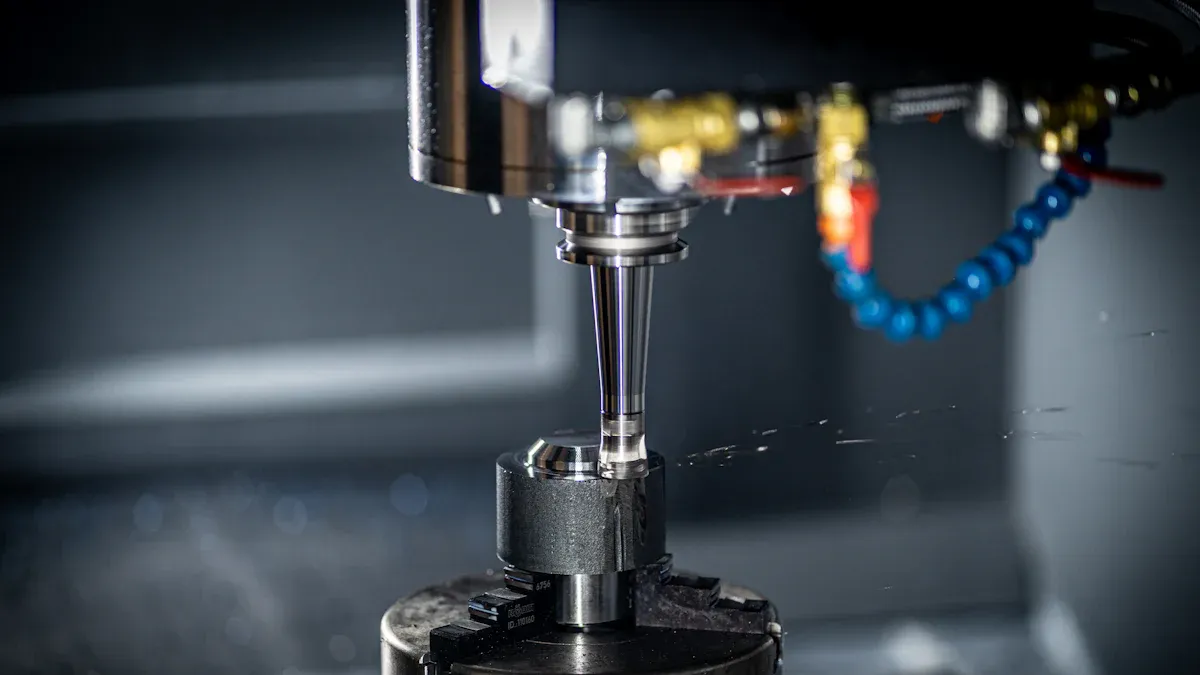
A Vertical Machining Center (VMC) operates with its spindle oriented vertically, moving along the Z-axis, while the workpiece typically remains stationary on a table that moves along the X and Y axes. This configuration allows the cutting tool to approach the workpiece from above. The operational process involves several key steps:
- Workpiece Setup: Operators secure and align the workpiece on the machine table. They also load the correct cutting tool into the spindle.
- Program Input: The machining program, which contains instructions for tool movement, cutting speed, feed rate, and depth of cut, is entered into the control system.
- Machine Movement: The control system directs motors to move the table along the X and Y axes and rotate the spindle. This brings the cutting tool into contact with the workpiece.
- Machining Operations: The machine removes material from the workpiece according to the program. The control system continuously monitors and adjusts parameters for optimal performance.
- Tool Change: If the operation requires different tools, the control system automatically changes them using the tool changer. This ensures continuous machining.
- Machining Completion: The machine stops once all operations finish. Operators then remove and inspect the workpiece.
Advantages of a Vertical Machining Center
Vertical Machining Centers offer significant benefits for many manufacturing applications. They provide extensive versatility, capable of tapping, drilling, and milling operations with their vertical spindle design. These machines can also perform turning operations when equipped with a conventional tool holder or live tooling. This versatility allows VMCs to process a wide range of materials, including composites like fiberglass-reinforced plastic (FRP), aluminum, brass, copper, and steel.
VMCs deliver high precision and accuracy due to CNC control, ensuring consistent results for intricate parts with tight tolerances. They also increase productivity and efficiency through automation, allowing continuous operation with minimal human intervention. This boosts production rates, reduces human error, and minimizes material waste. Faster machining speeds and tool changes further enhance productivity. Operators find VMCs easy to use due to their structural design, which provides better visibility. This allows them to easily identify and correct potential issues. User-friendly CNC controls simplify programming and fixturing, leading to less setup time and more machining time.
Limitations of a Vertical Machining Center
Despite their advantages, Vertical Machining Centers have certain limitations. They often face space and stability issues when processing long or heavy parts, which can impact accuracy and efficiency. Workpiece size and weight constraints are strict due to the table’s support structure and the ‘daylight’ between the table and spindle. Overloading can lead to diminished accuracy, wear, and structural damage.
A constant challenge for VMCs is chip evacuation. Due to the vertical spindle, chips fall directly onto the workpiece. This can lead to re-cutting, poor surface finish, and reduced tool life because gravity works against effective chip removal. Furthermore, VMCs can experience productivity bottlenecks in high-volume production. They often have significant idle time during part loading, unloading, and setup, resulting in lower ‘spindle-on time’ compared to machines with features like automatic pallet changers. Standard 3-axis VMCs also have limited machining access for complex geometries, as they can only machine the top surface and sides within the tool’s reach. Machining multiple sides requires manual re-fixturing, increasing setup time and risking accuracy loss.
Exploring Horizontal Machining Centers (HMCs)
Defining HMC Operation
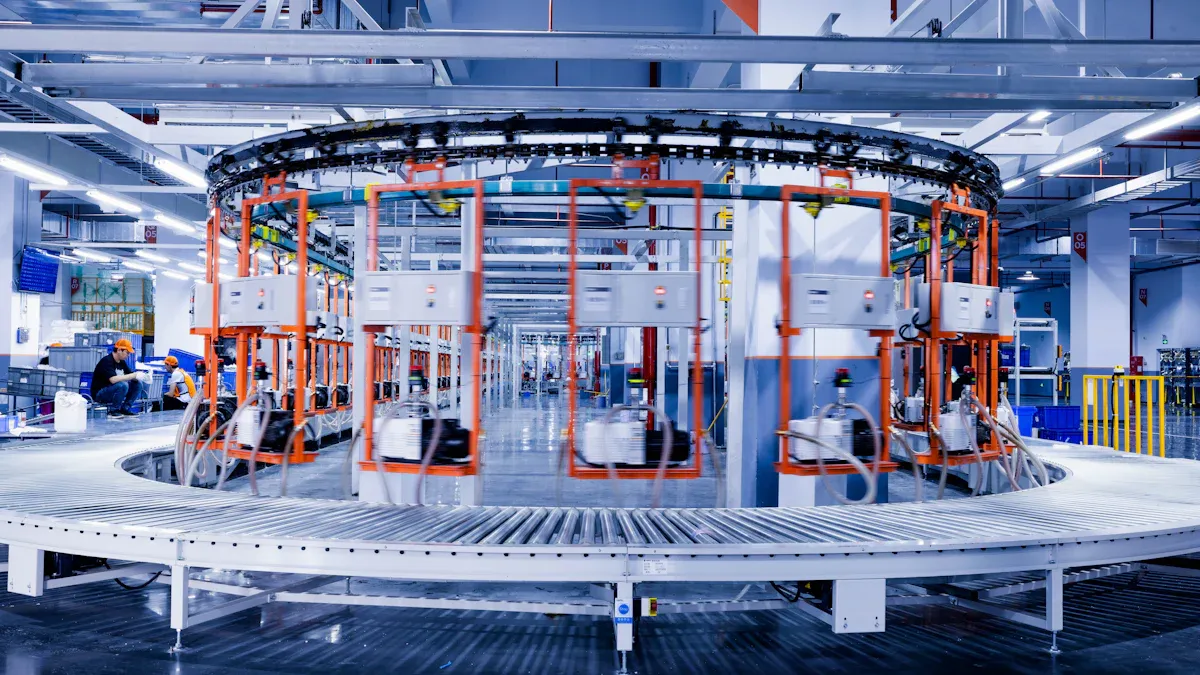
A Horizontal Machining Center (HMC) features a spindle oriented horizontally. This configuration allows the cutting tool to approach the workpiece from the side. HMCs often include a pallet changer system. This system enables operators to load a new workpiece onto one pallet while the machine processes another workpiece on a different pallet. This design significantly reduces idle time. The horizontal spindle also facilitates efficient chip evacuation. Gravity helps chips fall away from the cutting zone. This prevents re-cutting and improves surface finish.
Advantages of Horizontal Machining Centers
Horizontal Machining Centers offer several significant advantages for production lines. They achieve increased precision and accuracy through rigid construction and stable workpiece support. Features like rotary tables allow for multiple operations in one setup. Automatic tool changers further enhance this precision. Industries like aerospace and automotive find this crucial. HMCs also deliver enhanced productivity and speed. Efficient chip removal, multiple axis capabilities for simultaneous machining, and automatic tool changers lead to faster cycle times and higher output. They improve tool life and efficiency. Better heat dissipation and constant tool engagement reduce tool wear and replacement costs. HMCs show versatility in material handling. They machine a wide range of materials, including metals like aluminum, steel, and titanium, and composite materials. This allows for diverse production needs and multi-material workpieces in a single setup. Finally, HMCs excel in handling complex machining operations. They perform simultaneous multi-surface machining, boring, and milling. They also utilize advanced workholding systems to produce intricate parts for industries such as aerospace and defense.
Limitations of Horizontal Machining Centers
Despite their benefits, Horizontal Machining Centers have specific limitations. They generally incur higher purchase and maintenance costs compared to VMCs. Their setup processes are more intricate, demanding additional time and specialized expertise. HMCs typically occupy a larger floor area than vertical machining centers. Their structural complexity surpasses that of VMCs, leading to more challenging programming and maintenance tasks. Programming HMCs effectively to leverage their full capabilities, such as multi-sided machining without setup changes, is more difficult. This is due to increased complexity in managing work offsets and advanced features like pallet changing. Tooling costs for HMCs are considerably higher than for VMCs. This includes more expensive cutters, tombstones, and associated fixtures. The need for verification/simulation software is often required to ensure smooth operations. This is due to the complexity of programming, expensive fixtures, and the high utilization of the machine. Operating an HMC to its full potential requires a higher level of skill from the machinist compared to operating a VMC.
Part Complexity and Size: VMC vs. HMC
Ideal Parts for a Vertical Machining Center
A Vertical Machining Center (VMC) excels at machining parts with specific characteristics. It is ideal for flat or prismatic components. These parts often require drilling, tapping, and milling operations from above. Parts with flat surfaces and pockets are also well-suited for a VMC. Even complex geometries can be machined, especially with multi-axis VMCs (4-axis and 5-axis).
The machine’s work envelope determines the maximum part size. A typical CNC milling machine might handle parts up to 40 x 20 x 20 inches. Minimum feature size depends on machine precision and tool size; high-precision machines can achieve features as small as 0.005 inches in diameter. The weight capacity varies by machine design, with tables supporting several tons. When designing parts for a Vertical Machining Center, consider tool access limitations. These may require redesign or alternative manufacturing methods. For internal corners, use a minimum radius of 1/3 of the pocket’s depth. Design holes with standard drill bit diameters, ensuring the depth-to-diameter ratio does not exceed 10:1. Maintain a minimum wall thickness of 0.8 mm for metals. Standard tolerances are typically ±0.125 mm.
Ideal Parts for Horizontal Machining Centers
Horizontal Machining Centers (HMCs) are particularly effective for parts requiring machining on multiple sides in a single setup. This capability makes them excellent for complex, prismatic parts that need extensive milling, boring, and drilling from various angles. HMCs handle larger and heavier workpieces more efficiently than VMCs. Their robust design and horizontal spindle orientation support heavier loads and more aggressive cutting. Parts that generate a lot of chips, such as those made from aluminum or other soft metals, benefit greatly from an HMC. The horizontal spindle allows gravity to assist in chip evacuation, preventing re-cutting and improving surface finish. Industries like automotive, aerospace, and heavy equipment manufacturing often use HMCs for components like engine blocks, transmission cases, and large structural brackets. These parts frequently demand high precision, multi-sided access, and efficient material removal, which are strengths of an HMC.
Production Volume and Efficiency Considerations
Vertical Machining Center for Lower Volume Production
A Vertical Machining Center (VMC) often serves lower to medium production volumes effectively. Businesses find VMCs suitable for prototyping, custom parts, and small batch runs. For annual production, specific thresholds guide VMC suitability:
- 1-5,000 parts annually: This volume range typically suits standard manual VMC operation.
- 5,000-15,000 parts annually: Achieving efficiency at this level requires dedicated fixtures and optimized toolpaths.
- 15,000-25,000 parts annually: Automation and lights-out operation become necessary to maintain cost-effectiveness.
- Beyond 25,000 parts annually: Other manufacturing methods, such as stamping, usually offer more cost-efficient solutions.
CNC machining remains cost-competitive for complex geometries up to 15,000-25,000 parts annually. However, for volumes exceeding 25,000 parts, alternative methods like casting, molding, or stamping often become more favorable. These methods reduce material waste and improve cycle times. A Vertical Machining Center provides flexibility for diverse part types without extensive retooling, making it ideal for varied, lower-volume demands.
Horizontal Machining Centers for High Volume Production
Horizontal Machining Centers (HMCs) excel in high-volume production environments. Their design inherently supports continuous operation and minimal downtime. HMCs often feature automatic pallet changers. This allows operators to load new workpieces onto one pallet while the machine processes parts on another. This capability significantly increases spindle utilization and overall throughput. The ability to machine multiple sides of a part in a single setup also reduces cycle times and improves efficiency for large batches. Industries requiring consistent production of complex parts, such as automotive and aerospace, frequently leverage HMCs. These machines deliver the speed, reliability, and automation necessary to meet demanding production schedules and high output targets.
Cost Implications and Return on Investment
Initial Investment: Vertical Machining Center vs. HMC
The initial investment for a machining center varies significantly between types. A Horizontal Machining Center (HMC) typically demands a much higher upfront cost than a Vertical Machining Center. HMCs often include complex features like automatic pallet changers, advanced tool magazines, and more robust structural designs. These additions contribute to their elevated price tag. Installation costs also tend to be higher for HMCs due to their larger footprint and more intricate setup requirements. Businesses must consider these substantial initial expenses when planning their budget.
Operational Costs and Long-Term ROI
Operational costs also differ between the two machine types. HMCs generally have higher tooling costs. They often require specialized fixtures, such as tombstones, which can be expensive. Power consumption for HMCs can also be greater due to their size and advanced automation systems. However, HMCs offer significant advantages in long-term return on investment (ROI) for high-volume production. Their ability to run continuously with minimal operator intervention, thanks to features like pallet changers, drastically reduces labor costs per part. Efficient chip evacuation in HMCs also extends tool life and reduces re-cutting, leading to lower consumable expenses over time. A Vertical Machining Center, while having lower initial and tooling costs, may incur higher labor costs per part in high-volume scenarios due to more frequent manual loading and unloading. For lower volume or diverse job shops, the VMC’s flexibility and lower initial outlay often provide a quicker ROI.
Floor Space and Facility Layout Impact
Vertical Machining Center Footprint
A Vertical Machining Center typically occupies less floor space. Its design features a vertical spindle. This configuration allows the machine to have a smaller footprint. Businesses with limited factory space often prefer VMCs. They fit well into smaller workshops or crowded production lines. The compact nature of a Vertical Machining Center makes facility planning easier. Companies can arrange more machines in a given area. This maximizes the use of available floor space. This also helps maintain an efficient workflow in a smaller facility.
Horizontal Machining Center Footprint
Horizontal Machining Centers require significantly more floor space. Their horizontal spindle orientation contributes to a wider design. Many HMCs also include automatic pallet changers. These systems need extra room for pallet exchange and storage. The larger overall structure of an HMC demands careful consideration during facility layout. Businesses must allocate substantial space for these machines. This includes room for maintenance access and material handling. The larger footprint means fewer HMCs can fit into the same area compared to VMCs. This impacts the overall production capacity per square foot. Companies planning to install HMCs need ample space to accommodate their size and operational requirements.
Accuracy, Surface Finish, and Chip Management
Precision with a Vertical Machining Center
Vertical Machining Centers (VMCs) offer impressive precision for various manufacturing tasks. These machines consistently achieve strict tolerances of ±0.025 mm. This level of accuracy makes them suitable for many demanding applications. While VMCs produce precise parts, they often leave noticeable machining marks. Achieving very smooth surface finishes, such as Ra 0.8 µm or Ra 0.4 µm, typically requires secondary surface treatments. Operators must plan for these additional steps when surface quality is a critical requirement. A Vertical Machining Center provides a solid foundation for accurate part production.
HMC Advantages in Chip Evacuation
Horizontal Machining Centers (HMCs) excel in chip management, which significantly impacts machining efficiency and surface quality. The horizontal spindle orientation allows chips to fall away naturally from the workpiece. This keeps the cutting area clear. An optimized chip removal system in a horizontal machining center enhances cutting stability by preventing chip re-cutting. It also improves thermal balance by maintaining a consistent temperature near the spindle and workpiece. This boosts automation efficiency by enabling longer unattended machining cycles.
Efficient chip evacuation extends tool lifespan by up to 25% compared to conventional systems. By preventing chip recirculation, the spindle maintains consistent torque, ensuring ±0.003 mm precision during extended machining. Proper chip removal is crucial in precision machining. It avoids tool wear, surface damage, and thermal distortion. This maintains long-term dimensional accuracy. The horizontal machining process ensures chips are more likely to fall off naturally. This reduces the likelihood of decreased machining accuracy.
Automation and Integration Potential
Vertical Machining Center Automation Capabilities
A Vertical Machining Center (VMC) offers significant automation capabilities. These machines integrate seamlessly with various CAD/CAM software. This allows for smooth transitions from design to production. VMCs also fit well into automated production lines. This integration improves throughput and reduces manual intervention. Automatic tool changers further enhance productivity. They allow continuous machining without frequent operator involvement. Pallet changers and robotic part-handling systems are crucial for VMCs. These technologies separate setup procedures from the actual machining process. This builds a work queue in front of the spindle. It significantly increases spindle utilization. This leads to more productive hours and reduced costs. Automation integration involves making different hardware and software work together. This often combines several subsystems into one large system. Automation integrators establish direct communication lines between automated systems. This allows plant equipment to communicate efficiently with operators and other machinery. This level of automation helps manufacturers optimize their processes. It also ensures consistent quality across production runs, making VMCs a versatile choice for many applications.
HMC for Advanced Automation
Horizontal Machining Centers (HMCs) excel in advanced automation. They offer multi-pallet capabilities. For example, 400mm pallet systems enable continuous production. One pallet undergoes machining while operators load or unload another. This continuous flow minimizes idle time. Automated pallet systems integrate with facility-wide automation. This allows for production priority-based scheduling. It significantly reduces operator intervention. Operators can manage multiple machines or focus on other tasks. HMCs also facilitate extended unattended operation. This capability supports ‘lights-out production’. Machines can run without human supervision during off-hours. This maximizes productivity and efficiency around the clock. These advanced features make HMCs ideal for highly automated manufacturing environments. They provide a robust solution for manufacturers seeking to maximize output and minimize labor costs, especially in high-volume scenarios.
Choosing between a Vertical Machining Center and a Horizontal Machining Center requires careful evaluation. No single machine offers a universal solution. Businesses must select the most suitable option for their specific production goals. Aligning machine capabilities with production demands ensures success and optimizes manufacturing processes.
FAQ
What is the primary distinction between a VMC and an HMC?
A Vertical Machining Center (VMC) has a vertical spindle. It approaches the workpiece from above. A Horizontal Machining Center (HMC) features a horizontal spindle. It cuts from the side. This fundamental orientation difference impacts part access, chip evacuation, and overall machine footprint.
For what types of parts does a VMC excel?
VMCs are ideal for flat or prismatic parts. These parts require machining from one primary side. They handle drilling, tapping, and milling operations effectively. VMCs also suit prototyping, custom parts, and lower-volume production runs. Their versatility and easier setup contribute to this suitability.
Why do HMCs suit high-volume production better?
HMCs excel in high-volume production. Features like automatic pallet changers and multi-sided machining in one setup contribute to this. These capabilities minimize idle time and maximize spindle utilization. They support continuous, unattended operation. This boosts overall throughput.
How does chip evacuation impact machine choice?
Chip evacuation is crucial.
- HMCs benefit from gravity. Gravity helps chips fall away from the cutting zone. This prevents re-cutting and improves surface finish.
- VMCs often face challenges. Chips accumulate on the workpiece. This potentially affects tool life and part quality.
Post time: Jan-16-2026