


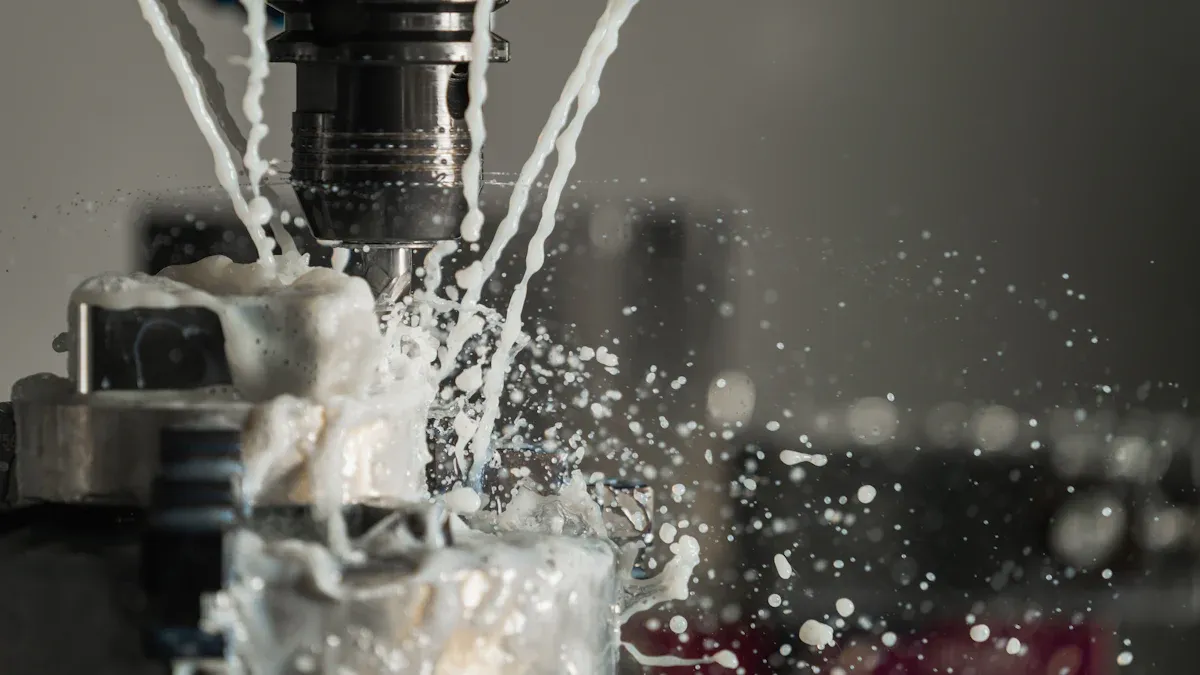
Haas Automation, Mazak Corporation, and DMG Mori emerge as premier CNC Machining Center Manufacturers for enduring partnerships. These industry leaders provide reliability, innovation, and extensive support, crucial for sustained operational success. The global CNC machining and turning centers market reached USD 25.99 billion in 2023, with CNC machining centers alone accounting for 61.6% of this substantial revenue. This robust market emphasizes the need for top-tier equipment. OTURN MACHINERY, a Reliable CNC Machining Center Manufacturers in China, delivers high-efficiency industrial machines, including advanced 5 Axis CNC Machining Center solutions. A reputable CNC Machining Center Factory China prioritizes customer needs. When evaluating which Chinese CNC machining center brands are most reliable?, comprehensive service and technological prowess define the best CNC Machining Center Manufacturers.
Key Takeaways
- Haas Automation machines offer great value and are easy to use. They help businesses make many different parts quickly.
- Mazak Corporation makes very precise machines. They use new technology to help factories work better and faster.
- DMG Mori provides advanced machines for difficult tasks. These machines can do many jobs and help factories run all the time.
- Choosing the right CNC machine means looking at how reliable it is, the help you get after buying it, and its new technology.
- The total cost of a machine includes more than just its price. It also includes tools, software, and maintenance over time.
Haas Automation: A Leading CNC Machining Center Manufacturer for Value
Why Haas is a Smart Long-Term Investment
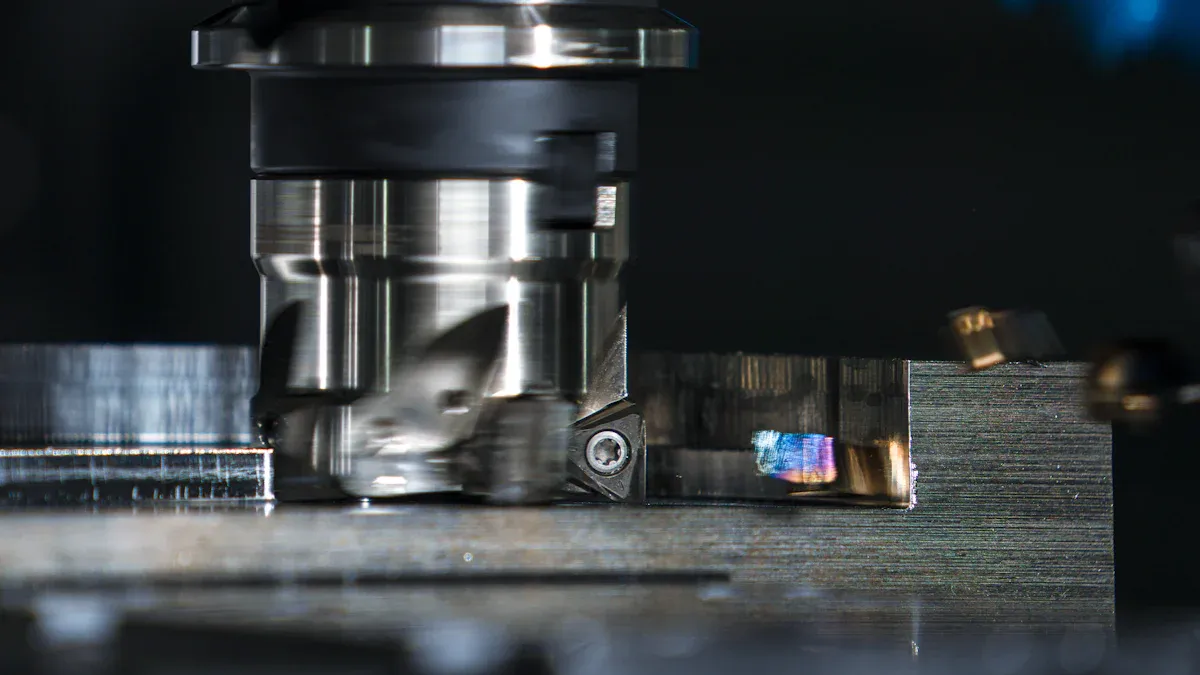
Haas Automation stands as a premier choice among CNC Machining Center Manufacturers, offering exceptional value, dependability, and versatility. Investing in Haas machines provides a smart long-term strategy for businesses. The Haas Next Generation Control (NGC) exemplifies their commitment to innovation. This control features an intuitive interface, a high-resolution touchscreen, and real-time machine performance monitoring. It also includes advanced programming tools, better diagnostics, and Wi-Fi/Ethernet connectivity. These features reduce downtime and improve operational efficiency. Furthermore, Haas machines boast high-speed and high-precision machining capabilities. They incorporate advanced spindle designs for high torque and speed, alongside advanced ball screw and linear guide technologies. This combination ensures smooth, precise movement, enabling efficient machining of diverse materials, better surface finishes, and tighter tolerances.
Key Advantages for Long-Term Cooperation
Long-term cooperation with Haas Automation brings significant advantages. The company offers integrated automation solutions, including robotic loading/unloading, pallet changing systems, and automated tool change systems. These solutions maximize productivity, minimize labor costs, and reduce human error. Businesses can customize these systems for specific manufacturing applications. Haas also prioritizes energy efficiency and sustainability. Their machines include power-saving modes and efficient cooling systems, which reduce energy consumption and lengthen component life. Haas provides a wide range of customization options for machine configurations and software solutions. This ensures seamless integration into existing production workflows. A robust after-sales support network, with global service centers and trained technicians, ensures prompt maintenance and minimizes operational disruptions.
Ideal Applications and Businesses
Haas CNC machining centers are ideal for a wide range of applications and businesses, particularly job shops. Job shops often operate in low-volume, high-mix settings. They require equipment that handles diverse materials, from stainless steel to exotic alloys, without extensive reconfiguration. Haas machines manage varying part sizes, from small brackets to substantial structural elements. Quick turnarounds are crucial for these shops, and Haas machines are easy to set up, program rapidly, and transition between tasks efficiently. Midwest Precision Components, a 12-person machine shop, uses Haas VF-2 mills and an ST-20 lathe. They achieve an 82% equipment utilization rate and generate $1.8 million in annual revenue. The owner states, “The VF-2 handles literally everything we quote,” highlighting its adaptability. Aerospace Prototype Solutions, an 8-person specialty shop, uses larger Haas VF-3 mills for complex aerospace prototypes. They note the VF-3′s ability to handle large parts while providing standard Haas support and dependability. This allows them to charge 15–25% more for complex parts. Haas machines support businesses from startups to growing operations, offering versatility and a fair initial investment.
Mazak Corporation: Innovative CNC Machining Center Manufacturer for Precision

Why Mazak Ensures Long-Term Value
Mazak Corporation stands as a leading CNC Machining Center Manufacturer, consistently delivering long-term value through its commitment to innovation and precision. The company holds 82 patents and actively conducts research in advanced technical fields. These fields include 3D printing, machine tools, manufacturing engineering, and metalworking. Mazak’s proprietary Smooth Technology platform exemplifies its dedication to comprehensive process performance. This platform covers programming, setup, metal removal, automation, monitoring, and data collection. Mazak also develops advanced machines like the INTEGREX i-400AM, a hybrid multitasking machine with additive manufacturing capabilities. Other innovations include the HORIZONTAL CENTER NEXUS (HCN) 4000-III for increased productivity and the VARIAXIS i-700, a 5-axis vertical machining center for complex surfaces. Mazak’s acquisition of MegaStir, a friction stir welding (FSW) technology supplier, further demonstrates its drive for cutting-edge solutions.
Benefits of Sustained Partnership
A sustained partnership with Mazak offers significant advantages. North Star Technical Inc. exemplifies this long-term value. They initially invested in a QUICK TURN 250M CNC Turning Center in 2014. Later, they expanded their fleet with a VC-500C, a 5-axis VC-500A/5X, and a large VTC-805G. These machines allowed them to process larger, more complex parts in single setups and run operations overnight. They efficiently handle diverse materials like titanium and aluminum. Mazak’s MAZATROL SmoothG CNC simplifies program generation, reducing cycle, setup, and programming times. Furthermore, Mazak provides exceptional customer support. Their single-source support resolves machine, control, or accessory issues quickly. Mazak’s World Parts Center operates 24/7, ensuring 97% same-day shipping for 60,000 unique part numbers. They offer progressive learning, including three years of unlimited classroom programming training with new machine purchases. A 2-year warranty on all machine tool components and a guaranteed one-hour response to technical questions further solidify their commitment.
Target Industries and Operational Scale
Mazak’s advanced CNC machining solutions cater to a wide array of demanding industries. Their Northeast Technology Center specifically focuses on the medical and jet engine/aerospace sectors. Other primary target markets include semiconductor, defense, private space exploration, automotive/EV, infrastructure, and oil and gas. These industries require the highest levels of precision, reliability, and efficiency that Mazak machines consistently deliver. Mazak’s diverse machine portfolio, from multi-tasking centers like the INTEGREX i-200ST to specialized machines like the Ultimate Die & Mold (UD) 400/5X, allows businesses of various operational scales to find suitable solutions. Whether for small, complex components or large, heavy workpieces, Mazak provides the technology to meet stringent manufacturing needs.
DMG Mori: Premium CNC Machining Center Manufacturer for Advanced Solutions
Why DMG Mori is a Strategic Long-Term Choice
DMG Mori establishes itself as a premium CNC Machining Center Manufacturer, offering advanced solutions for complex manufacturing challenges. Investing in DMG Mori machines provides a strategic long-term advantage. The company integrates state-of-the-art manufacturing technologies, including 5-axis simultaneous machining and turn-mill centers. They also provide a broad automation portfolio and extensive digitalization. DMG Mori’s modular solutions, like WH Flex, integrate up to nine CNC machines and peripheral processes. This boosts production performance and efficiency. Their CELL CONTROLLER LPS 4 integrates machines, cells, and production systems into a flexible network. The DMG MORI API connects the shop floor with superordinate systems, enabling simulations and reducing downtime. Autonomous transport vehicles (AGV/AMR) like WH-AMR and PH-AMR handle workpieces and pallets, further enhancing efficiency.
Advantages for Enduring Collaboration
Enduring collaboration with DMG Mori brings significant benefits. Their automation solutions are user-friendly, often controlled through the machine interface, supporting both high-volume and single-piece manufacturing. These proven technologies are optimized and tested in DMG Mori plants, ensuring compatibility and process integration. Automation enables unmanned operation, maximizing machine utilization for night shifts and 24/7 production. DMG MORI Connect offers remote services, including automatic notifications and NETservice, which allows remote troubleshooting for over 60% of problems. This minimizes downtime. DMG Mori’s Machining Transformation (MX) integrates consistent process integration, flexible automation, and fully digitized processes. This results in shorter setup and cycle times, more precise machining, and resource-efficient production. The CELOS X platform enables manufacturing digitization through applications and interoperable data exchange, connecting DMG Mori and third-party machines.
Best Fit for Specific Manufacturing Needs
DMG Mori’s offerings are best suited for specific, demanding manufacturing needs. Their 5-axis machining centers, such as the DMU 60 eVo 2nd Generation, are designed for intricate, high-precision manufacturing. These machines cater to industries requiring complex part geometries and multi-surface machining. The LASERTEC SLM series, including the LASERTEC 30 SLM US, provides additive manufacturing (metal 3D printing) capabilities. This enables the production of metal parts with complex geometries for sectors like aerospace and medical technology. DMG Mori offers flexible, high-performance solutions for the rising complexity of production components and difficult-to-machine materials. These include high-strength steels or innovative alloys. Their solutions for job shops address the need to process various materials and retool quickly between jobs. This maintains high productivity even with small quantities.
Evaluating CNC Machining Center Manufacturers for Long-Term Partnerships
Selecting the right CNC Machining Center Manufacturers requires careful evaluation. Businesses must consider several critical factors for a successful long-term partnership. These factors ensure sustained productivity and a strong return on investment.
Reliability and Machine Longevity
Machine reliability and longevity are paramount. Regular and proactive maintenance is crucial for sustained performance. This includes proper lubrication, routine inspections, and timely replacement of worn components. The frequency and intensity of machine usage also affect lifespan. Machines used within recommended limits and with regular maintenance tend to last longer. Environmental conditions like temperature and humidity impact components. Controlled environments benefit longevity. Higher-quality machines are designed to withstand rigorous use. They generally have longer lifespans. Choosing a machine that meets workload requirements reduces stress on the equipment. Knowledgeable operators also help prolong machine lifespan. They use the machine correctly and safely.
After-Sales Support and Service Network
A robust after-sales support and service network is essential. It ensures minimal downtime and continuous operation. Manufacturers with global service centers and trained technicians offer prompt maintenance. This minimizes operational disruptions. Excellent support includes quick access to spare parts and technical assistance. A strong service network provides peace of mind. It guarantees that help is available when needed. This support extends the machine’s operational life. It also maximizes its uptime.
Technological Innovation and Future-Proofing
Technological innovation and future-proofing capabilities are vital. Modern CNC systems leverage the Industrial Internet of Things (IIoT). IIoT-enabled sensors and algorithms allow real-time monitoring. They also enable predictive maintenance and process optimization. This minimizes downtime. AI and machine learning are major advancements. They allow machines to optimize tool paths. They also predict wear and automatically adjust for errors. This ensures consistent quality. Digital twin technology creates a virtual replica of the machining process. This enables simulation and troubleshooting. Hybrid CNC machines combine additive manufacturing with subtractive processes. This enhances versatility. Future-proof machines integrate Industry 4.0 technologies. This includes IoT for real-time data sharing. They also feature more sophisticated machines with additive manufacturing integration. Virtual and Augmented Reality (VR/AR) are used for training and simulation. Remote monitoring and control also reduce unplanned downtime.
Total Cost of Ownership (TCO) and ROI
Evaluating CNC machining centers requires a thorough understanding of Total Cost of Ownership (TCO) and Return on Investment (ROI). TCO extends far beyond the initial purchase price, encompassing all expenses incurred throughout a machine’s lifespan. A $150,000 CNC machine, for instance, can incur an additional $50,000–$150,000 in supporting expenses during its first few years of operation. These additional costs include crucial elements such as tooling and fixturing, which involve items like end mills, drills, inserts, collets, tool holders, workholding fixtures, vises, probing systems, and touch-off tools.
Furthermore, businesses must account for CAD/CAM software, including licenses ranging from $1,000–$15,000+, post-processor customization, simulation tools, and recurring annual subscription fees for platforms like Fusion 360 or Mastercam. Installation and training also contribute significantly to TCO. This covers electrical and air line hook-ups, machine leveling and anchoring, coolant systems, networking, DNC systems, and potential facility upgrades. Other ongoing costs include preventive maintenance, repairs, downtime losses, utility expenses, and operator wages, which directly impact productivity.
Calculating ROI helps businesses justify the investment and predict profitability. One common methodology involves a Total Life Cycle Cost Analysis, which considers acquisition, operating, maintenance, and decommissioning costs. Acquisition costs include the purchase price, installation, training, post-sale service, warranty, and supplier reputation. Another approach is the Productivity Impact Assessment. This evaluates how new equipment improves cycle time, enhances tool life, delivers better part quality, and increases reliability through uninterrupted operation.
The Payback Period offers a straightforward ROI calculation: Payback Period (Years) = Total Cost of Investment / Annual Net Profit. Here, the Total Cost of Investment includes the purchase price plus all additional costs, while Annual Net Profit represents revenue generated minus additional costs. Integrating automation benefits, such as increased machine utilization up to 95%, also significantly impacts ROI by boosting throughput and reducing lead times. Finally, evaluating financing options, whether cash, leasing, or financing, affects cash flow and long-term ownership costs.
Other Notable CNC Machining Center Manufacturers to Consider
Beyond the top three, several other manufacturers offer specialized strengths. They provide excellent options for specific manufacturing needs. Businesses should consider these companies for their unique contributions to CNC technology.
Makino for Precision and Automation
Makino excels in precision and automation, making them a strong contender for advanced manufacturing. Their horizontal machining centers (HMCs) ensure accuracy and rigidity across the Y-axis travel. These machines feature high-speed, high-performance spindles. They deliver high, repeatable metal removal rates or reduced cycle times on 5-axis HMCs. Makino’s vertical machining centers (VMCs) provide chatter-free cutting and enhanced accuracy for complex 3D parts. Their 5-axis VMCs offer high-speed rotary axes for reduced cycle time and superior surface finish. Makino’s Electrical Discharge Machines (EDMs) are engineered for supreme reliability and industry-leading precision. They produce finer surface finishes while significantly reducing maintenance and consumable costs. Makino pioneered high-speed spindles for milling and servo-control software for high-speed machining. They also developed ATHENA, the first voice-activated assistant for machinists. Makino’s in-house software designers collaborate with engineers. They build CNC equipment with optimized control mechanisms from the outset. This includes high-precision cutting programs and easy configurations for a seamless operator-machine connection.
Okuma Corporation for Integrated Solutions
Okuma Corporation provides comprehensive integrated solutions, focusing on a ‘Mechatronics’ approach. This merges mechanical and electrical engineering. It designs and builds all key machine, control, and software components. This approach creates ‘smarter’ CNC machines. They make real-time decisions to improve product quality and reduce cycle time. Okuma Intelligent Technology includes Machining Navi for optimizing spindle speeds and reducing chatter. The Thermo-Friendly Concept manages thermal deformation. A Collision Avoidance System (CAS) uses real-time 3D modeling. Okuma offers the OSP Suite, an open architecture CNC control system built on the OSP-P300 platform. This suite integrates Intelligent Technologies with various software applications. It enhances cycle and lead times and optimizes machine conditions. It features a user-friendly operating interface with customizable layouts, machine tool apps, widgets, shortcuts, and touch screen technology. Okuma’s integrated solutions also include numerous automation systems. These ranging from automatic pallet changers to mobile robot systems and gantry loaders. The OSP-P500 Control System features on many of their latest CNC machines.
FANUC Corporation for Controls and Robotics
FANUC Corporation stands out for its advanced controls and robotics integration. FANUC robots increase machine utilization. CNC machines operate continuously, 24 hours a day, without requiring operator breaks. Automated handling ensures correct part loading and positioning. This reduces production errors and scrap rates. Robots take over repetitive and potentially dangerous tasks. This lowers the risk of workplace injuries. FANUC offers rapid robot programming in a virtual environment. This allows parallel programming with mechanical design teams. It increases programming efficiency by 80-90%. Cost-effective proof-of-concept (PoC) simulations test concepts before significant investment. FANUC’s controls architectures, like Dual Check Safety (DCS), allow testing safety parameters without physical resets. The FANUC Series 500i-A CNC is a cutting-edge control system. It features 5-axis integrated technology for advanced machining. It boasts a dual-engine architecture with 2.7 times higher CPU processing power than previous models. This series includes FANUC’s new generation servo system, the α i-D Series. It offers high speed, high precision, and reduced energy loss. The 500i-A CNC incorporates a modern iHMI2 interface. It supports IoT efforts through centralized data collection and management software. It also includes cybersecurity features.
Haas Automation, Mazak Corporation, and DMG Mori stand as premier CNC Machining Center Manufacturers for smart investment. Aligning with these industry leaders ensures sustained productivity and growth. Such partnerships offer significant long-term economic benefits. Businesses gain access to advanced technology and reduce production costs. They also achieve product cost savings, efficient supply chain management, and robust quality control. This collaboration provides engineering expertise, faster product development, and quicker market entry. Ultimately, it leads to capital investment savings and reduced labor costs, optimizing overall efficiency and profitability.
FAQ
What makes Haas Automation a smart long-term investment?
Haas Automation offers exceptional value, reliability, and versatility. Their machines feature intuitive controls and high-speed, high-precision capabilities. They also provide integrated automation solutions and energy efficiency. This makes them ideal for diverse applications and businesses seeking sustained operational success.
How does Mazak Corporation contribute to long-term value?
Mazak Corporation ensures long-term value through continuous innovation and precision. They hold numerous patents and develop advanced technologies like Smooth Technology and hybrid multitasking machines. Their comprehensive support network, including 24/7 parts availability and extensive training, further enhances their value proposition.
What advanced solutions does DMG Mori provide?
DMG Mori offers premium, advanced solutions for complex manufacturing. They integrate 5-axis machining, turn-mill centers, and extensive digitalization. Their modular automation solutions and remote services maximize production performance and efficiency. This makes them suitable for demanding industries.
Why is after-sales support crucial for CNC machining centers?
Robust after-sales support is essential for minimizing downtime and ensuring continuous operation. Manufacturers with global service centers and trained technicians provide prompt maintenance. This quick access to spare parts and technical assistance extends machine life and maximizes uptime, guaranteeing operational continuity.
Post time: Dec-15-2025