


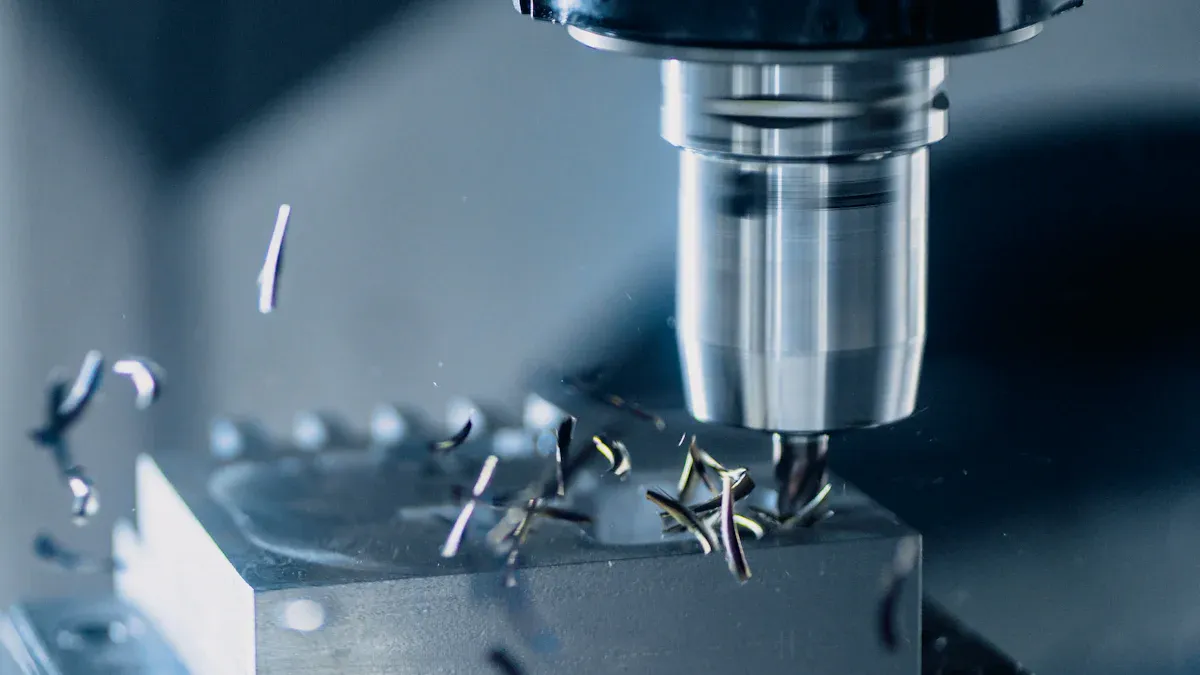
5-Axis CNC Machining Centers represent advanced technology in precision manufacturing. These machines, including the 5 Axis CNC Gantry Machining Center and the CNC Vertical Machining Center, operate on five different axes, allowing for intricate movements that produce complex geometries. Their significance lies in their ability to create high-quality components efficiently.
- The global market for 5-Axis CNC Machining Centers is valued at US$ 4,738 million in 2025 and is projected to grow to US$ 7,083 million by 2032.
- This growth underscores the increasing demand for precision in industries such as aerospace and medical devices, particularly with the use of high-precision 5-axis CNC for aerospace applications.
By enabling the production of complex surface milling with 5-axis CNC, these machines streamline processes that traditional methods struggle to achieve, especially when comparing 5-axis horizontal vs vertical machining centers.
Key Takeaways
- 5-Axis CNC Machining Centers enhance precision, achieving tolerances as tight as ±0.005mm, crucial for industries like aerospace and medical devices.
- These machines significantly boost efficiency, reducing production time by up to 50% through fewer setups and simultaneous multi-axis cutting.
- Versatility is a key advantage; 5-Axis CNC can process a wide range of materials, making it ideal for diverse applications in aerospace, automotive, and medical sectors.
- Choosing the right 5-Axis CNC machine involves assessing technical capabilities, quality control measures, and specific production requirements.
- Regular maintenance is essential for optimal performance, including checks on alignment, tool change mechanisms, and coolant systems to extend machine lifespan.
Mechanics of 5 Axis CNC Machining Center
Types of Movements
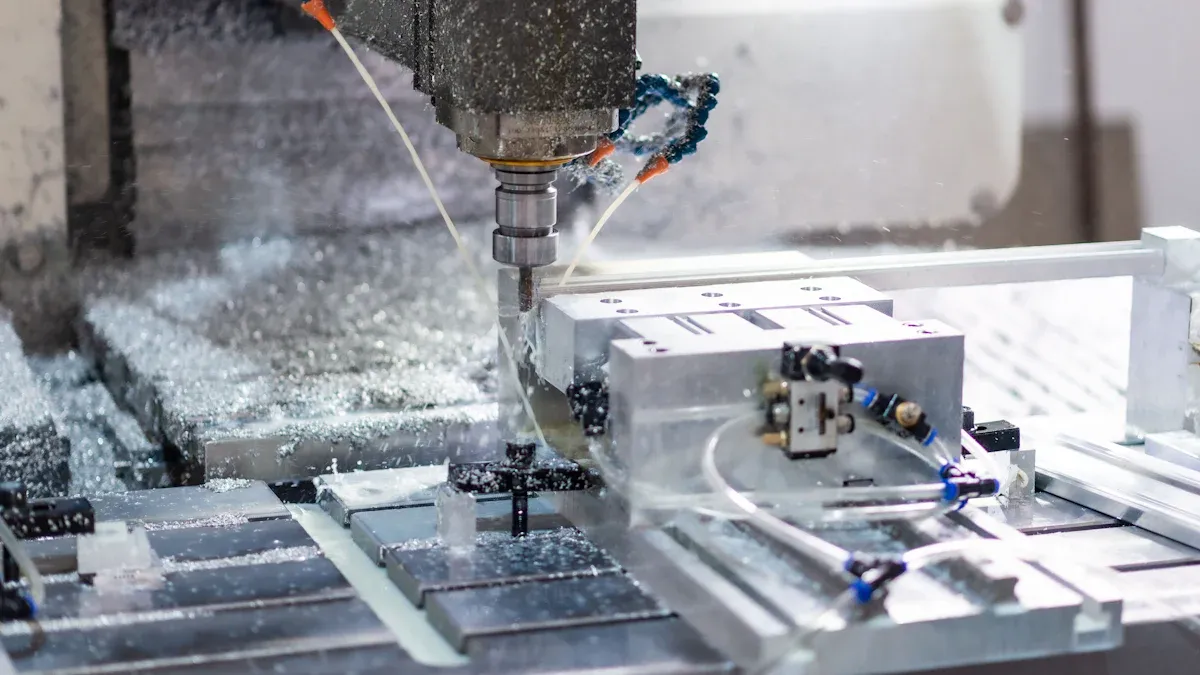
5-Axis CNC Machining Centers utilize a combination of linear and rotational movements to achieve high precision in machining complex components. The movements can be categorized into three linear axes and two rotational axes:
| Axis | Movement Type | Description |
|---|---|---|
| X | Linear | Moves the tool laterally across the workpiece. |
| Y | Linear | Moves the tool or table in the depth direction. |
| Z | Linear | Raises or lowers the tool along the vertical axis. |
| A | Rotational | Tilts the tool or workpiece forward and backward. |
| B | Rotational | Tilts the tool or workpiece side to side. |
This combination of movements allows manufacturers to create intricate parts in a single setup. The ability to approach the workpiece from various angles significantly reduces production time and enhances accuracy. The simultaneous movement across multiple axes improves machining capabilities, allowing for continuous tilting of the tool along a curved path. This flexibility reduces tool interference and improves surface finish on complex geometries.
Machine Configurations
The configuration of a 5-Axis CNC Machining Center plays a crucial role in its performance and application. Different configurations offer unique advantages and limitations. Here are some common configurations:
| Configuration Type | Description | Advantages | Applications |
|---|---|---|---|
| Trunnion Table | Rotary axes are contained in the trunnion table; head is stationary. | Excellent undercut capabilities; larger usable work volume; more torque at lower RPMs. | Aerospace and energy industries. |
| Swivel Head | All rotations are completed by the head; can be head-head or head-table. | Allows machining of heavier parts; versatile for different setups. | Precision work requiring tool angle changes. |
| Table/Table | Workpiece on rotary tables, spindle head stationary. | Excellent rigidity for heavy cutting. | Large aerospace components, energy equipment. |
| Head/Head | Rotational axes in spindle head, workpiece stationary. | Ideal for complex, lightweight parts. | Medical implants, precision molds. |
| Head/Table | Rotary table with tilting spindle head. | Versatile for various part sizes. | Various complex geometries. |
Each configuration affects the machining process’s efficiency and quality. For instance, the trunnion table configuration provides excellent support and rigidity, making it suitable for heavy workpieces. In contrast, the swivel head configuration enhances flexibility, allowing for complex geometries that require precise tool angle adjustments.
By understanding these movements and configurations, manufacturers can select the appropriate 5 Axis CNC Machining Center for their specific needs, ultimately improving production efficiency and component quality.
Advantages of 5 Axis CNC Machining Center
Enhanced Precision
5-Axis CNC Machining Centers excel in delivering exceptional precision. These machines can achieve tolerances as tight as ±0.005mm, making them ideal for high-precision manufacturing. This level of accuracy is crucial in industries such as aerospace and medical devices, where even the slightest deviation can lead to significant issues. The ability to machine complex geometries in a single setup minimizes the risk of errors associated with multiple fixtures.
Tip: Utilizing 5-Axis technology allows manufacturers to maintain tighter tolerances, which enhances the overall quality of the components produced.
Increased Efficiency
The efficiency of 5-Axis CNC Machining Centers significantly surpasses that of traditional machining systems. These machines can reduce complex part production time by up to 50%. They achieve this by completing intricate parts in fewer setups, which leads to shorter lead times. The simultaneous movement along multiple axes eliminates the need for multiple re-fixturing, a common source of positioning errors in 3-axis systems.
- 5-Axis machines allow for:
- Continuous multi-axis cutting, enabling intricate geometries to be machined in a single operation.
- Reduced setup times, as optimized workpiece positioning minimizes kinematic errors.
Research indicates that optimizing setup parameters can lead to substantial reductions in manufacturing time. By minimizing setup time, manufacturers can increase throughput and respond more quickly to market demands.
Greater Versatility
5-Axis CNC Machining Centers offer unparalleled versatility in machining a wide range of materials. They can efficiently process tough steels, corrosion-resistant alloys, and complex composites that are challenging for traditional systems. This capability is particularly beneficial in industries such as aerospace, automotive, and medical devices, where diverse materials are often required.
| Industry | Material Type | Key Advantage |
|---|---|---|
| Aerospace | Carbon-fiber, glass-reinforced | Unrestricted multi-angle access for precise trimming and ultra-tight tolerances |
| Automotive | Various plastics, composites | Smooth surfaces and quick design changes for prototype molds and trim pieces |
| Marine/Railway | Large-scale molds | Expansive work envelopes for processing oversized sections without seams |
| New Energy | Epoxy, composite structures | Accurate machining of long structures in one seamless operation |
The ability to handle a variety of materials enhances the adaptability of 5-Axis CNC Machining Centers, allowing manufacturers to meet diverse production needs without compromising on quality or efficiency.
Comparison with 3-Axis and 4-Axis Systems
Key Differences
The differences between 3-Axis, 4-Axis, and 5-Axis CNC machining centers are significant, particularly in terms of movement capabilities and complexity of parts produced. The following table summarizes these differences:
| Feature | 3 Axis CNC Machining Center | 5 Axis CNC Machining Center |
|---|---|---|
| Number of Axes | X, Y, Z (3 linear axes) | X, Y, Z + 2 rotational axes |
| Tool Approach Angle | Fixed vertical approach | Tool can tilt and rotate to any angle |
| Part Setup | Multiple re-clamping often required | Single setup for multi-face machining |
3-axis machines limit movement to three directions, restricting their ability to create complex geometries. In contrast, 4-axis machines introduce rotation, allowing for more intricate designs. However, 5-axis machines provide the highest flexibility, enabling the production of complex shapes while minimizing manual repositioning of parts.
Unique Benefits of 5 Axis CNC Machining Center
5-axis CNC machining centers offer several unique advantages over their 3-axis and 4-axis counterparts:
- Simplified Production of Complex Parts: The additional axes allow for intricate parts to be created with fewer setups, crucial for reducing time and costs.
- Enhanced Machining Efficiency: These machines enable tools to approach workpieces from various angles, leading to reduced cycle times and faster production.
- Precision and Consistency: Maintaining tight tolerances across complex geometries ensures that parts meet exact specifications, vital in precision-critical industries.
- Improved Surface Quality: Continuous tool movement results in smoother finishes, minimizing the need for secondary processes and saving time and resources.
By consolidating operations into a single setup, 5-axis CNC machining reduces manual intervention. This leads to streamlined production processes and improved consistency. The reduction in manual handling also minimizes potential human error, significantly boosting productivity.
Applications Across Industries
Aerospace
5-Axis CNC Machining Centers play a pivotal role in the aerospace industry. They are essential for producing turbine blades and engine components, which require tight tolerances and complex geometries. The following points illustrate their significance:
- Turbine blades feature twisted airfoil shapes that necessitate continuous five-axis interpolation.
- This technology ensures high surface quality and dimensional accuracy, critical for performance and safety.
Automotive
In the automotive sector, 5-Axis CNC Machining Centers enhance the production of complex geometries in car engines. Their applications include:
- Manufacturing intricate parts such as cylinder heads, gearboxes, and drive axles with high precision.
- Producing molds with deep cavities and undercuts, which improves overall efficiency and accuracy.
The benefits of using 5-axis technology in automotive manufacturing are substantial:
| Benefit | Improvement Percentage |
|---|---|
| Setup reduction | 70-80% fewer fixture changes |
| Tool life improvement | 25-40% longer tool longevity |
| Quality enhancement | ±0.0002″ repeatability |
| Labor efficiency | Reduced operator intervention |
Medical Devices
5-Axis CNC Machining Centers are crucial in the medical device industry, where precision is paramount. They enable the production of complex geometries in a single setup, which is essential for sophisticated medical devices. Key advantages include:
- Achieving tight tolerances often within microns, critical for ensuring device functionality and safety.
- Producing intricate shapes and features that traditional machining cannot efficiently create.
The precision offered by 5-axis machining significantly impacts the quality and safety of medical implants. For instance, it minimizes human intervention, ensuring perfect alignment and tight tolerances. This capability is vital for implants like hip joints and bone plates, where even minor deviations can compromise patient safety.
Note: The superior surface finishes achieved through 5-axis machining reduce the need for manual polishing, speeding up production timelines.
Tool and Die Making
5-Axis CNC Machining Centers revolutionize the tool and die making industry by enhancing precision and efficiency. These machines excel in operational efficiency by allowing tools to access workpieces from any direction without the need for repositioning. This capability significantly reduces machining time and minimizes the potential for errors, making them particularly advantageous in tool and die making.
The following table outlines the key advantages of using 5-axis CNC machining centers in this field:
| Advantage | Description |
|---|---|
| Improved Precision | Maintains tolerances within sub-micron levels, essential for high-stakes applications. |
| Reduced Cycle Times | Faster machining due to tangential cutting, reducing time by 25-50% for complex parts. |
| Enhanced Tool Life | Optimal cutting angles lead to less wear on tools, extending their lifespan. |
| Increased Productivity | Single-setup approach eliminates the need for repositioning, reducing errors and downtime. |
In tool and die making, the ability to handle complex geometries in a single operation is crucial. 5-axis machines allow for intricate designs to be completed in one setup, which saves time and labor costs. This efficiency leads to faster turnaround times for prototypes and custom orders.
Key benefits include:
- Eliminating Multiple Setups: Reduces downtime by machining from all angles in one setup.
- Improved Cutting Speeds and Efficiency: Enhanced precision optimizes cutting paths, reducing idle time and accelerating production.
- Better Surface Finishes: Achieving tighter tolerances reduces the need for additional finishing steps, further speeding up production.
By integrating 5-axis CNC technology, manufacturers can significantly enhance their production capabilities. This technology not only improves the quality of the tools and dies produced but also accelerates the overall manufacturing process, ensuring timely delivery and high customer satisfaction.
Best Practices for Implementation
Choosing the Right Machine
Selecting the appropriate 5-Axis CNC Machining Center is crucial for meeting specific manufacturing needs. Consider the following criteria when making a choice:
| Criteria | Description |
|---|---|
| Technical Capabilities | Assess the provider’s state-of-the-art 5-axis CNC machines capable of handling complex geometries. |
| Quality Control Measures | Look for advanced measurement technologies like CMMs and 3D scanners for accurate inspection. |
| Industry Experience | Consider the provider’s track record in producing parts for industries with demanding precision. |
| Specific Requirements | Ensure the equipment can accommodate specific part dimensions and production volumes. |
Additionally, manufacturers should evaluate workpiece dimensions, machining materials, and precision requirements to ensure the selected machine aligns with production goals.
Training and Skill Development
Investing in training for operators of 5-Axis CNC machines enhances both performance and safety. Specialized training programs can include:
- Expert 5 Axis CNC Programming and Calibration Training: Focuses on mastering programming and precision calibration.
- 5-Axis Programming Fundamentals: Covers essential programming concepts, including toolpath strategies.
- CAM Software Training: Teaches best practices for machine setup and programming.
- Laser Interferometer Training: Provides skills for accuracy verification.
- Machine Accuracy Diagnostics: Develops skills to evaluate CNC performance and plan maintenance.
Such training ensures operators can maximize the technology’s potential, directly influencing machining operations’ efficiency and safety.
Maintenance and Upkeep
Regular maintenance is vital for ensuring optimal performance and extending the lifespan of 5-Axis CNC Machining Centers. Implement these best practices:
- Ensure that the automatic tool change mechanism operates smoothly by cleaning and lubricating it as per the manufacturer’s recommendations.
- Confirm the alignment of the machine’s axes by performing a precision calibration check and correct any misalignment promptly.
- Inspect ball screws and linear guides for signs of wear, damage, or contamination, and clean and lubricate them according to the manufacturer’s guidelines.
- Perform a thorough inspection of the coolant system, including pumps, filters, and hoses, and replace any worn or damaged parts.
By adhering to these practices, manufacturers can reduce maintenance costs and extend equipment life by up to 20%. Regular inspections and systematic preventive maintenance safeguard the longevity and efficiency of CNC machines.
The 5 Axis CNC Machining Center stands as a cornerstone in modern manufacturing. Its ability to produce complex components with high precision significantly enhances operational efficiency. Key advantages include reduced setup times, improved surface finishes, and the capability to work with diverse materials. Industries such as aerospace, automotive, and medical devices benefit immensely from this technology.
As manufacturers continue to adopt 5 Axis CNC technology, they unlock transformative potential that drives innovation and competitiveness in the market.
FAQ
What is a 5-Axis CNC Machining Center?
A 5-Axis CNC Machining Center operates on five axes, allowing tools to move in multiple directions simultaneously. This capability enables the production of complex geometries with high precision and efficiency.
How does 5-Axis machining improve production efficiency?
5-Axis machining reduces setup times by allowing multiple faces of a part to be machined in a single operation. This minimizes manual repositioning and decreases overall production time.
What industries benefit from 5-Axis CNC Machining?
Industries such as aerospace, automotive, medical devices, and tool and die making benefit significantly from 5-Axis CNC Machining. These sectors require high precision and the ability to produce complex components.
What materials can be machined using 5-Axis CNC technology?
5-Axis CNC Machining Centers can handle a variety of materials, including metals, plastics, composites, and alloys. This versatility allows manufacturers to meet diverse production needs.
How do I maintain a 5-Axis CNC Machining Center?
Regular maintenance includes checking alignment, inspecting ball screws, and ensuring the coolant system functions properly. Following the manufacturer’s guidelines helps extend the machine’s lifespan and maintain optimal performance.
Post time: Mar-04-2026