


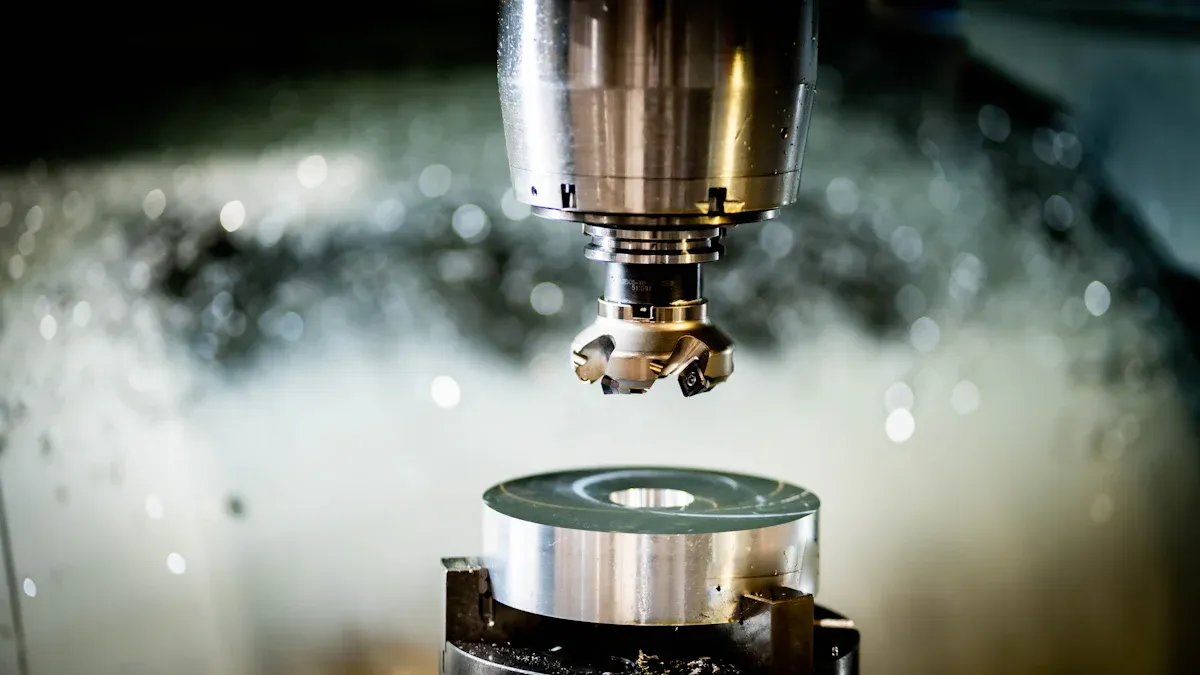
CNC drilling and milling machines are indispensable for achieving precision in modern manufacturing, fundamentally defining accuracy in part creation. The global CNC machine tools market is projected to grow annually at 7.50% from 2025 to 2034. As a leading CNC Machine Manufacturer, we provide these essential solutions, including versatile CNC Lathe options. We also offer specialized equipment like the Gantry Drilling Machine, and our expertise extends to Automotive Parts Machining. We pride ourselves on delivering OEM and Custom CNC Drilling and Milling Machine Solutions to meet diverse industrial needs.
Key Takeaways
- CNC machines use computer programs. They make parts with high accuracy. This helps many industries.
- CNC technology makes manufacturing faster. It reduces mistakes. It saves money by using less material.
- CNC machines are very flexible. They help create new designs quickly. They also make workplaces safer.
Core Principles of CNC Technology for Precision
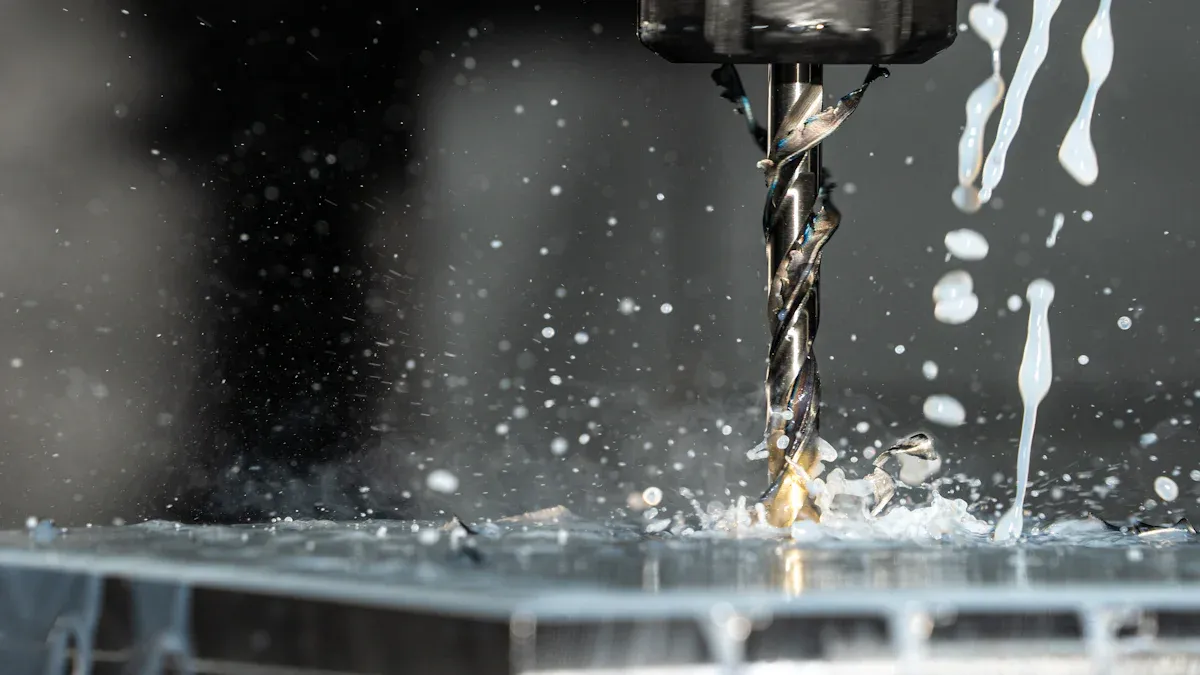
CNC technology forms the backbone of precision manufacturing. It automates processes through programmed commands, achieving high accuracy and repeatability. This technology allows for intricate customization of parts across various industries. The fundamental principles of CNC technology involve a sophisticated interplay between computer control, automated processes, and digital design transformation.
Computer Control Ensures Accuracy
Computer control in CNC machining significantly improves accuracy. It removes inconsistencies human error causes, leading to highly precise and repeatable movements. This results in greater overall accuracy compared to manual processes. The computer system interprets CAD models into G-code, directing the machine’s movements, speed, depth, and path. It continuously adjusts for variations.
Modern CNC machines feature advanced feedback devices. These include rotary encoders or linear scales. They provide real-time data on the position and movement of the machine’s axes. These mechanisms are crucial for compensating for issues like thermal expansion and mechanical faults, boosting the machine’s precision. Upgrading CNC software and hardware dramatically enhances precision. For instance, new systems allow machines to look ahead up to 1,000 lines of point data in the program. This predictive capability enables the computer to anticipate tool placement, resulting in more efficient and accurate machining operations.
The hardware essentials of a CNC system include the machine tool, such as a milling machine or lathe, and a spindle that rotates the cutting tool. Axes guide the tool and part, while a control panel allows for commands and monitoring. Software and programming are equally vital. CAD software creates designs, and CAM software converts these designs into machine-readable G-code, which controls movement and speed, and M-code, which manages auxiliary actions. Various cutters, like end mills, drills, and turning tools, are held securely by toolholders for precision.
Repeatability Through Automated Processes
Automated processes are central to CNC technology’s repeatability. They ensure consistent output across multiple production runs. The design and programming phase involves using CAD software to create 3D models. CAM software then converts these designs into CNC code, including tool paths, cutting speeds, and feed rates. During setup and calibration, materials are secured, and appropriate tools are selected and calibrated to ensure consistent accuracy. The CNC machine operates automatically, controlling tool paths and feed rates to perform the cutting process.
Specific mechanisms contribute to this repeatability. A workholding device secures the workpiece during machining and reorientation. These include chucks, vises, fixtures, and pallets. An actuation system drives workpiece movement using motors, hydraulic/pneumatic actuators, or mechanical linkages. A control system interfaces with the CNC controller to execute programmed reorientation commands, ensuring synchronization. A feedback system monitors workpiece position and orientation using sensors or encoders to detect deviations and ensure accuracy.
Advances in feedback systems, such as high-resolution optical encoders and laser-based positioning, significantly improve the precision of workpiece reversing mechanisms, enabling sub-micron accuracy. Adaptive control algorithms adjust the mechanism’s behavior in response to material variations or tool wear, further enhancing reliability and repeatability. Modern CNC systems mitigate backlash, the mechanical play between components that can affect accuracy, through closed-loop control. This involves real-time correction of positional errors using feedback from linear encoders or optical sensors, directly contributing to enhanced repeatability in operations requiring axis reversals.
Digital Design to Physical Part Transformation
Transforming a digital design into a physical part using CNC technology follows a structured process.
- Designing the Part: Engineers and designers use Computer-Aided Design (CAD) software to create a digital representation. This defines the overall shape and minute details. CAD software allows for precise 3D model creation, easy dimension adjustments, and modeling how parts will join.
- Design to Machine Instructions: Computer-Aided Manufacturing (CAM) software translates the 3D model into precise instructions, typically G-code, for the CNC machine. G-code specifies where to move, how fast to go, which tools to use, and when to activate coolant. M-code controls additional machine functions like coolant activation or tool changes.
- Starting the Machine: Operators prepare the CNC mill by selecting appropriate cutting tools and feeding raw material (workpiece). They fix the workpiece onto the machine bed and upload the G-code to the machine’s computer. Ensuring safety measures are in place is also critical.
- The Machining Process: The operator starts the machine, which then executes the G-code. This involves positioning tools and removing material from the workpiece. The machine repeats the cutting process until the part is built. It automatically switches between tools, for example, for rough cutting then precise finishing, as the G-code dictates. Sensors monitor the entire process.
- Quality Assurance Final Audit: After machining, the component undergoes inspections to ensure it meets specifications. This includes CMM for precision dimensional checking and visual and functional tests for quality assurance.
Advantages Over Traditional Manufacturing Methods
CNC drilling and milling machines offer significant advantages over traditional manufacturing methods. They provide superior precision, enhanced efficiency, and reduced human error. These benefits make CNC technology indispensable in modern industrial settings.
Superior Precision and Tight Tolerances
CNC machining delivers exceptional accuracy and precision. It virtually eliminates human error due to autonomous operation and digital templates. This ensures uniformity in all outputs. Each part perfectly matches the prototype’s specifications. CNC machining achieves significantly tighter precision tolerances compared to manual machining. These tolerances often fall within ±0.001 inches (0.025 mm) or even tighter. This high level of accuracy comes from advanced technology like 5-Axis machining and automated processes. These processes minimize human error inherent in manual methods. Once programmed, a CNC machine replicates designs with precision across many units. This ensures uniformity and reliability.
CNC machining processes involve tighter tolerances compared to alternative remanufacturing technologies. Achieving tighter tolerances, such as ±0.001 inches, may necessitate specialized equipment or additional secondary processes. For example, Protolabs offers a standard prototype and production machining tolerance of ±0.005 inches (0.13 mm). For greater accuracy, their standard precision or production machining tolerance is ±0.002 inches (0.051 mm). They can also achieve ±0.0005 inches (0.0127 mm) on reamed holes and ±0.002 inches (0.051 mm) on feature locations. These features must be machined on the same side of the part. Depending on part geometry and material, even greater accuracy is often achievable if requirements are communicated.
Enhanced Speed and Production Efficiency
CNC machines deliver faster and more efficient production. They operate around-the-clock to meet high demands. They produce large quantities of parts in short periods. This makes them ideal for high-volume projects and increases overall productivity. Small CNC machines significantly boost production efficiency. A study by TechNavio indicates that adopting these machines leads to an increase in production efficiency of over 30% across various manufacturing sectors. Additionally, businesses utilizing small CNC technology report reducing lead times by up to 30%.
CNC machines also offer increased production options. Manufacturers update them with advanced software to expand functionality. This versatility allows for rapid adaptation to changing production needs. The ability to produce parts quickly and consistently translates directly into higher throughput and faster time-to-market for products.
Minimizing Human Error and Variability
CNC machining’s ability to produce highly precise and accurate parts is a significant benefit. Unlike traditional manual methods, which rely on human skill and consistency, CNC machines operate with computer-controlled precision. This ensures each part meets exact specifications. This accuracy is vital in industries where even slight deviations cause product failure. Furthermore, CNC machining excels in producing consistent and repeatable results. Once a design is programmed, it produces identical parts with minimal variation. This is crucial for mass production and maintaining uniform quality.
CNC machines offer precise control over all aspects of the manufacturing process. This reduces the risk of human error and enhances product quality. A key advantage over traditional machines is their ability to operate continuously with minimal human intervention. This not only increases production speed but also reduces the possibility of human error. Their repeatability allows a program to be stored and executed multiple times to produce identical parts. This ensures consistency in production batches.
CNC machining significantly reduces human error by automating the manufacturing process. This minimizes mistakes common in manual operations. Precise computer programming controls production. This ensures each part manufactures exactly to design. This automation eliminates variability and inconsistencies from manual handling, such as measurement inaccuracies, tool misalignment, or operator fatigue. By relying on sophisticated software and accurate machinery, CNC machining ensures consistent quality and repeatability. This leads to fewer defects and higher overall reliability. This reduction in human error improves efficiency, productivity, and results in cost savings from less rework and waste. CNC technology enhances manufacturing efficiency by improving the quality and consistency of parts. CNC machines execute cuts with incredible precision and repeatability. This leads to higher-quality parts with tighter tolerances. The automated nature of CNC machining significantly reduces the risk of human error. Unlike manual machining, where operator fatigue, distraction, or miscalculation leads to scrapped parts, CNC machines execute programmed instructions consistently every time. This results in consistent, high-quality parts without human limitations.
CNC machining requires less personnel. One skilled operator manages multiple autonomous machines. This reduction in labor, combined with efficiency and speed, leads to lower overall costs. These savings pass on to customers. CNC machines also provide a safer working environment. Operators are distanced from sharp tools, unlike conventional machines where direct contact is often required. Once a design loads, it is easily retrieved and reproduced consistently. This ensures uniformity regardless of operator changes. CNC machines also offer flexible scalability. They consistently execute desired quantities. CNC machining meets contemporary production requirements for precision, high production, and better efficiency. It produces the quality outcomes modern industries demand. CNC machines produce seamless fitting parts. This allows the assembly line to flow freely and manage high-production settings. CNC machining reduces energy loss and decreases labor. This provides a more sustainable alternative for energy-intensive industries. While some expertise is needed, CNC machining allows for the production of high-quality products with relatively less skill in actual parts creation compared to manual methods.
Diverse Applications in Precision Industries
CNC drilling and milling machines serve critical roles across numerous industries requiring high precision and reliability. These machines enable the creation of complex parts essential for advanced technological applications.
Aerospace and Defense Components
The aerospace and defense sectors rely heavily on CNC technology for manufacturing critical components. CNC milling creates complex parts such as airframes, engine mounts, and aerospace prototypes. It works with materials like aluminum alloys, titanium, and advanced composites, producing parts with tight tolerances. CNC drilling makes holes and openings in aerospace components, essential for fastening parts or hydraulic systems. It performs on both flat and curved surfaces, ensuring precision for structural integrity and function.
Medical Device Manufacturing
CNC machining is indispensable in medical device manufacturing. It produces a wide array of precise components. These include orthopedic implants like knee and hip replacements, and surgical instruments such as endoscopic tools. Manufacturers also create components for diagnostic equipment, pins, screws, and rods for various medical applications. CNC machines produce customized medical components with complex geometries and miniature parts for endoscopic tools.
Automotive Industry Parts
The automotive industry extensively uses CNC drilling and milling for producing high-performance parts. These machines manufacture engine components, including camshafts, cylinder heads, and crankshafts. They also produce transmission housings and various suspension components. CNC technology ensures the precision and durability required for modern vehicles.
Electronics and Semiconductor Production
Electronics and semiconductor industries demand extreme precision for their miniature components. CNC machines create intricate parts for circuit boards, connectors, and housings. They ensure the exact specifications necessary for optimal electronic performance.
Tool and Die Making
Tool and die making requires exceptional accuracy for creating molds, dies, and other tooling. CNC drilling and milling machines produce these tools with the tight tolerances needed for mass production. This ensures the quality and consistency of manufactured goods.
Advanced Features Enhancing Precision
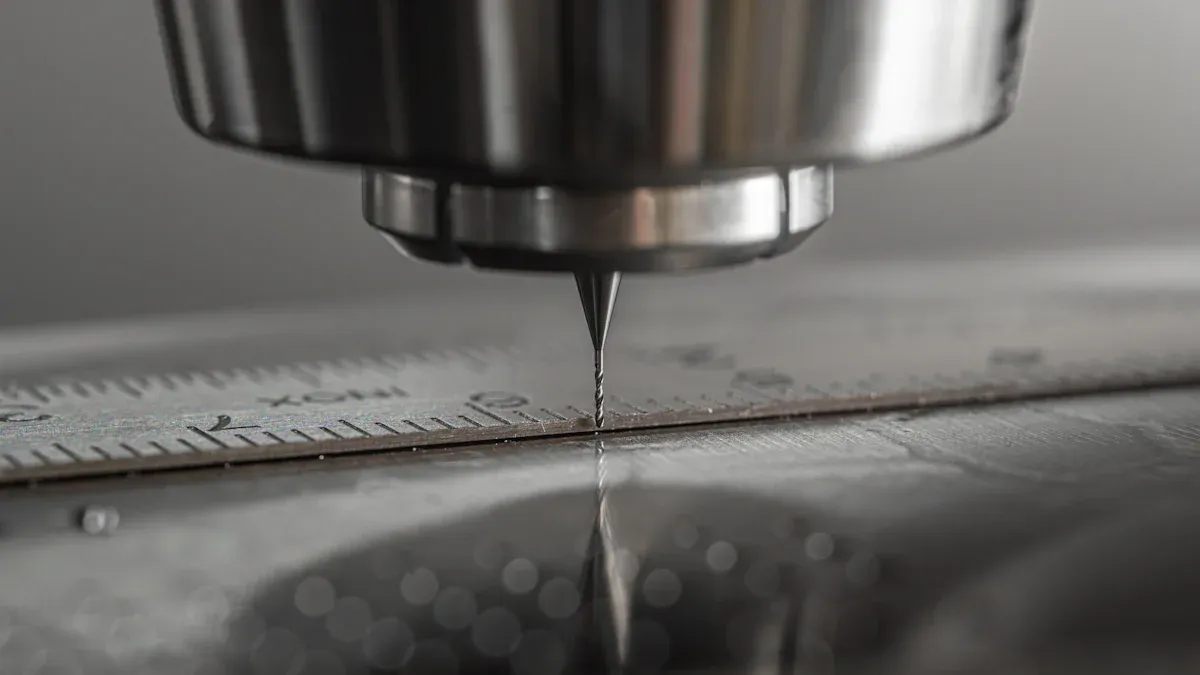
CNC drilling and milling machines incorporate advanced features. These features significantly boost precision and efficiency in manufacturing. They allow for the creation of highly complex and accurate parts.
Multi-Axis Machining Capabilities
Multi-axis machining capabilities greatly enhance precision in complex part manufacturing. Machines can work from multiple angles in a single setup. This ensures tighter tolerances and higher accuracy. This is crucial for meeting strict industry standards. Automated multi-axis systems minimize manual intervention. This lowers the risk of human error and improves consistency across production runs. For complex parts, multi-axis machines facilitate seamless transitions between cutting paths. They also provide more consistent part quality. For example, 4-axis machining adds a rotational axis, allowing for features on multiple sides without manual repositioning. 5-axis machining adds rotation around two axes. This enables machining extremely complex parts in one setup.
Automated Tool Changers and Libraries
Automated tool changers and libraries are vital for efficient CNC operations. They eliminate manual tool changes. This reduces downtime and minimizes errors. This speeds up production and increases precision. These systems allow for multiple operations without stopping the machine. This enhances productivity by reducing time spent on manual tool changes. They offer versatility in small spaces. They handle a wide range of materials and tasks without needing a large footprint. Automated tool changes ensure high precision and accuracy. They maintain consistent quality across all cuts. This also proves cost-effective in the long run. It reduces manual labor and material waste.
In-Process Measurement and Feedback Systems
In-process measurement and feedback systems significantly improve CNC machining accuracy. Advanced measurement systems automatically adjust machining parameters. They optimize cutting conditions without manual intervention. Continuous monitoring helps identify potential issues. This prevents machine breakdowns and maintains production schedules. These systems ensure parts meet specifications. They detect minute deviations, even for complex geometries. Real-time data allows adaptive control systems to optimize machining parameters continuously. This enhances process stability and part quality. Advanced probing systems, like touch probes and laser probes, provide detailed measurements and calibrations.
High-Speed Machining Techniques
High-speed machining (HSM) techniques involve specific methods to achieve rapid and precise manufacturing. Core factors for HSM include rigidity, tool balancing, and proper clamping methods. Rigidity minimizes tool deflection. This ensures high-quality surface finishes and accurate parts. Tool balancing prevents excessive vibration. Proper clamping secures the workpiece. HSM achieves high material removal rates. It improves productivity and lowers manufacturing costs. It also maintains precision and quality. This leads to better dimensional accuracy and superior surface smoothness. HSM minimizes tool wear and extends tool life. It uses advanced cutting tools, coatings, and precise tooling.
Beyond Precision: Broader Manufacturing Benefits
CNC drilling and milling machines offer significant advantages beyond mere precision. They provide extensive benefits across the entire manufacturing process. These machines enhance efficiency, reduce costs, and improve safety.
Increased Production Efficiency and Throughput
CNC machines dramatically increase production efficiency and throughput. Multi-spindle CNC drill machines enable simultaneous drilling of multiple holes. This provides a massive productivity gain. This is especially true in high-volume manufacturing where design is fixed. CNC machines boost production throughput once operational. This improvement comes from the centralization of operations. It enhances both throughput and overall production capacity.
Cost-Effectiveness Through Reduced Waste
CNC machines contribute to significant cost savings by reducing waste. They optimize material usage. This minimizes scrap. CNC routing and EDM technologies are programmed for maximum material utilization. This efficiency conserves resources. It translates into cost savings. CNC machines are programmed for precision. This eliminates errors in the machining process. It reduces waste. Computerized design and advanced programming ensure precise material removal. This uses less raw material to manufacture the same product. This leads to immediate cost savings.
Flexibility in Design and Prototyping
CNC machining technology enables manufacturers to customize products. Its flexibility and precision make it ideal for custom design. It facilitates rapid prototyping. It quickly transforms design concepts into physical prototypes. This accelerates time-to-market. CNC machining offers exceptional flexibility in creating complex geometries. This is due to the computer-controlled toolpath. CNC prototyping accelerates the development process. It eliminates the need for molds and manual adjustments.
Improved Workplace Safety
CNC machines significantly enhance workplace safety. They often come with protective enclosures. These contain cutting, grinding, and drilling processes. This prevents debris from harming workers. It eliminates the need for close proximity to moving parts. CNC machines reduce human error. They follow precise computer programs. This leads to fewer accidents. CNC machines lessen physical strain on workers. They automate tasks that traditionally involved heavy lifting.
The Role of CNC Lathe in Complementary Precision
Understanding CNC Lathe Operations
A CNC Lathe rapidly rotates a piece of material. A computer-controlled cutting tool moves to cut and shape it. This process removes material to create a complex, finished part. The term ‘CNC’ stands for Computer Numerical Control. This distinguishes it from manual lathes by using a computer for accuracy and speed. Automated subtractive manufacturing is the main idea. It starts with a solid block (blank or workpiece) and cuts away material until only the desired shape remains. The workpiece spins, and the cutting tool moves towards it. This reverses a CNC mill where the tool rotates and the workpiece is stationary. Engineers create a 2D or 3D digital model of the final part using CAD software. CAM software then processes this model, planning the machining strategy. This includes tool selection and paths. CAM software translates the plan into G-code, a text file with instructions for the machine. The CNC Lathe’s onboard computer (controller) loads the G-code file. It reads the code and sends electrical signals to motors for precise physical actions. Computer control enables CNC Lathes to achieve extremely tight tolerances, often ±0.001 inches.
Synergies with Drilling and Milling
CNC Lathes work in synergy with drilling and milling machines. Lathes excel at creating cylindrical or rotational parts. They perform operations like turning, facing, and threading. Drilling machines create precise holes. Milling machines shape non-rotational features, such as flat surfaces, slots, and complex contours. Together, these machines allow manufacturers to produce parts with both rotational and prismatic features. This integrated approach ensures comprehensive part completion. It often eliminates the need for multiple setups on different machines.
Expanding Machining Capabilities
Combining CNC drilling, milling, and CNC Lathe operations significantly expands machining capabilities. This is especially true with multi-axis capabilities. It allows for turning, milling, drilling, and tapping all within one setup. This integration improves throughput and accuracy. It also enables handling a wide range of part sizes and production complexities. This comprehensive approach streamlines the manufacturing process. It reduces lead times and enhances overall product quality.
CNC drilling and milling machines are indispensable for modern precision manufacturing. Their future involves significant innovations. Manufacturers will see increased sustainability through eco-friendly materials and energy-efficient operations. AI and automation will enhance precision, optimize toolpaths, and revolutionize predictive maintenance, further boosting efficiency alongside advancements in CNC Lathe technology.
FAQ
What is CNC technology?
CNC technology uses computer programs to control machine tools. It ensures precise and automated manufacturing processes.
How do CNC machines enhance precision?
CNC machines follow digital instructions. This minimizes human error. They achieve tight tolerances and consistent part quality.
Which industries benefit from CNC machining?
Aerospace, medical, automotive, and electronics industries widely use CNC machines. They rely on them for high-precision component production.
Post time: Jan-19-2026