


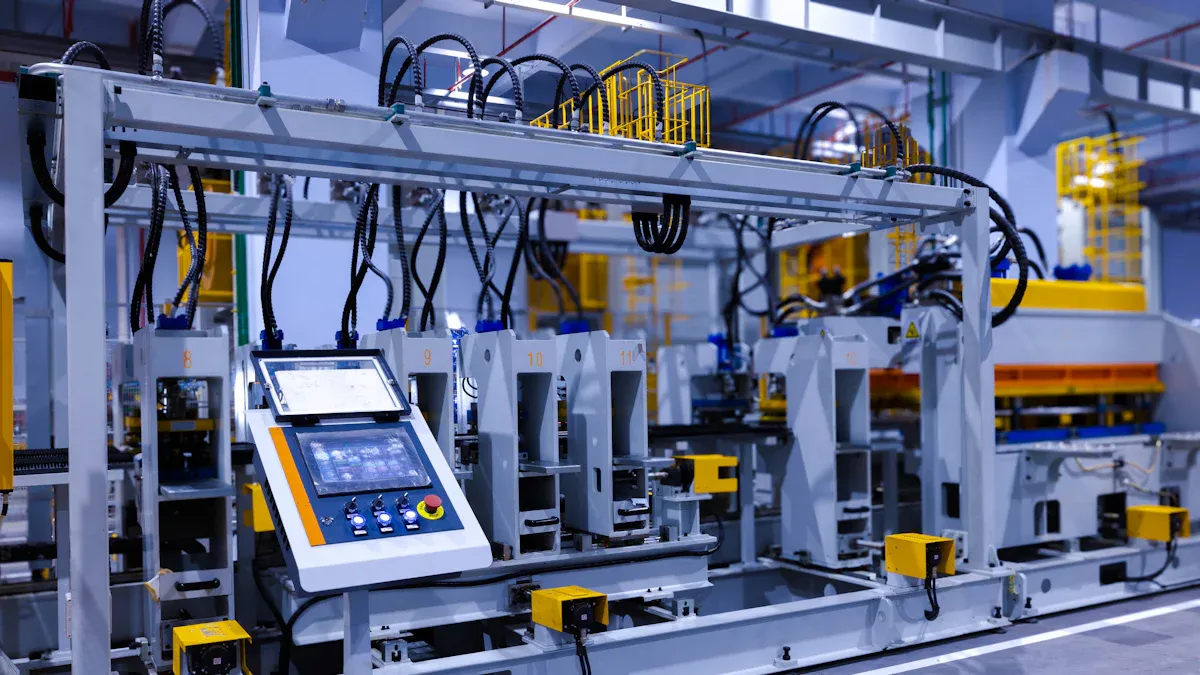
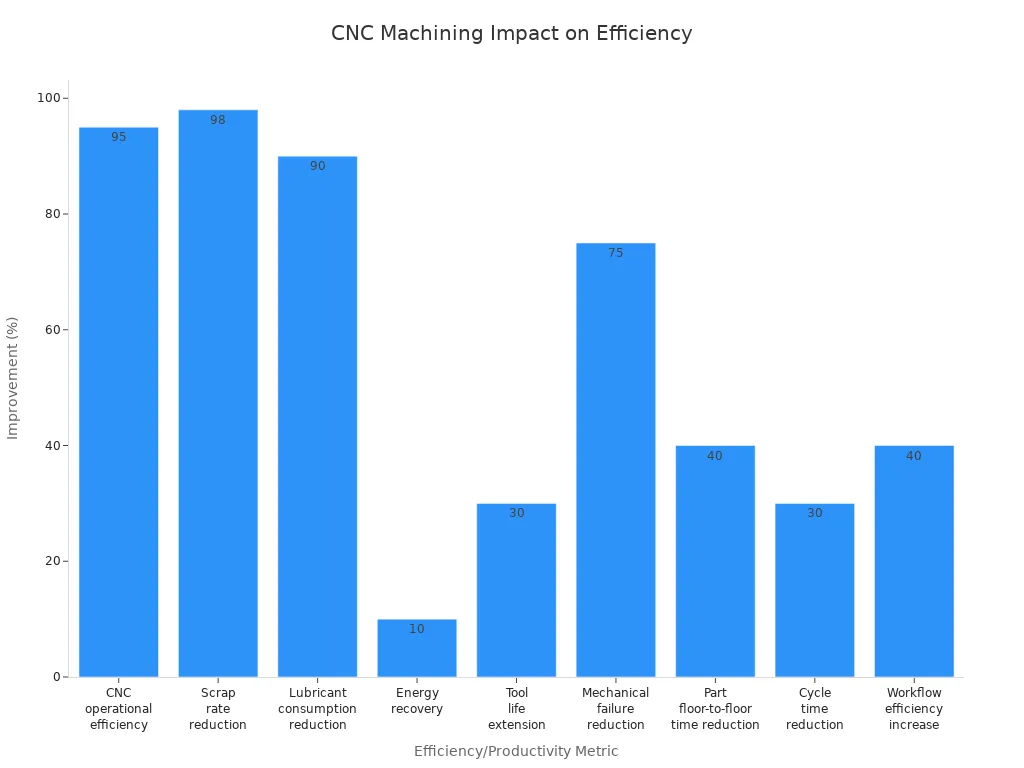
CNC machining centers, including advanced CNC lathe machines, significantly streamline production processes in various industries. They enhance precision, leading to improved product quality and reduced human error. By integrating advanced automation, these machines, such as the 5-axis machining center, can operate at high efficiency levels. For instance, companies utilizing a 5 axis CNC machine for aerospace machining can increase operational efficiency by up to 30%. This efficiency translates into shorter lead times, allowing manufacturers to meet market demands swiftly. Additionally, CNC machining solutions for the oil & gas industry and CNC gantry milling machines for large parts further exemplify the versatility and effectiveness of CNC technology in enhancing productivity.
Key Takeaways
- CNC machining centers boost manufacturing efficiency by automating processes, reducing human error, and ensuring consistent quality.
- Industries like aerospace and renewable energy benefit from CNC technology, producing high-precision components that meet strict safety and performance standards.
- CNC machining allows for lightweight structures, enhancing fuel efficiency in aerospace and optimizing energy output in renewable energy applications.
- Customization options in CNC machining enable manufacturers to create tailored products, improving market appeal and functionality.
- Integrating CNC machining centers can lead to significant cost savings and faster production times, helping businesses stay competitive.
CNC Machining Centers in the Aerospace Industry
Precision Components
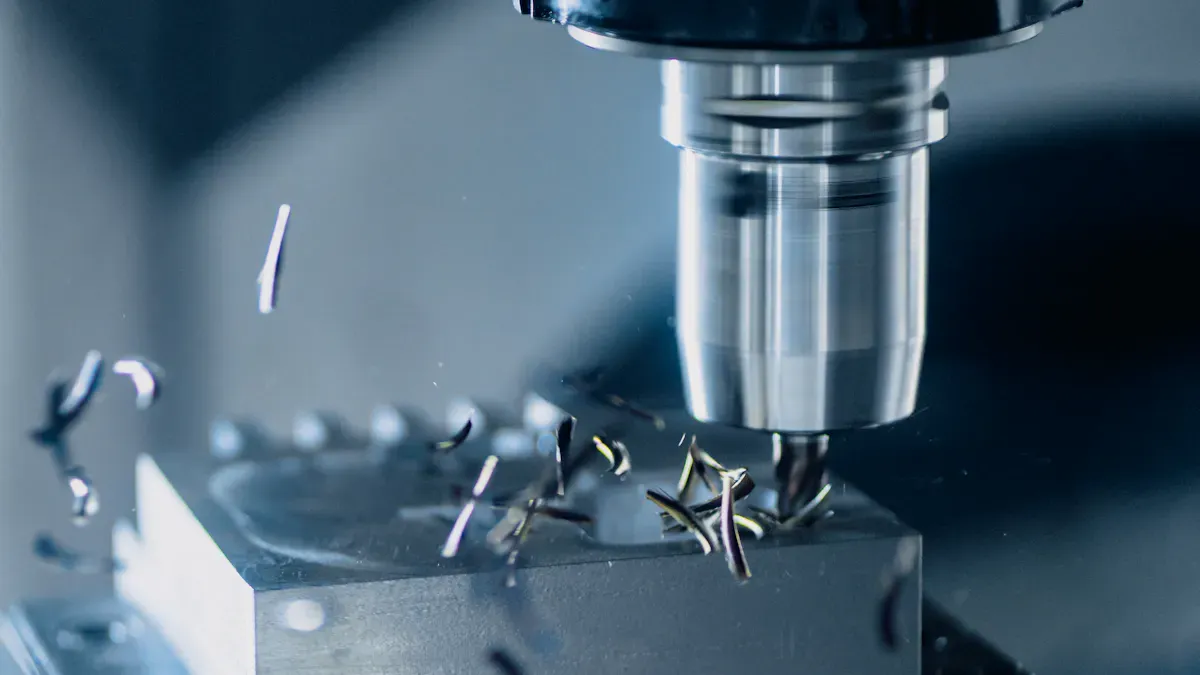
CNC machining centers play a crucial role in producing high-precision components for the aerospace industry. They manufacture essential parts such as turbine blades, structural brackets, and landing gear components. These components require tight tolerances to ensure safety and performance. The advanced capabilities of CNC machining allow manufacturers to create complex geometries that meet stringent aerospace standards.
- Key Benefits of CNC Machining in Aerospace:
- Maintains tight tolerances for critical components.
- Handles exotic materials like titanium and aluminum.
- Ensures consistent quality across production runs.
In the aerospace sector, where precision is paramount, CNC machining has revolutionized the manufacturing process. It allows for the creation of parts that must withstand extreme conditions, ensuring reliability and performance. The ability to produce components with high accuracy minimizes the risk of failure, which is critical in aerospace applications.
Lightweight Structures
CNC machining is particularly advantageous in the aerospace sector as it enables the creation of lightweight components. Weight is a significant factor in aerospace technology, impacting fuel efficiency and overall performance. The process allows for the fabrication of structures with thin walls using strong yet lightweight materials. This capability is essential for producing various aircraft parts.
| Component Type | Material | Benefits |
|---|---|---|
| UAV Propulsion Systems | Inconel, Titanium | 40% weight reduction |
| Structural Components | Carbon fiber composites | Superior strength-to-weight ratio |
By utilizing CNC machining centers, manufacturers can achieve significant weight reductions while maintaining structural integrity. This innovation leads to enhanced performance and efficiency in aerospace applications.
CNC Machining Centers in Renewable Energy
Turbine Manufacturing
CNC machining centers significantly enhance turbine manufacturing processes in the renewable energy sector. These centers produce critical components such as turbine hubs, blade molds, and precision-machined gearboxes. The ability to create complex geometries with high accuracy is essential for optimizing turbine performance and efficiency.
- Key Applications of CNC Machining in Turbine Manufacturing:
- Turbine hubs and blade molds
- Precision-machined gearboxes and bearings
- Nacelle housings for internal mechanisms
Several companies have successfully integrated CNC machining into their turbine production. For instance, Siemens Gamesa in Spain utilizes 5-axis CNC machining to create large molds for wind turbine blades. This innovation enhances aerodynamic efficiency, leading to improved energy output. Similarly, Suzlon Energy in India produces rotor blades up to 54.8 meters long, relying on CNC machining for precision and consistency.
Solar Panel Production
CNC machining centers also play a vital role in solar panel production. They are essential for manufacturing custom mounts, frames, and thermal components. These components ensure durability and precision, which are critical for the effective functioning of solar power systems.
- Benefits of CNC Machining in Solar Panel Production:
- Produces aluminum panel frames and mounts
- Creates machined joints and couplings for solar trackers
- Manufactures housings for inverters and cooling systems
The integration of CNC machining in solar projects has proven beneficial. Venttup Ventures provided CNC-manufactured mounting structures for solar installations, achieving a cost reduction of 6-8% on a 100 MT volume delivery. This efficiency not only lowers production costs but also promotes a greener manufacturing process by reducing waste and optimizing resource usage.
| Renewable Energy Source | Key CNC Applications |
|---|---|
| Wind Energy | Turbine hubs & blade molds, precision-machined gearboxes & bearings, nacelle housings for internal mechanisms |
| Solar Energy | CNC-made aluminum panel frames & mounts, machined joints and couplings for solar trackers, housings for inverters & cooling systems |
| Hydropower | Large CNC-machined turbine blades & runners, shafts & casings for durability, seals & valves for leak prevention under high pressure |
CNC machining centers enhance resource efficiency by enabling precise material removal, which reduces waste. This precision contributes to a decrease in excess material consumption, promoting a greener manufacturing process.
CNC Machining Centers in Robotics
Custom Parts Fabrication
CNC machining centers significantly enhance custom parts fabrication in the robotics industry. By integrating CNC technology with industrial robots, manufacturers achieve increased efficiency and reduced human error. This combination allows for the performance of complex tasks, which is essential for producing high-quality custom parts.
- Key Advantages of CNC Robotics in Custom Parts Fabrication:
- Increased efficiency in production processes.
- Enhanced precision in manufacturing custom parts.
- Reduced labor costs and improved safety.
CNC machines excel at loading and unloading materials, handling workpieces, and performing repetitive tasks. This automation streamlines operations, allowing manufacturers to focus on innovation and design improvements.
Prototyping and Testing
CNC machining centers also play a vital role in prototyping and testing within robotics development. They create high-quality physical models that allow engineers to validate design ideas quickly. This rapid prototyping capability is crucial for refining concepts before full-scale production.
- Applications of CNC Machining in Prototyping:
- Producing parts with ultra-tight tolerances, essential for robotics.
- Supporting Research and Development across various sectors, including automotive and aerospace.
- Facilitating quick iterations of design ideas, leading to faster project timelines.
In the automotive industry, CNC prototype machining is a standard practice. This method parallels the needs in robotics, where precision components are critical. By utilizing CNC machining, developers can ensure that their robotic systems function effectively and meet performance standards.
CNC Machining Centers in Medical Devices
Surgical Instruments
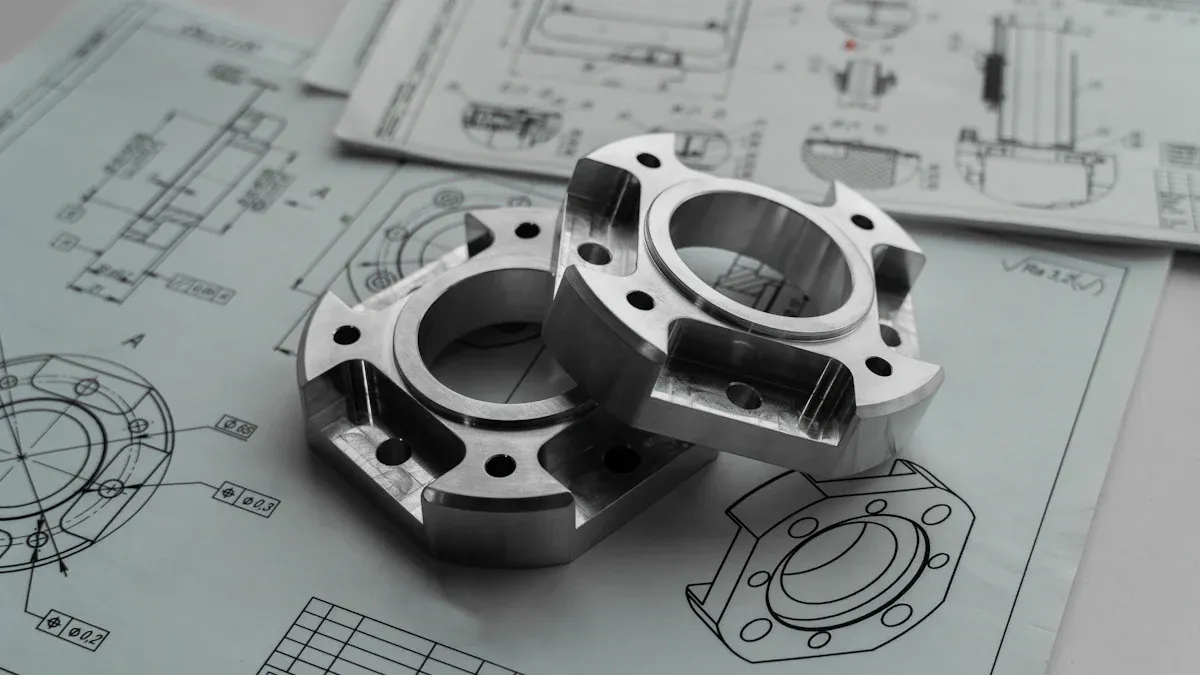
CNC machining centers are essential in the production of surgical instruments. These instruments require high precision and stringent quality standards to ensure patient safety. Manufacturers utilize CNC technology to create tools such as scalpels, forceps, and surgical scissors. The ability to produce these instruments with exact specifications minimizes the risk of errors during surgical procedures.
Key Regulatory Standards for Surgical Instruments:
Regulatory Standard Description FDA Quality System Regulation (QSR) Governs medical device manufacturing, ensuring consistent production and control according to quality standards. ISO 13485 International standard for medical device quality management systems, aligning closely with FDA requirements and recognized globally. Material Traceability Requires detailed records of raw materials to ensure safety and accountability in case of recalls. Process Validation Ensures that the machining process consistently produces parts that meet specifications.
By adhering to these standards, manufacturers can guarantee that their surgical instruments meet the necessary safety and performance criteria. The integration of CNC machining centers allows for rapid production while maintaining high quality.
Implant Manufacturing
CNC machining centers also play a critical role in implant manufacturing. These implants, such as hip and knee replacements, must meet specific requirements for strength and biocompatibility. The precision offered by CNC machining ensures that each implant fits perfectly and functions as intended.
How CNC Machining Centers Ensure Precision and Safety in Implant Manufacturing:
Evidence Description Precision Manufacturing Ensures that medical devices have the necessary strength and longevity to perform their intended function. Rigorous Quality Control Components are thoroughly inspected for dimensional accuracy, surface finish, and industry specifications. Biocompatible Materials The use of materials that are safe for the human body is crucial for implant safety.
Additionally, smart manufacturing techniques enhance the production process. By utilizing big data and AI, manufacturers can optimize machining processes, achieving a level of precision that significantly improves safety.
Case Studies in Implant Manufacturing:
- Custom Titanium Hip Implants: Tailored to patient anatomy with specialized machining techniques for osseointegration.
- High-Precision Surgical Forceps: Achieved sharpness and durability using 5-axis CNC milling.
- Durable Housings for Handheld Ultrasound Devices: Optimized design for strength and watertight sealing using 5-axis CNC machining.
CNC machining centers not only enhance the efficiency of implant production but also ensure that the final products meet the highest standards of quality and safety.
CNC Machining Centers in Electronics
Circuit Board Production
CNC machining centers significantly enhance circuit board production in the electronics industry. They provide high precision in creating intricate pathways and cutouts essential for circuit boards. This precision ensures that electronic components fit together perfectly, which is crucial for device functionality.
- Key Advantages of CNC Machining in Circuit Board Production:
- High speed for efficient production.
- Adaptability to various materials, including copper-clad laminates and fiberglass.
- Ability to achieve tight tolerances for complex electronic applications.
- Consistent quality across all produced boards.
The rapid prototyping capabilities of CNC machining allow manufacturers to create prototypes quickly. This speed enables faster testing and design optimization, which is vital in the fast-paced electronics market. As a result, manufacturers can reduce lead times and bring products to market more swiftly.
Enclosure Fabrication
CNC machining centers also play a crucial role in the fabrication of electronic enclosures. These enclosures must fit tightly and function correctly to protect sensitive components. The high precision offered by CNC machining ensures that each enclosure meets these requirements.
- Benefits of CNC Machining in Enclosure Fabrication:
- Consistency in production, maintaining quality across multiple enclosures.
- Capability to create intricate designs, accommodating the complex shapes of modern electronic devices.
- Functional protection and aesthetic appeal, essential for devices like smartphones and laptops.
- Flexibility to work with various materials, allowing customization based on specific device needs.
By utilizing CNC machining centers, manufacturers can produce enclosures that not only protect but also enhance the overall design of electronic devices. This capability contributes to the longevity and reliability of products in a competitive market.
CNC Machining Centers in Tooling
Tool Production
CNC machining centers play a vital role in tool production within the manufacturing sector. They enable the efficient creation of molds and dies, which are essential for various manufacturing processes. These centers produce injection molds, die-casting molds, stamping dies, and progressive dies with high precision.
- Key Roles of CNC Machining Centers in Tool Production:
| Key Role | Description |
|---|---|
| Manufacture of molds and dies | CNC machining centers are essential for producing injection molds, die-casting molds, stamping dies, and progressive dies. |
| High precision and quality | They ensure high accuracy, tight tolerances, and superior surface finishes. |
| Complex shape creation | CNC machining supports the creation of intricate 3D shapes for both plastic and metal components. |
| Impact on production | Directly influences production quality, cycle time, and the lifespan of molds. |
| Toolmaking techniques | Commonly utilizes CNC EDM and CNC milling for detailed toolmaking processes. |
The ability to produce complex geometries quickly enhances operational efficiency. Companies leveraging CNC technology can boost their efficiency by up to 30%. This improvement allows manufacturers to meet increasing demands while maintaining high-quality standards.
Maintenance and Repair
CNC machining centers also contribute significantly to the maintenance and repair of tools. Regular maintenance ensures that tools operate at peak performance, reducing downtime and extending their lifespan.
- Benefits of CNC Machining in Maintenance and Repair:
| Evidence Type | Description |
|---|---|
| Market Growth | The global market for CNC machines is expected to grow by over 8% annually, indicating their importance in manufacturing. |
| Efficiency Increase | Companies using CNC technology can boost operational efficiency by up to 30%. |
| Production Improvement | CNC machining reduces setup times and enhances machining speeds, allowing for complex geometries to be produced easily. |
By utilizing CNC machining for repairs, manufacturers can restore tools to their original specifications. This capability minimizes waste and maximizes resource utilization. Overall, CNC machining centers enhance both the production and maintenance processes, ensuring that tooling remains efficient and effective in meeting manufacturing needs.
CNC Machining Centers in Consumer Goods
Customization Options
CNC machining centers offer extensive customization options for consumer goods manufacturing. They enable manufacturers to create products tailored to specific consumer needs. This flexibility enhances product appeal and functionality. Here are some examples of how CNC machining supports customization:
- Luxury watches with intricate designs.
- Eyewear featuring customized frames.
- Jewelry with detailed components.
- High-quality handles for appliances.
- Custom parts for personal items.
Manufacturers can choose from various materials, allowing them to tailor properties for specific applications. The ability to create different types of prototypes accelerates design iterations, ensuring that products meet market demands effectively.
| Customization Option | Description | Benefits |
|---|---|---|
| Material Selection | Choose from a variety of materials for different applications. | Tailored properties for specific needs. |
| Prototype Types | Create different types of prototypes for testing and validation. | Accelerates design iterations. |
| Customized Parts | Design parts with specific features to meet consumer demands. | Enhances product functionality and appeal. |
Mass Production Efficiency
CNC machining centers significantly enhance mass production efficiency in the consumer goods sector. These centers streamline operations, reduce human error, and maintain high-quality standards. For instance, Cadbury (Mondelez) reported a 30% reduction in production time for chocolate molds due to CNC machining. This efficiency allows for faster product innovation.
The CNC machine tool market is projected to reach USD 100 billion by 2026, driven by the increasing demand for automation. This growth reflects the industry’s need for efficient production processes. A study by MIT indicates that manufacturers using smart CNC machines can boost production uptime by up to 20% through predictive maintenance and real-time monitoring.
| Application Area | CNC Examples | Importance |
|---|---|---|
| Processing Equipment | Blades, mixers, augers | Ensures efficient and consistent food processing. |
| Beverage Machinery | Pump parts, bottling nozzles, valves | Maintains hygiene and precision in bottling. |
| Food Packaging | Plastic bottle molds, cans, containers | Produces uniform packaging quickly and accurately. |
By integrating CNC machining centers, manufacturers can achieve significant improvements in both customization and mass production efficiency, ultimately enhancing their competitiveness in the consumer goods market.
CNC machining centers significantly enhance manufacturing efficiency across various sectors. These advanced machines, particularly the 5-axis models, utilize cutting-edge technology to achieve high precision. They enable manufacturers to produce complex geometries with remarkable accuracy. This capability reduces turnaround times and allows for quick adjustments to accommodate diverse part designs.
- Key Benefits of Integrating CNC Machining Centers:
- Enhanced productivity and efficiency through continuous operation.
- Improved precision and consistency, minimizing human error.
- Reduced labor costs by automating routine tasks.
- Scalability to meet growing production demands.
- Improved workplace safety by handling hazardous tasks.
By integrating CNC machining, manufacturers can optimize operations and future-proof their success.
FAQ
What is a CNC machining center?
A CNC machining center is an automated machine tool that uses computer numerical control to perform various machining operations. It can mill, drill, and cut materials with high precision, making it essential in modern manufacturing.
How does CNC machining improve efficiency?
CNC machining enhances efficiency by automating production processes, reducing human error, and maintaining consistent quality. This automation allows for faster production cycles and the ability to produce complex parts with minimal setup time.
What industries benefit from CNC machining?
CNC machining benefits numerous industries, including aerospace, automotive, medical devices, electronics, and consumer goods. Each sector utilizes CNC technology to improve precision, reduce lead times, and enhance overall productivity.
Can CNC machining handle custom designs?
Yes, CNC machining centers excel at producing custom designs. Manufacturers can create unique parts tailored to specific requirements, allowing for greater flexibility in product development and innovation.
What materials can CNC machining process?
CNC machining can process a wide range of materials, including metals (aluminum, titanium, steel), plastics, and composites. This versatility makes it suitable for various applications across different industries.
Post time: Mar-11-2026