



Flywheel CNC lathes enhance production efficiency by delivering superior precision in the flywheel machining process on CNC lathe. This precision reduces engine imbalance and improves performance in both automotive engine manufacturing and marine engine machining. Utilizing a special purpose machine for flywheel ensures optimized material selection combined with advanced machining techniques, which lowers costs and extends component lifespan. Moreover, the seamless integration of CNC lathe for flywheel into existing manufacturing processes accelerates workflow and boosts productivity.
Key Takeaways
- Flywheel CNC lathes enhance production efficiency by providing high precision, which reduces engine imbalance and improves overall performance.
- Utilizing advanced machining techniques lowers production costs and extends the lifespan of engine components, making manufacturing more cost-effective.
- Seamless integration of CNC lathes into existing workflows minimizes downtime and boosts productivity, leading to faster turnaround times.
Flywheel CNC Lathe Technology and Its Role in Engine Production
CNC Lathe Capabilities in Flywheel Manufacturing
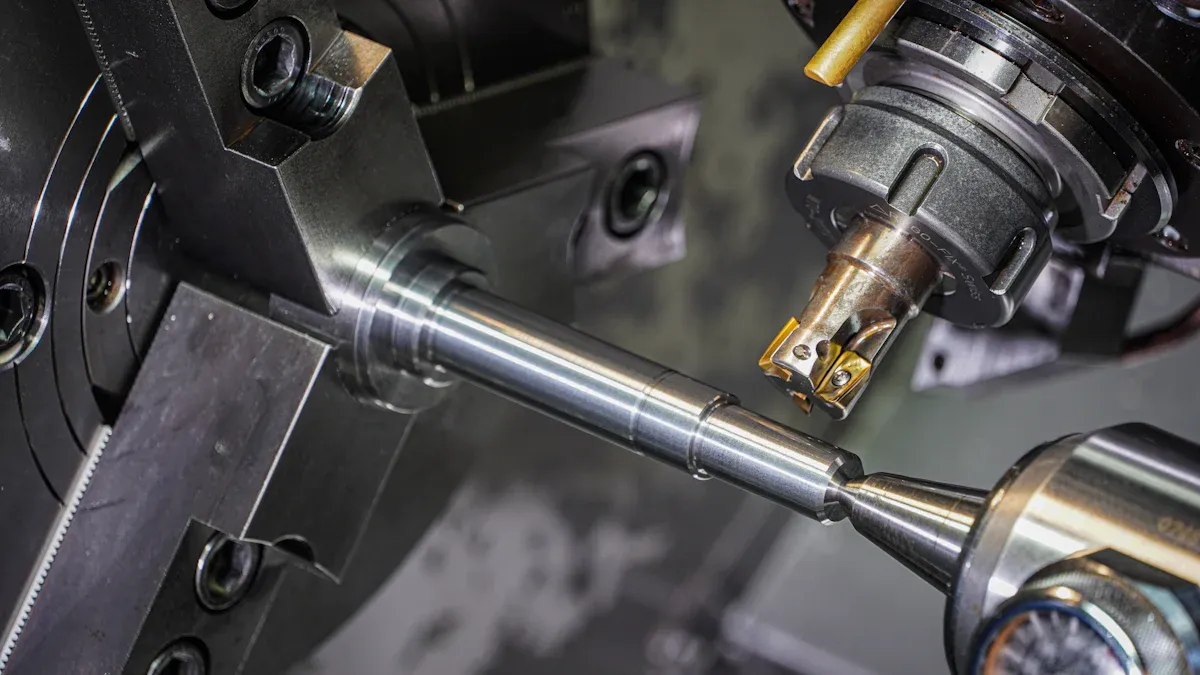
Flywheel CNC lathes offer advanced capabilities that significantly enhance the manufacturing process. These machines enable precise machining, which is crucial for achieving perfect balance and concentricity. The following features highlight the capabilities of CNC lathes in flywheel manufacturing:
- Precision Machining: CNC lathes maintain diameters within ±0.005 mm, ensuring high accuracy.
- Large Diameter Handling: They can securely manage flywheel diameters often exceeding 500 mm using four-jaw chucks, preventing movement during heavy roughing.
- Controlled Cuts: The machining process includes controlled radial cuts, ensuring even wall thickness and preventing imbalance.
- Carbide Boring Bars: These tools allow for exact interference fits on bearing seats, enhancing overall component quality.
- Real-Time Adjustments: Integrated live touch probes measure dimensions during machining cycles, enabling real-time program adjustments to maintain tight tolerances and reduce scrap.
- Coolant Application: This feature controls heat during machining, preserving tool sharpness and dimensional accuracy.
These capabilities collectively improve production quality by ensuring tight tolerances, reducing vibrations, and enhancing the durability and performance of flywheels.
Impact on Automotive and Marine Engine Components
The adoption of Flywheel CNC lathes has a measurable impact on the performance of automotive and marine engine components. The precision engineering provided by these machines leads to several benefits:
- Enhanced Component Quality: Tolerances measured in microns significantly improve component quality. This precision leads to better symmetry and balance, which are critical for engine performance.
- Reduced Engine Vibrations: Accurate machining reduces vibrations, which in turn improves fuel efficiency and enhances transmission engagement.
- Extended Lifespan: Components such as crankshafts can exceed service lives of over 250,000 kilometers due to the high-quality machining processes.
- Improved Surface Finish: Achieving surface finish quality with Ra values below 0.2μm enhances performance and durability.
Furthermore, Flywheel CNC lathes contribute to reducing manufacturing defects. They achieve micron-level tolerances, ensuring proper fit and alignment, which minimizes vibration and wear. Integrated finishing processes, such as polishing and honing, enhance surface integrity, crucial for optimal friction and longevity. This results in fewer defects and higher overall component quality.
Precision, Material Selection, and Machining Techniques
Achieving Dimensional Accuracy and Surface Finish
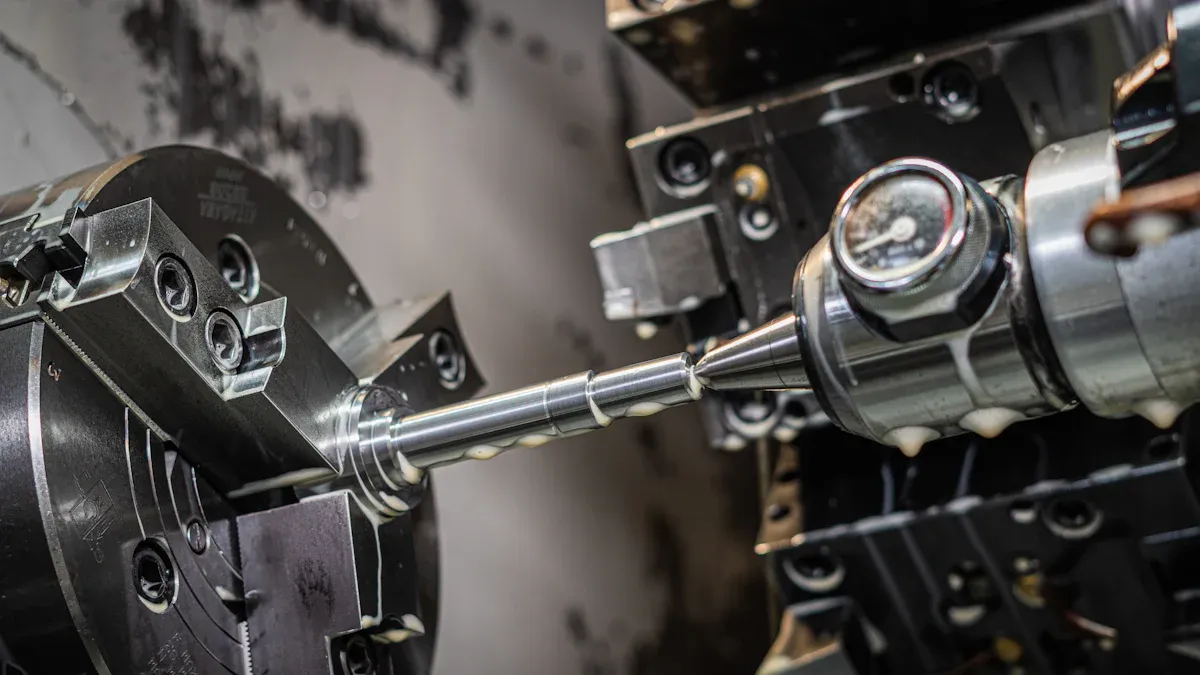
Achieving high dimensional accuracy and superior surface finish is critical in flywheel manufacturing. Flywheel CNC lathes excel in this area through several effective strategies. The table below outlines these strategies and their descriptions:
| Strategy | Description |
|---|---|
| CNC Integration | Enables micron-level accuracy in turning, drilling, and facing operations. |
| Feedback Systems | Allows real-time adjustments during machining through in-process probing. |
| Thermal Compensation | Corrects for expansion due to heat buildup using thermal sensors. |
| Tooling Requirements | High-speed carbide or diamond-tipped tools are essential for clean machining. |
| Efficiency Boost | Optimizes cutting parameters to maximize material removal without compromising surface finish. |
These strategies collectively enhance the precision of flywheel components. The integration of CNC technology ensures that manufacturers achieve tight tolerances, which is vital for optimal engine performance. Additionally, the use of advanced tooling and real-time feedback systems minimizes errors, leading to a superior surface finish that meets stringent industry standards.
Balancing and Heat Treatment for Performance and Durability
Balancing and heat treatment are essential processes that significantly enhance the performance and durability of flywheels produced with CNC lathes. Dynamic balancing of flywheels prevents vibrations that could damage engines, ensuring smoother operation and enhanced durability. The integration of advanced balancing methods with CNC turning services allows for precise mass distribution and tight tolerances, which minimize imbalances.
Moreover, heat treatment plays a crucial role in increasing the hardness and fatigue resistance of flywheels. Techniques such as quenching and tempering are applied to CNC-machined parts to ensure they can endure the high torque stresses encountered during operation. This treatment reduces the likelihood of cracks and deformation, thereby significantly improving the performance and extending the lifespan of the flywheels in automotive and industrial applications.
By focusing on these critical aspects, manufacturers can produce flywheels that not only meet but exceed performance expectations, contributing to the overall efficiency of automotive and marine engines.
Integration and Future Trends in Flywheel CNC Lathe Applications
Workflow Optimization and Production Line Compatibility
The integration of Flywheel CNC lathes into manufacturing processes significantly enhances workflow efficiency. Key benefits include:
- Reduced Downtime: CNC-enabled flywheel grinders minimize operational interruptions, leading to faster turnaround times.
- Intelligent Autofeed Systems: These systems enable proactive maintenance, maximizing uptime and boosting production throughput.
- In-House Resurfacing: By bringing resurfacing capabilities in-house, manufacturers eliminate outsourcing delays and associated costs, improving overall profitability.
Moreover, Flywheel CNC lathes are designed for compatibility with automated production lines. Their high-rigidity structure ensures stability during machining, which is crucial for maintaining precision in automated environments. Features such as multifunctional servo-powered turrets allow for integrated multi-process operations, reducing tool change times and enhancing efficiency. Customizable power heads enable these machines to handle complex tasks required in automotive and marine sectors, making them ideal for batch processing and quality control.
Emerging Technologies and Industry Challenges
As the industry evolves, several emerging technologies promise to reshape the landscape of flywheel production. However, manufacturers face challenges in adopting these innovations. The table below outlines some primary industry challenges:
| Challenge Type | Description |
|---|---|
| Inefficiencies in Soft Costs | High costs associated with indirect tasks such as quoting, programming, and billing that do not involve fabrication. |
| Need for End-to-End Digitization | The necessity to automate processes to reduce lead times and improve efficiency in manufacturing. |
| Integration Difficulties | Challenges faced by traditional setups in adopting and integrating new CNC lathe technologies. |
Despite these challenges, advancements in CNC technology continue to enhance cost-effectiveness in flywheel production. These innovations improve product quality, reduce defect rates, and optimize processes for greater efficiency. As manufacturers embrace these technologies, they can expect to see significant improvements in both productivity and profitability.
Flywheel CNC lathes significantly enhance manufacturing efficiency through improved precision, optimized material use, and seamless integration. These advancements lead to better engine performance, reduced production costs, and increased output in automotive and marine sectors. Ongoing innovations in CNC technology will further solidify the role of flywheel CNC lathes in future engine production.
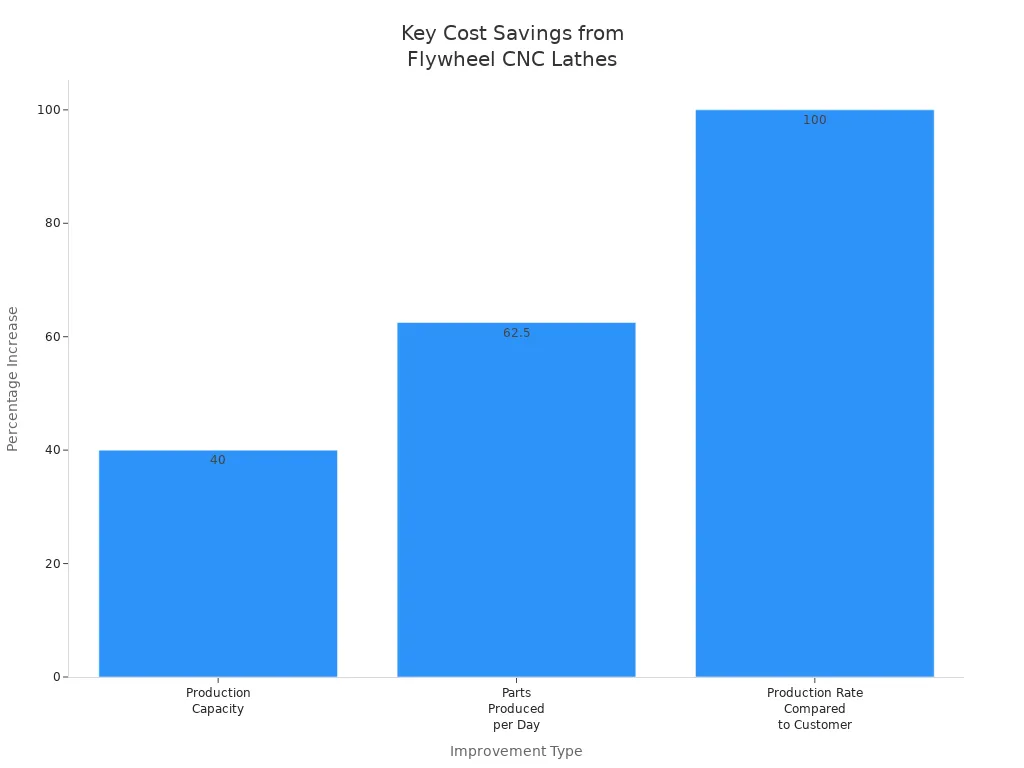
| Improvement Type | Percentage Increase | Description |
|---|---|---|
| Production Capacity | 40% | Increased production of hubs by about 40% using Hwacheon machines compared to previous methods. |
| Tolerance Achieved | 0.0005 to 0.0006 in | Consistent tolerances achieved on large parts without vibration, leading to reduced variation. |
| Parts Produced per Day | 62.5% | Increased from 8 parts to 13-16 parts per day with new machines. |
| Production Rate Compared to Customer | 100% | Doubled production rate compared to the customer’s machines. |
| Secondary Operations Eliminated | N/A | Live tool heads saved a secondary operation, reducing handling and machining time. |
FAQ
What advantages do flywheel specific CNC lathes offer in engine production?
They provide high precision, reduce imbalance, improve surface finish, and increase production speed, resulting in better engine performance and longer component lifespan.
How do CNC lathes improve the balancing process of flywheels?
CNC lathes enable precise mass distribution and tight tolerances, minimizing vibrations and ensuring smoother engine operation and enhanced durability.
Can flywheel CNC lathes integrate with existing manufacturing lines?
Yes, they feature compatibility with automated systems, reducing downtime and streamlining workflows to boost overall production efficiency.
Post time: Mar-25-2026