


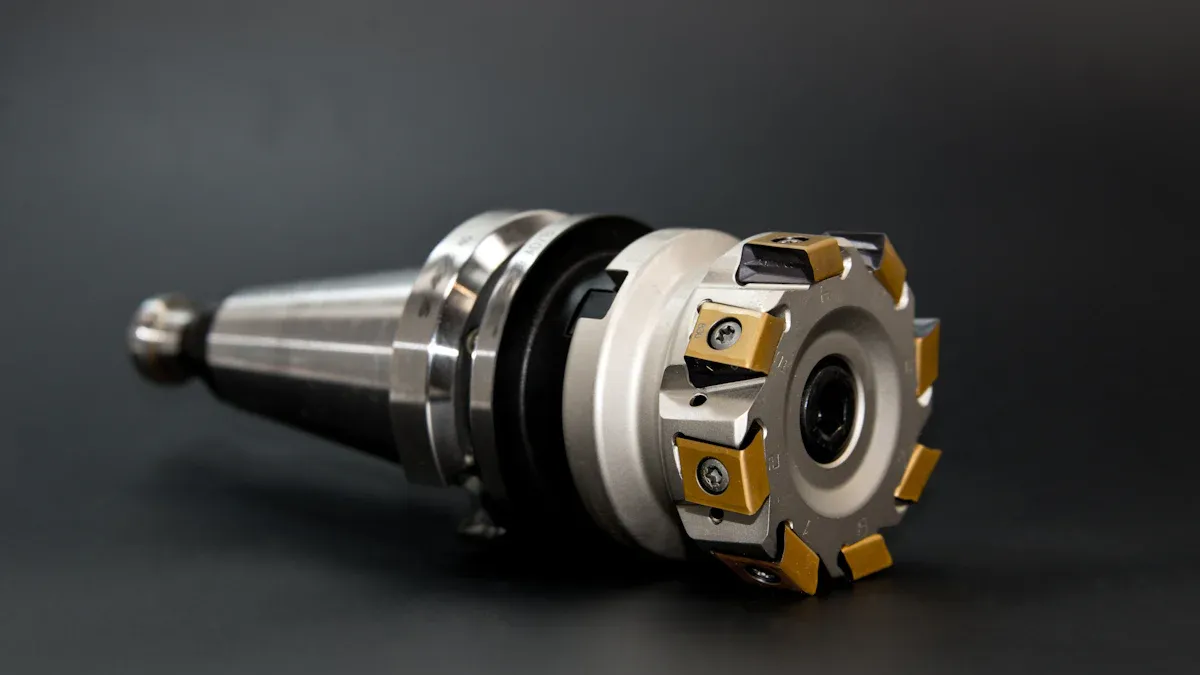
Modern precision manufacturing critically depends on 5-axis CNC machining. This advanced technology profoundly transforms production capabilities. The CNC Machining Center market projects a 1.23% Compound Annual Growth Rate (CAGR) from 2025 to 2034. Manufacturing processes increasingly adopt 5-axis CNC, showing a 7% annual increase. Industry growth expects to reach 10% annually, with the automotive sector being a significant contributor. Leading 5 Axis Milling Machine Manufacturers will introduce models in 2025 offering unparalleled speed and accuracy. These innovations extend beyond traditional Cnc Machine Tools, impacting even specialized equipment like the Horizontal Turning Center and Cnc Horizontal Lathe.
Key Takeaways
- Five-axis CNC machines make parts more accurate. They also create smoother surfaces. This is because they cut from many angles at once.
- These machines can make very complex shapes. They do this in one setup. This saves time and reduces mistakes.
- Using 5-axis CNC machines saves money. They use less labor and create less waste. This makes production faster and cheaper.
- Top 5-axis CNC machines offer great speed and accuracy. Brands like DMG MORI, Mazak, and Hermle lead the way. They help make high-quality parts.
- Choosing the right 5-axis machine is important. Consider how many parts you make. Also, think about how complex your parts are. Good support and training are also key.
Key Advantages of 5-Axis Cnc Machining Center Technology
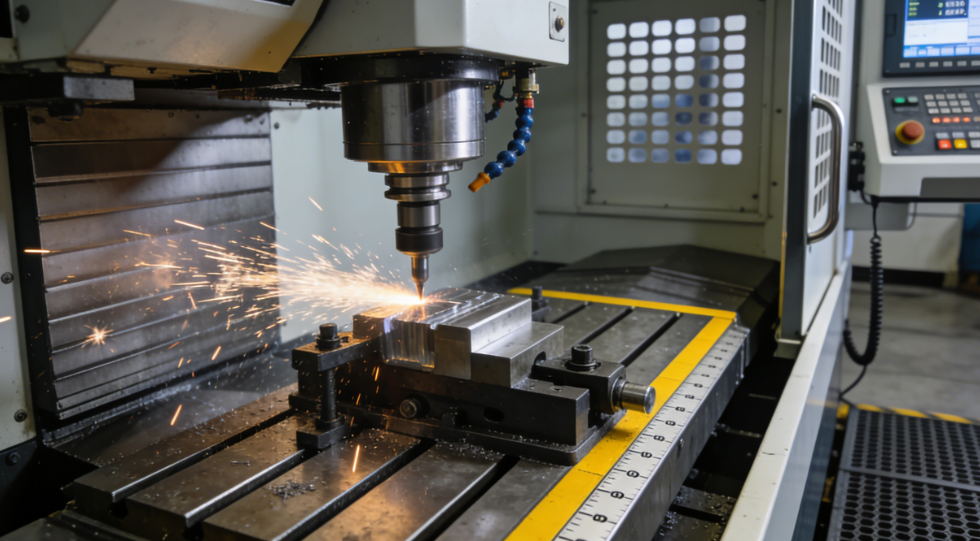
Enhanced Part Accuracy and Surface Finish
Five-axis CNC machines significantly improve part accuracy and surface finish. These machines move along multiple axes simultaneously. This continuous cutting motion minimizes tool marks and other surface defects. As a result, they produce smoother surfaces and more accurate parts. Optimal cutting tool orientation relative to the workpiece surface leads to improved surface finishes. This also reduces cutting forces and extends tool life. The ability to maintain a constant chip load and optimal cutting angles throughout complex geometries provides superior machining conditions. Single-setup machining eliminates cumulative tolerances from multiple setups. This ensures superior dimensional accuracy and part-to-part repeatability. These features make 5-axis machines ideal for high-precision applications. Examples include turbine blades, medical devices, and molds.
Complex Geometry Production Capabilities
Five-axis CNC machining uniquely enables the production of complex geometries. These machines offer a high degree of freedom. They tilt and rotate the cutting tool. This allows for the creation of intricate, multi-dimensional, and high-precision parts. This advanced capability significantly improves precision and flexibility. Manufacturers can produce complex, three-dimensional shapes and contours with exceptional efficiency and accuracy.
If your part requires machining on multiple sides with critical tolerances, or if tool access is restricted in standard orientations, a 5-axis solution is likely the best choice. Common examples of parts created include aerospace turbine blades, medical implants, and automotive engine components.
Reduced Setup Times and Increased Throughput
Five-axis CNC technology drastically reduces setup times. The machine can access multiple sides of a workpiece in a single setup. This eliminates the need for operators to manually reorient the part. Fewer setups mean less downtime between operations. This directly translates to increased throughput and higher production volumes. Manufacturers achieve greater efficiency and faster delivery times for their products. This streamlined process also reduces the potential for human error during part repositioning.
Improved Tool Life and Machine Longevity
Five-axis CNC technology significantly extends both tool life and machine longevity. These machines achieve optimal tool orientation relative to the workpiece. This precise positioning distributes cutting forces more evenly across the tool’s edge. Consequently, it reduces localized stress and premature wear on the cutting inserts or end mills. Operators maintain a consistent chip load throughout the machining process. This steady cutting action prevents sudden impacts and minimizes thermal fluctuations, which often cause tool fatigue and breakage.
Furthermore, the stable cutting environment provided by 5-axis machines reduces vibrations and chatter. Excessive vibration accelerates tool wear and can damage the machine’s spindle and bearings over time. By minimizing these detrimental forces, the machine operates more smoothly. This protects critical components and extends the operational lifespan of the entire Cnc Machining Center. Fewer setups also contribute to longevity. Each manual setup introduces potential for misalignment and stress on the machine. Single-setup machining eliminates these repeated adjustments.
The ability to machine complex features in one go means fewer tool changes. Each tool change cycle involves mechanical movements that contribute to wear on the tool changer mechanism. Reducing these cycles preserves the integrity of the machine’s automated systems. Ultimately, these combined factors lead to less frequent tool replacements and lower maintenance requirements for the machine itself. This translates into significant cost savings and increased uptime for manufacturing operations.
5-Axis Cnc Machining Center vs. Traditional Methods: A Comparative Analysis
Single-Setup Manufacturing Efficiency
Five-axis Cnc Machining Center technology significantly boosts manufacturing efficiency through single-setup operations. Traditional 3-axis machining often requires multiple setups for complex parts. This involves repositioning the workpiece several times. In contrast, 5-axis machines access multiple sides of a part in one go. This capability drastically reduces the number of required setups.
| Manufacturing Approach | Required Setups |
|---|---|
| 3-Axis Machining | 5-7 |
| 5-Axis Machining | 1-2 |
For instance, complex aerospace components that once needed 5-6 setups on 3-axis machines now require just a single setup on 5-axis equipment. This change leads to setup time reductions of up to 80% for complex geometries. Production times for these components can also decrease by up to 60%.
Eliminating Multiple Fixturing Operations
Eliminating multiple fixturing operations is a direct benefit of single-setup machining. Traditional methods demand operators to unclamp, reorient, and reclamp parts for each new machining angle. Each fixturing step introduces potential for error and consumes valuable time. Five-axis machines remove this need. They maintain the workpiece in a single fixture throughout the entire machining process. This ensures consistent part positioning and reduces the risk of misalignment. It also frees up operators for other tasks.
Cost Savings Through Reduced Labor and Rework
Five-axis CNC machining delivers substantial cost savings by reducing labor and rework. It minimizes the number of setups required, which directly lowers labor costs and machine idle time. For example, a part needing four setups on a 3-axis machine finishes in a single setup on a 5-axis machine. This eliminates the labor for three setups and the idle time during those changes. These savings accumulate significantly across many parts. Furthermore, quality enhancements from 5-axis machining directly reduce scrap and rework. Single-setup machining improves positional accuracy between features. Optimized cutting conditions also lead to better surface finishes. This often removes the need for secondary finishing operations. These improvements collectively decrease material waste and the labor associated with fixing errors.
Design Freedom and Innovation Potential
Five-axis CNC machining significantly expands design freedom and innovation potential for engineers and product developers. Traditional machining methods often impose limitations on part geometry due to tool access and fixturing constraints. However, 5-axis technology removes these barriers. It allows manufacturers to create highly complex, organic, and intricate shapes previously considered impossible or prohibitively expensive to produce.
Engineers can now design parts with optimized internal structures, complex curves, and undercut features without compromising manufacturability. This capability fosters innovation across various industries. For example, in aerospace, designers create lighter, stronger components with optimized airflow characteristics. Medical device manufacturers develop more ergonomic and effective implants. Automotive companies produce more efficient engine parts and aerodynamic body components.
The ability to machine complex contours in a single setup means designers no longer need to simplify designs for manufacturing ease. They can focus on optimal performance and functionality. This leads to groundbreaking product development and competitive advantages. A modern Cnc Machining Center empowers designers to push the boundaries of what is possible, transforming conceptual designs into tangible, high-performance products. This freedom accelerates product cycles and brings novel solutions to market faster. It also encourages experimentation with new materials and advanced geometries, driving continuous improvement and innovation.
Top 5-Axis Cnc Machining Center Models for Precision Manufacturing in 2025
Manufacturers seeking the pinnacle of precision and efficiency often turn to advanced 5-axis Cnc Machining Center models. The year 2025 brings forth machines that redefine capabilities in complex part production. These leading models offer unparalleled accuracy, speed, and versatility, meeting the rigorous demands of modern industries.
DMG MORI DMU Series: Versatility and Performance
The DMG MORI DMU Series stands out for its exceptional versatility and robust performance. This series offers comprehensive cooling concepts, ensuring the highest long-term precision. A one-piece machine bed, direct-driven ball screw drives, and direct path measuring systems in all axes contribute to its superior accuracy. The DMU Series also boasts an ergonomic design. It features a large door opening of 1,310 mm, providing unique access to the working area. Its compact footprint, at just 8 m², allows for efficient use of shop floor space. Operators can easily load workpieces up to 1,000 kg with unrestricted crane access. Quick setup is possible through its three-point support system.
The series provides multiple table solutions for 5-axis machining, accommodating workpieces up to 1,000 kg. It also supports complete milling and turning operations with torque up to 1,000 Nm. A wide spindle range, offering speeds up to 30,000 rpm or torque up to 200 Nm, enhances its adaptability. Machine-integrated tool magazines can hold up to 240 pockets, supporting extensive production runs. The stiff monoBLOCK Concept ensures maximum stability from a single casting. This design includes a one-piece column with large, stable slideways and 45 mm roller guideways in all axes. Large ball screws (ø 40 / 50 / 40 mm) and FEM optimization further enhance rigidity. The clamping of the swiveling rotary table adds to its robust structure.
Advanced features like CELOS Control provide integrated digitization with an APP-based user interface. This system offers 27 CELOS APPs for order processing and continuous digital workflows. The DMU Series also integrates flat grinding technology for superior surface results. It includes in-machine tool balancing, which balances tools directly in the machine for high surface requirements and machine protection. This achieves balancing quality up to 0.3 g/mm. Technologies like 3D quickSET and VCS Complete measure and correct kinematic accuracy, ensuring optimal performance.
Mazak Variaxis Series: Speed and Accuracy
The Mazak Variaxis Series is renowned for its impressive speed and accuracy, making it a top choice for dynamic 5-axis machining. This series offers various models tailored to different production needs. Each model delivers high-speed performance crucial for efficient manufacturing.
| Series Name | Standard Max. Spindle Speed (rpm) |
|---|---|
| VARIAXIS i NEO | 12000 (BIG-PLUS No.40), 10000 (BIG-PLUS No.50) |
| VARIAXIS i | 12000 (BIG-PLUS No.40 / CAT No.40), 12000 (BIG-PLUS No.50 / CAT No.50) |
| VARIAXIS C | 12000 (BIG-PLUS No.40) |
| VARIAXIS j | 12000 (BIG-PLUS No.40) |
| VARIAXIS i-300 AWC | 12000 (BIG-PLUS No.40) |
These spindle speeds enable rapid material removal and efficient processing of diverse materials. While specific accuracy ratings vary by model and configuration, the Variaxis series consistently delivers the precision required for demanding applications. Its design focuses on minimizing vibration and maximizing stability, contributing to its overall accuracy and surface finish capabilities.
Hermle C Series: Uncompromising Precision
Hermle’s C Series machines represent uncompromising precision in 5-axis machining. These machines are specifically designed for 5-axis and 5-side machining, leveraging Hermle’s extensive expertise. They feature advanced collision protection with a collision monitor, enhancing operational safety. The C Series places three axes in the tool, ensuring component-independent dynamics. The A-axis drive is located outside the working area, contributing to a clean and efficient design. Three guideways with one guideshoe provide an ideal force balance, which is critical for maintaining precision. Linear axes are positioned above the working area, optimizing space and performance.
The structural design of the Hermle C Series emphasizes stability and vibration dampening. It utilizes a mineral cast machine bed, which ensures stable, vibration-free machining. A modified gantry design provides ideal main axis support. The Y-axis features a centrally arranged drive for balanced movement. A pick-up magazine integrated into the base saves valuable floor space. The design also promotes ideal chip clearance, making it suitable for dry machining. These machines offer a large working area relative to their footprint, maximizing productivity. Excellent ergonomics and accessibility for servicing auxiliary units simplify maintenance.
Key specifications for a typical Hermle C Series machine include:
| Parameter | Value |
|---|---|
| Traverse Path (X-Y-Z) | 850 x 700 x 500 mm |
| Body Diameter / Height | 650 mm / 500 mm |
| Collision Circle Diameter | 885 mm |
| Max. Vertical Table Clearance | 625 mm |
| Spindle Speed | 15000/18000 1/min |
| Rigid Clamping Table | 1070 x 700 mm |
| Max. Table Load | 2000 kg |
These specifications highlight the robust capabilities of the Hermle C Series for high-precision manufacturing tasks.
Okuma MU-V Series: Stability and Advanced Control
The Okuma MU-V Series offers exceptional stability and advanced control, making it a reliable choice for precision manufacturing. These machines integrate cutting-edge technologies to ensure consistent accuracy and operational safety. Okuma’s proprietary OSP CNC control system forms the core of its advanced capabilities. This system features closed-loop positioning and thermal compensation, which actively monitors and adjusts for temperature changes. This proactive approach maintains precision within ±0.001 mm, even during extended machining operations.
The MU-V Series incorporates several intelligent features that enhance its stability and control. Its 5-Axis Auto Tuning function automatically optimizes machine performance, ensuring peak accuracy for complex geometries. A sophisticated Collision Avoidance System protects both the machine and the workpiece from potential damage, minimizing costly errors and downtime. Furthermore, Okuma includes Chatter prevention technology, which actively suppresses vibrations during machining. This results in superior surface finishes and extended tool life. The Thermo-Friendly Concept further contributes to the machine’s stability. It minimizes thermal deformation, ensuring consistent accuracy regardless of ambient temperature fluctuations or internal heat generation. This comprehensive suite of control and stability features makes the Okuma MU-V Series a robust solution for demanding precision applications.
Makino D Series: High-Speed and High-Accuracy Machining
The Makino D Series excels in high-speed and high-accuracy machining, delivering superior performance for intricate part production. These machines feature robust spindle options designed for rapid material removal and fine finishing. The D800Z (#40) model offers a standard Cat #40 (or optional HSK-A63) 14,000-rpm spindle, with an optional 20,000-rpm HSK-A63 spindle available for even faster operations. For heavier cutting, the D800Z (#50) provides a standard Cat #50 (or optional HSK-A100) 12,000-rpm spindle, also offering an optional 18,000-rpm HSK-A100 spindle. These powerful spindles support a wide range of machining tasks.
The D Series achieves impressive feedrates across all axes. The X-, Y-, and Z-axes move at 36,000 mm/min, while the B- and C-axes rotate at 18,000 deg/min (50 rpm). These high feedrates contribute to reduced cycle times and increased productivity. Makino engineers designed a highly rigid machine structure, ensuring responsive cutting and sustained dynamic accuracy. The integral, direct-drive motor design for the fourth and fifth axes provides productive speed, smooth motion, and outstanding accuracy. Core-cooled ballscrews and temperature control of direct-drive motors contribute to the machine’s renowned thermal stability. This prevents thermal expansion from affecting precision.
A uniquely designed ‘Z’ shape of the tilt-trunnion table ensures the center of gravity remains within the center of rotation of the B- and C-axes. This design enhances stability during complex movements. Large-diameter bearings further minimize table deflection, offering outstanding stiffness and rigidity. Makino’s SGI.4 software further enhances high-feedrate, tight-tolerance machining for complex 3D shapes. This software reduces cycle times while maintaining high accuracy. Tool Center Point (TCP) control also contributes to improved surface quality, ensuring precise tool path execution. This combination of speed, rigidity, and advanced control makes the Makino D Series a leading Cnc Machining Center for high-performance applications.
Impact of 5-Axis Cnc Machining Center on Production Efficiency and Cost
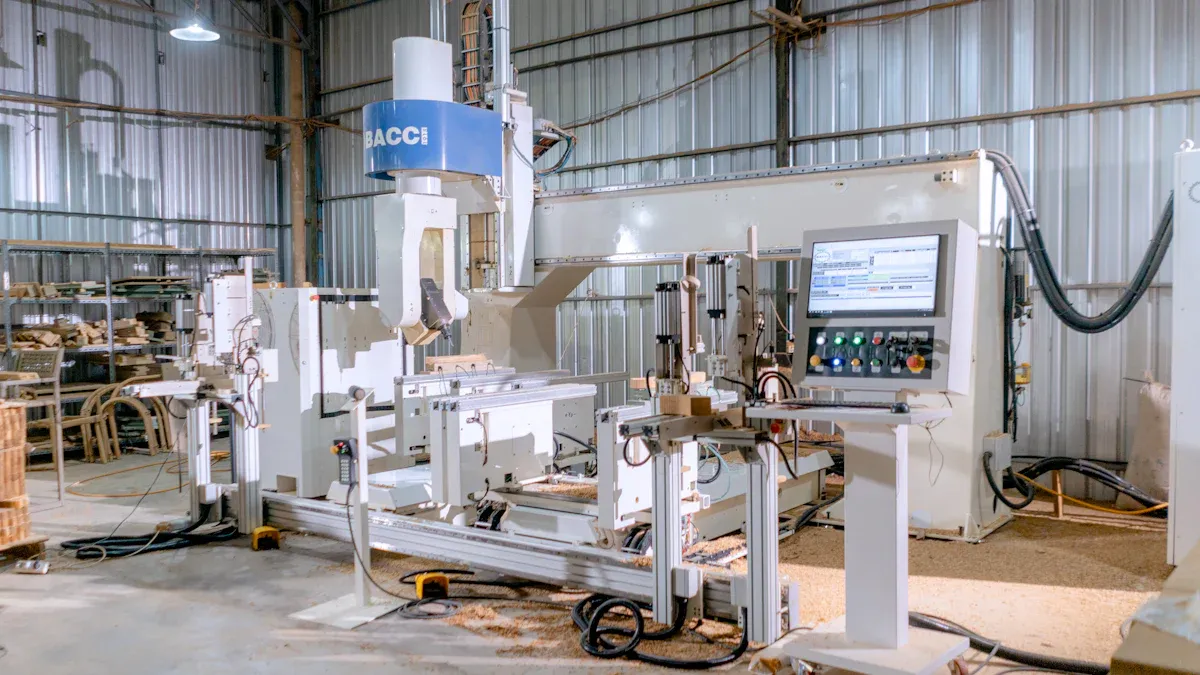
Quantifying ROI in 5-Axis Investment
Investing in a 5-axis Cnc Machining Center offers significant financial returns. Manufacturers often see a rapid return on investment (ROI). One customer achieved ROI in just three months. This was possible by using a 5-axis setup to cut 16 stainless steel parts in under 45 minutes per cycle. This efficiency allowed them to produce 3200 parts every 24 hours. Such rapid payback periods are common for 5-axis machining. Businesses can calculate the payback period for a general CNC machine investment. They divide the total investment (including purchase, installation, tooling, and training) by the annual net benefit. This net benefit comes from reduced scrap, increased capacity, lower labor costs, or new jobs. For example, a $250,000 investment generating $100,000 in annual net benefits shows a 2.5-year payback period.
Streamlined Workflow and Reduced Lead Times
Five-axis CNC technology significantly streamlines production workflows and reduces lead times. It achieves this primarily through single-setup operations. This eliminates the need for multiple part reorientations. Implementing 5-axis CNC machining can lead to a lead time reduction of 40% to 60% for complex components. This is because most operations complete in single setups, dramatically reducing cycle times. For instance, 5-axis CNC with RTCP (Rotary Tool Center Point) can reduce mold machining time by 40-60%. This reduction comes from setup elimination, improved tool access, and enhanced surface quality. A traditional 8-hour process can become a 4-hour process, making it 50% faster.
Minimizing Material Waste and Scrap Rates
Five-axis machining plays a crucial role in minimizing material waste and scrap rates. Its ability to machine complex geometries in a single setup reduces the risk of errors. Each time a part is re-fixtured in traditional methods, it introduces potential for misalignment and damage. Five-axis machines eliminate these multiple setups. This ensures consistent part positioning and reduces the chance of costly mistakes. The enhanced accuracy and superior surface finish also mean fewer parts require rework or rejection. This directly translates to less material waste. Manufacturers save on raw material costs and disposal expenses.
Optimizing Labor Utilization
Five-axis CNC technology significantly optimizes labor utilization within manufacturing operations. It transforms how companies deploy their skilled workforce. Traditional multi-setup processes demand considerable manual intervention. Operators spend time reorienting parts and setting up new fixtures. Five-axis machining drastically reduces these labor-intensive tasks. It often transitions a process requiring five setups to just one. This “done-in-one” approach saves significant time and money. It also improves part quality by minimizing handling.
The elimination of secondary setups also reduces the need for complex or special fixturing. This means less preparation time for fixtures. It also decreases the demand for additional machines or personnel dedicated to fixture management. A single machinist can now oversee a machine with minimal intervention. This allows one skilled individual to manage multiple machines simultaneously. This capability directly leads to a lower labor cost per manufactured part.
Five-axis technology enables the machining of all sides of a part in a single setup. This accelerates production and minimizes errors. It offers a stark contrast to multi-setup processes on 3-axis machines. The streamlined workflow frees up skilled labor. These employees can then focus on higher-value tasks like programming, quality control, or process improvement. This strategic shift enhances overall productivity and maximizes the return on investment for a Cnc Machining Center.
Future Trends in 5-Axis Cnc Machining Center Technology
The landscape of 5-axis machining constantly evolves. Manufacturers increasingly adopt cutting-edge technologies. These advancements promise to redefine precision, efficiency, and autonomy in production.
Integration of AI and Machine Learning
Artificial intelligence (AI) and machine learning (ML) are transforming 5-axis Cnc Machining Center operations. AI-driven CAM software uses machine learning models. These models analyze sensor data, part geometry, and material properties. They auto-adjust parameters for optimal cutting performance. Key capabilities include adaptive learning, where each machining operation refines the model. Automated parameter selection calculates speeds and feeds in real-time. This prevents tool chatter or excessive wear. For example, if sensors detect chatter, the CAM software can reduce feed rates or change path angles to smooth the cut. AI also optimizes complex parts with deep pockets or multiple angles. It uses strategies like trochoidal, helical, or high-speed adaptive milling, driven by live data. Predictive maintenance is another significant benefit. AI algorithms monitor machine performance by analyzing data like vibration levels and temperature changes. This schedules proactive maintenance and prevents unexpected downtime.
Automation and Robotics in 5-Axis Workflows
Automation and robotics are becoming integral to 5-axis workflows. Collaborative robots (cobots) are engineered for human-robot collaboration. They reduce setup requirements and allow flexible deployment for tasks like part loading and inspection. Cobots address labor shortages by handling manual tasks. This frees skilled machinists for complex responsibilities. Lights-out manufacturing, fully automated operations running without human intervention, is also expanding. This relies on advanced tool management, robotic arms, and smart sensors for continuous data feedback. Automated inspection and quality control systems use robots with touch probes or 3D laser scanners. Some systems provide real-time correction loops to adjust tool offsets automatically. This leads to near-zero scrap rates.
Advanced Software and Simulation Tools
Advanced software and simulation tools are crucial for optimizing 5-axis CNC programming and operation. These tools offer collision avoidance features. They reduce the risk of collisions between the tool and workpiece through interaction detection and advanced AI. Efficient toolpath generation allows easy creation and tweaking of toolpaths for accurate tool movement control. Simulation capabilities enable programming and debugging in a virtual environment before production. This reduces the potential for scrapping expensive parts. It also eliminates the need for extensive prototyping. Digital twins, virtual replicas of physical parts and machining environments, are used for simulation and planning. Engineers model cuts, reduce collisions, and refine toolpaths before physical machining. This saves time and reduces costly errors.
Tips for Optimal 5-Axis Machine Utilization
Maximizing the potential of a 5-axis machine requires strategic planning and execution. Proper programming forms the foundation. Engineers must use advanced CAM software. This software generates efficient toolpaths. It also avoids collisions. Simulation tools are indispensable. They allow virtual testing of programs. This identifies potential issues before actual machining. This saves significant time. It also prevents costly errors.
Tooling selection is another critical aspect. Operators should choose high-quality, application-specific tools. These tools withstand the demands of complex geometries. They also maintain precision. Regular tool inspection and replacement are vital. This ensures consistent part quality. It also extends tool life. Consider using specialized coatings. These coatings enhance tool performance and longevity. They also reduce wear.
Effective workholding strategies are paramount. Secure and rigid fixturing minimizes vibration. It also maintains workpiece stability. This is crucial for achieving tight tolerances. It also ensures superior surface finishes. Investing in modular fixturing systems offers flexibility. It also reduces setup times for diverse parts. Vacuum fixtures or hydraulic clamping systems provide excellent stability for various materials. They also improve accessibility.
Regular maintenance and calibration are non-negotiable. Manufacturers must follow the machine’s recommended maintenance schedule. This includes lubrication, cleaning, and component checks. Periodic calibration of all axes ensures positional accuracy. This maintains the machine’s precision over time. A well-maintained Cnc Machining Center performs optimally. Proactive maintenance prevents unexpected downtime. It also extends the machine’s overall lifespan.
Finally, continuous operator training is essential. Skilled operators understand the machine’s capabilities. They also know its limitations. They can troubleshoot minor issues. They also optimize machining parameters. This expertise directly impacts productivity and part quality. Investing in training ensures operators fully leverage the machine’s advanced features. They can also adapt to new technologies. This continuous learning environment fosters innovation. It also improves overall shop floor efficiency.
Selecting the Right 5-Axis Cnc Machining Center for Your Needs
Choosing the correct 5-axis Cnc Machining Center requires careful consideration of several key factors. Businesses must align machine capabilities with specific production demands. This ensures optimal performance and a strong return on investment.
Assessing Production Volume and Part Complexity
Manufacturers must first evaluate their production volume and part complexity. When assessing part complexity, critical factors include undercuts, complex cavities, complex angles, and biological surfaces. These features often require processing from multiple sides or areas inaccessible with conventional vertical spindle machining. For production volume, the unit price for a 5-axis machine might seem higher. However, the overall cost for complex work can be lower. This requires weighing the number of parts, fixture costs, and potential expenses from multitasking and scrap rates due to errors. In prototyping with short runs and high complexity, single optimized setups and reduced production times offer significant benefits. These benefits often outweigh the initial investment in a 5-axis machine.
Evaluating Machine Rigidity and Spindle Power
Machine rigidity and spindle power are crucial for high-precision 5-axis machining. Solid machine frames resist vibrations and deflections. This is essential for achieving precision. Higher horsepower spindles enhance cutting efficiency. This is particularly true when working with challenging materials like titanium or hardened steel. Trunnion-style machines offer superior rigidity and accuracy, especially for heavy and complex parts. For example, the EXERON HSC MP9 5-Axis Ultra High-Precision Machining Center offers specific spindle power ratings: S1/S6–40% 10 kW/13.5 kW for HSK-E40, and 24.8 kW/33 kW for HSK-E50. The Haas UMC-750, with its trunnion-style design, provides exceptional rigidity for automotive prototyping. The Okuma MU-5000V delivers unmatched precision for cobalt-chrome implants, excelling in heat control and spindle speed for aerospace-grade materials. The DMG MORI DMU 50, a compact yet rigid mill, features excellent thermal stability for intricate aerospace components.
Considering Control Systems and Software Compatibility
Control systems and software compatibility significantly impact a 5-axis machine’s performance. Ensuring software compatibility is crucial. Fusion360 offers a user-friendly interface and comprehensive toolsets. DeskProto provides a cost-effective solution for multi-axis milling. Hurco WinMax Control is known for powerful features and ease of use. Autodesk Powermill specializes in high-precision machining with advanced toolpath strategies. For control systems, consider upgrades or replacements to enhance capabilities. Popular choices include DeskProto for 4- and 5-axis milling. Replacing a Mach3 knockoff with Hurco WinMax can simplify complex tasks. To choose the right CNC control system, assess machine requirements, research various types, and consider essential features. The CNC system’s algorithm performance, five-axis linkage implementation, and optimization capabilities are key. SIEMENS SINUMERIK ONE suits high-precision surface machining in aerospace. HEIDENHAIN TNC 640 excels in applications requiring fast machining, like mold making.
Importance of After-Sales Support and Training
Effective after-sales support and comprehensive training are crucial for maximizing the investment in a 5-axis Cnc Machining Center. These elements ensure continuous operation and optimal performance. Manufacturers rely on robust support systems to maintain productivity. Essential components of effective after-sales support include rapid response times for technical issues and a reliable spare parts supply. Many leading brands, such as Mazak and DMG MORI, offer remote diagnostics and 24/7 support. This strong after-sales support extends the long-term value of the machine. It minimizes downtime and keeps production schedules on track.
Training for operators is equally vital. Five-axis machines involve continuous cutting, and programming mistakes can lead to significant material waste. Professional after-sales service often includes comprehensive training support. This training equips operators with the necessary skills to program, operate, and troubleshoot these advanced machines effectively. Well-trained personnel can fully leverage the machine’s capabilities. They reduce errors and optimize machining processes. This expertise directly contributes to higher quality parts and increased efficiency. Investing in both robust support and thorough training ensures the machine operates at its peak potential throughout its lifespan.
Five-axis Cnc Machining Center technology plays an indispensable role in achieving precision for modern manufacturing. Investing in top-tier models offers a significant strategic advantage. These advanced machines enable businesses to produce complex parts with superior accuracy and efficiency. They also future-proof production capabilities. This ensures companies remain competitive and innovative in a rapidly evolving industrial landscape.
FAQ
What is 5-axis CNC machining?
5-axis CNC machining moves a cutting tool along five different axes simultaneously. This allows the machine to approach a workpiece from any direction. It creates complex geometries and intricate features in a single setup. This technology significantly enhances manufacturing capabilities.
How does 5-axis machining improve part accuracy?
5-axis machines improve accuracy by minimizing setups. They machine multiple sides of a part without re-fixturing. This reduces cumulative errors. Optimal tool orientation also maintains consistent cutting conditions. This results in superior surface finishes and tighter tolerances.
Which industries benefit most from 5-axis CNC technology?
Many industries benefit from 5-axis CNC technology. Aerospace, medical, and automotive sectors are primary beneficiaries. They produce complex components like turbine blades, medical implants, and engine parts. Mold and die manufacturing also heavily relies on this precision.
Is investing in a 5-axis CNC machine cost-effective?
Yes, investing in a 5-axis CNC machine is often cost-effective. It reduces setup times and labor costs. It also minimizes material waste and rework. These efficiencies lead to a rapid return on investment. The technology also enables production of higher-value, complex parts.
Post time: Dec-29-2025