


Why CNC gantry milling machines are a strategic investment
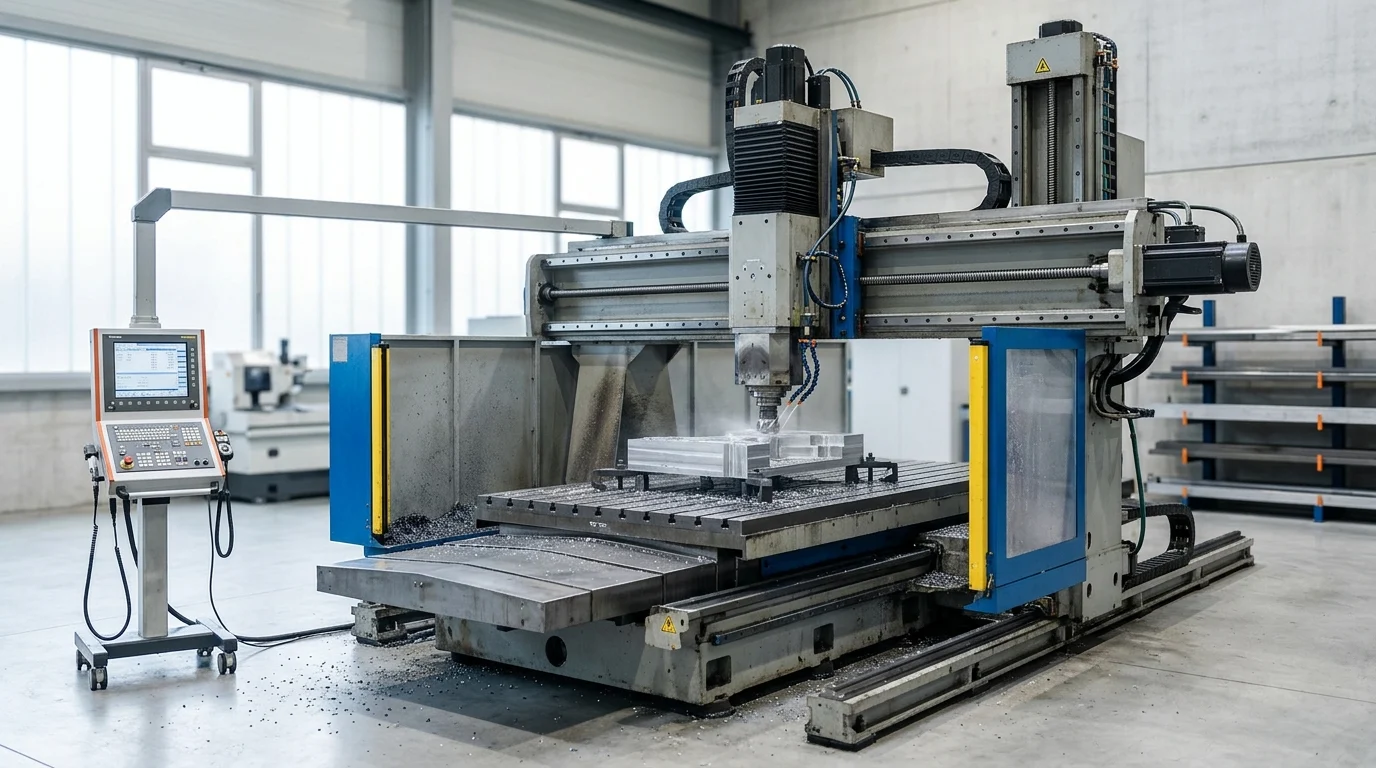
Investing in a CNC gantry milling machine represents a fundamental upgrade in heavy-duty metalworking capabilities, allowing manufacturers to process massive workpieces with uncompromising rigidity. Unlike standard vertical machining centers, the double-column architecture of a gantry mill distributes cutting forces evenly, significantly reducing vibration during deep material removal. This structural advantage is critical for global supply chains that demand high precision on large-scale components.
From a capital expenditure standpoint, these systems require a substantial initial investment, often ranging from $150,000 to well over $1,000,000 depending on the work envelope and axis configurations. However, by consolidating multiple machining operations into a single setup, facilities frequently reduce workpiece handling times by up to 40%. This operational efficiency accelerates the return on investment (ROI), allowing high-volume production lines to recoup costs within an 18- to 24-month window.
How CNC gantry milling machines improve throughput
Throughput optimization is primarily driven by the machine’s ability to maintain high material removal rates (MRR) without sacrificing dimensional accuracy. High-torque spindles, often exceeding 600 N·m, allow for aggressive roughing passes on tough alloys, while 5-axis configurations enable complex contouring in a single clamping. This continuous machining capability eliminates the need to transfer multi-ton parts between workstations.
Furthermore, advanced vibration absorption technologies integrated into the machine bed ensure that rapid traverse rates do not compromise surface finishes. By minimizing idle time and maximizing cutting engagement, procurement teams can project a consistent increase in overall equipment effectiveness (OEE), often pushing facility utilization rates past the 85% threshold.
Which buyer profiles benefit most
The strategic value of these machines resonates most strongly with Tier-1 automotive suppliers, aerospace contractors, and heavy industrial machinery manufacturers. These profiles routinely handle oversized components such as engine blocks, turbine casings, and large stamping molds. For these buyers, the ability to internalize large-format machining rather than outsourcing it provides a critical competitive edge in lead-time management.
Distributors and overseas marketing centers also benefit by offering complete metalworking solutions to regional manufacturers. By sourcing reliable CNC gantry milling machines from established Chinese group factories, importers can provide end-users with highly configured, cost-effective equipment that rivals legacy European or Japanese brands in performance while lowering the barrier to entry.
What technical specifications buyers should compare
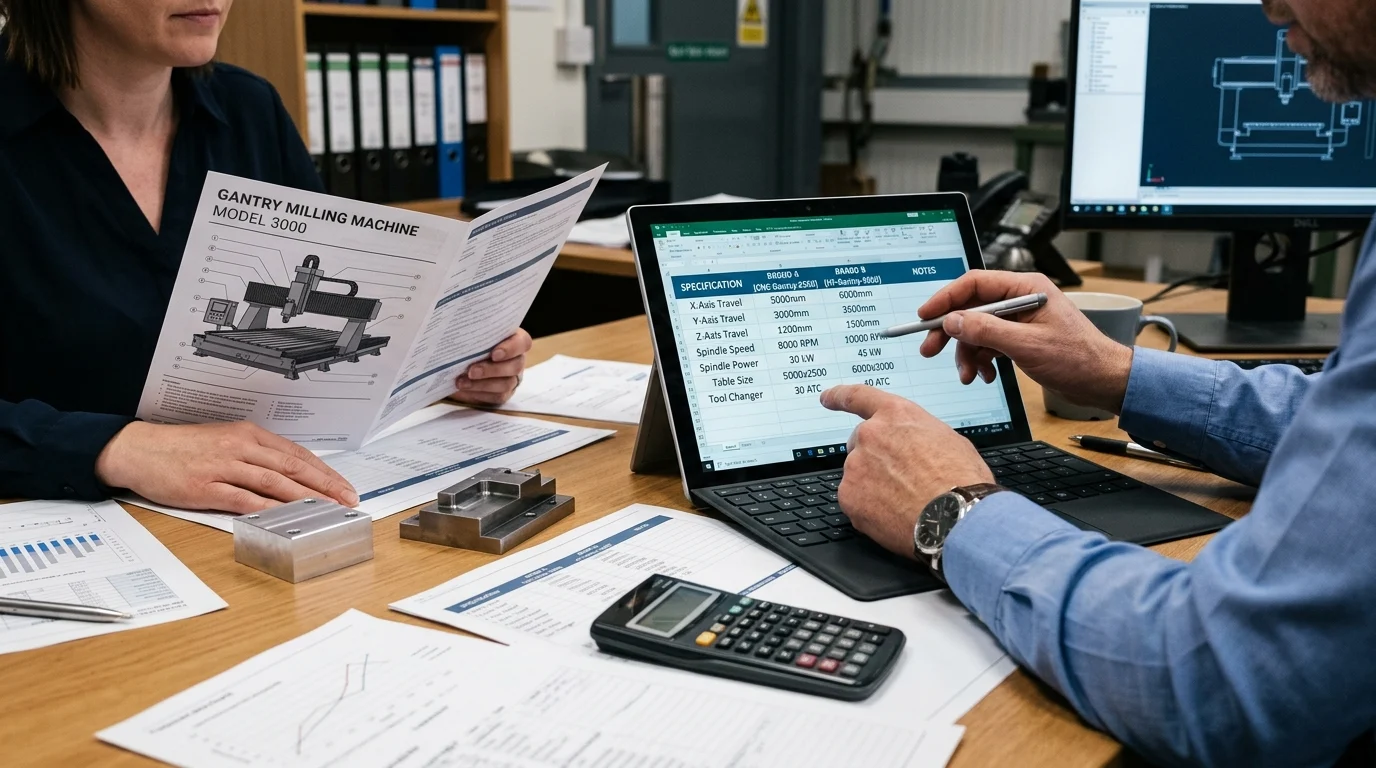
Evaluating a CNC gantry milling machine requires a rigorous analysis of specifications to ensure the equipment aligns with projected manufacturing demands. Procurement specialists must look beyond basic dimensions to understand the interplay between spindle power, axis travel, and structural design. A mismatch in these specifications can lead to accelerated tool wear, suboptimal surface finishes, or restrictive production bottlenecks.
Because these machines are tasked with handling workpieces weighing several tons, the foundational engineering of the base and columns is just as critical as the electronic control systems. Buyers must benchmark these technical parameters against their most demanding use cases.
Which machine parameters matter most
The primary parameters dictating a machine’s capability are the X-, Y-, and Z-axis travels and the maximum table load capacity. Heavy-duty models typically offer X-axis travels starting at 2,000 mm and extending beyond 10,000 mm, accommodating exceptionally long structural components. Table load capacities must be scrutinized; a standard rating of 10,000 kg is sufficient for most die and mold applications, whereas heavy industrial energy components may require tables rated for 30,000 kg.
Spindle specifications are equally vital. Buyers must choose between high-speed spindles (e.g., 12,000 to 24,000 RPM) for aluminum aerospace parts and high-torque geared spindles (e.g., 4,000 to 6,000 RPM with 30 to 45 kW of power) for cutting hardened steel and titanium. This selection directly impacts the machine’s versatility and cycle times.
How to compare structure and guideway type
The choice between box ways and linear guideways defines the machine’s dynamic behavior. Box ways involve solid metal-to-metal contact surfaces, providing superior damping and rigidity for heavy interrupted cuts. However, they are generally limited to slower rapid traverse rates, typically around 10 to 12 m/min.
Conversely, roller-type linear guideways utilize rolling elements to minimize friction, enabling rapid traverse rates of 24 m/min or higher. This configuration is ideal for high-speed machining and complex 3D contouring where rapid direction changes are frequent. Modern gantry machines often employ a hybrid approach, utilizing roller guideways on the X and Y axes for speed, and box ways on the Z-axis to maintain rigidity during deep plunging operations.
Which comparison criteria support evaluation
To effectively evaluate different models, procurement teams should utilize a standardized comparison matrix. This approach normalizes the technical data across various supplier proposals, highlighting discrepancies between standard and optional features.
| Specification Category | Box Way Configuration | Linear Guideway Configuration | Typical Application |
|---|---|---|---|
| Rapid Traverse Rate | 10 – 15 m/min | 20 – 30 m/min | High-speed contouring vs. Heavy roughing |
| Vibration Damping | High (Excellent for hard metals) | Moderate (Relies on roller elements) | Titanium/Inconel vs. Aluminum/Soft Steels |
| Maintenance Frequency | Higher (Requires precise lubrication) | Lower (Sealed bearing blocks) | Continuous heavy-duty cycles |
| Positioning Accuracy | ±0.008 mm / 300 mm | ±0.005 mm / 300 mm | High-precision mold making |
By applying these criteria, buyers can accurately align the machine’s mechanical profile with their specific tolerance requirements and production volumes.
Where CNC gantry milling machines are used
The deployment of CNC gantry milling machines spans macro-industrial sectors where component size and precision requirements intersect. These massive platforms are not utilized for high-volume, small-part turning, but rather for high-value, low-to-medium volume manufacturing where a single workpiece failure can result in tens of thousands of dollars in scrapped material.
Understanding specific applications and environmental demands helps buyers configure the machine’s options, such as coolant systems, chip conveyors, and specialized spindle attachments.
Which industries drive demand
The aerospace industry is a primary driver of demand, utilizing 5-axis gantry mills to sculpt complex wing spars and fuselage bulkheads from solid aluminum billets. In this sector, maintaining a defect rate below 0.05% is critical, demanding machines with exceptional thermal stability and volumetric accuracy.
Similarly, the automotive sector relies on these machines for the production of large stamping dies, molds, and heavy commercial vehicle components like flywheels and crankshafts. The energy sector also represents a massive growth area; the machining of wind turbine hubs, large-scale valves, and nuclear reactor components requires the immense table capacities and high-torque capabilities that only a double-column gantry structure can provide.
How materials, geometry, and tolerances affect selection
The selection of a gantry mill is heavily influenced by the physical properties of the target materials. Machining tough alloys like Inconel, hardened tool steel (HRC 50+), or titanium demands maximum structural rigidity to prevent chatter, dictating the use of box ways and high-torque gear-driven spindles.
Geometry and tolerances also play a pivotal role. When producing aerospace fixtures or complex injection molds, the machine must maintain strict positioning tolerances, often required to be within ±0.005 mm, with a repeatability of ±0.003 mm across a massive work envelope. To achieve this, buyers must ensure the machine is equipped with linear scales, thermal compensation software, and high-resolution rotary encoders to counter the physical expansion and contraction of the machine bed during long cutting cycles.
How to assess CNC gantry milling machine suppliers
Sourcing a CNC gantry milling machine, particularly from international markets, requires a stringent supplier assessment protocol. Buyers are not merely purchasing a piece of equipment; they are entering into a long-term partnership that will impact their production capabilities for a decade or more. Engaging with professional overseas marketing centers that represent reputable Chinese group factories can yield significant cost advantages, provided the supplier’s credentials are thoroughly vetted.
Risk mitigation during the procurement phase ensures that the delivered machine matches the promised technical specifications and that the logistical complexities of transporting heavy machinery are managed without costly delays.
What procurement teams should verify
Procurement teams must verify the supplier’s manufacturing capacity, quality control infrastructure, and historical export volume. Requesting documentation for ISO 9001 certification and CE compliance is a mandatory baseline. Furthermore, buyers should investigate the supplier’s supply chain for critical components; machines utilizing highly regarded CNC controllers (e.g., FANUC, Siemens, Heidenhain) and precision bearings (e.g., SKF, NSK) indicate a commitment to reliability.
It is also crucial to verify the supplier’s engineering support capabilities. A reliable partner should offer comprehensive pre-sales consultation, including time studies and fixture design, to prove the machine’s capability to handle the buyer’s specific workpiece portfolio.
How to evaluate MOQ, lead time, shipping, and installation
Given the scale of these machines, the Minimum Order Quantity (MOQ) is universally one unit. However, lead times are a critical factor in project planning. Standard configurations may require 90 to 120 days for assembly and testing, while highly customized 5-axis models can push lead times to 180 days or more.
Shipping and installation present massive logistical challenges. Gantry mills must be disassembled and shipped using flat racks or open-top shipping containers. Buyers must evaluate the supplier’s packaging protocols, ensuring critical surfaces are protected with anti-rust coatings and vacuum-sealed barriers. Upon arrival, installation and commissioning typically require two to four weeks, necessitating a clear agreement on whether the supplier will dispatch factory technicians or rely on localized service partners.
Which compliance and risk-control checkpoints matter
To safeguard the capital investment, procurement contracts must include stringent compliance and risk-control checkpoints. A mandatory Factory Acceptance Test (FAT) should be conducted prior to shipment, requiring the machine to execute a test cut on a sample workpiece to verify spindle runout (typically <0.002 mm) and geometric accuracy.
| Assessment Criterion | Benchmark Standard | Potential Red Flag |
|---|---|---|
| Quality Certification | ISO 9001, CE Mark | Unverifiable or expired certificates |
| Component Traceability | Tier-1 global brands (Controllers, Guideways) | Unbranded or proprietary generic electronics |
| Acceptance Testing | Documented FAT & SAT with laser calibration | Refusal to allow third-party inspection prior to shipping |
| Warranty Terms | 12-24 months covering parts and labor | Ambiguous clauses regarding international service coverage |
Following the FAT, a Site Acceptance Test (SAT) at the buyer’s facility ensures the machine has not suffered alignment issues during transit. Establishing clear payment terms tied to these milestones—such as 30% down, 60% after FAT, and 10% after SAT—provides necessary financial leverage.
How to choose the right CNC gantry milling machine
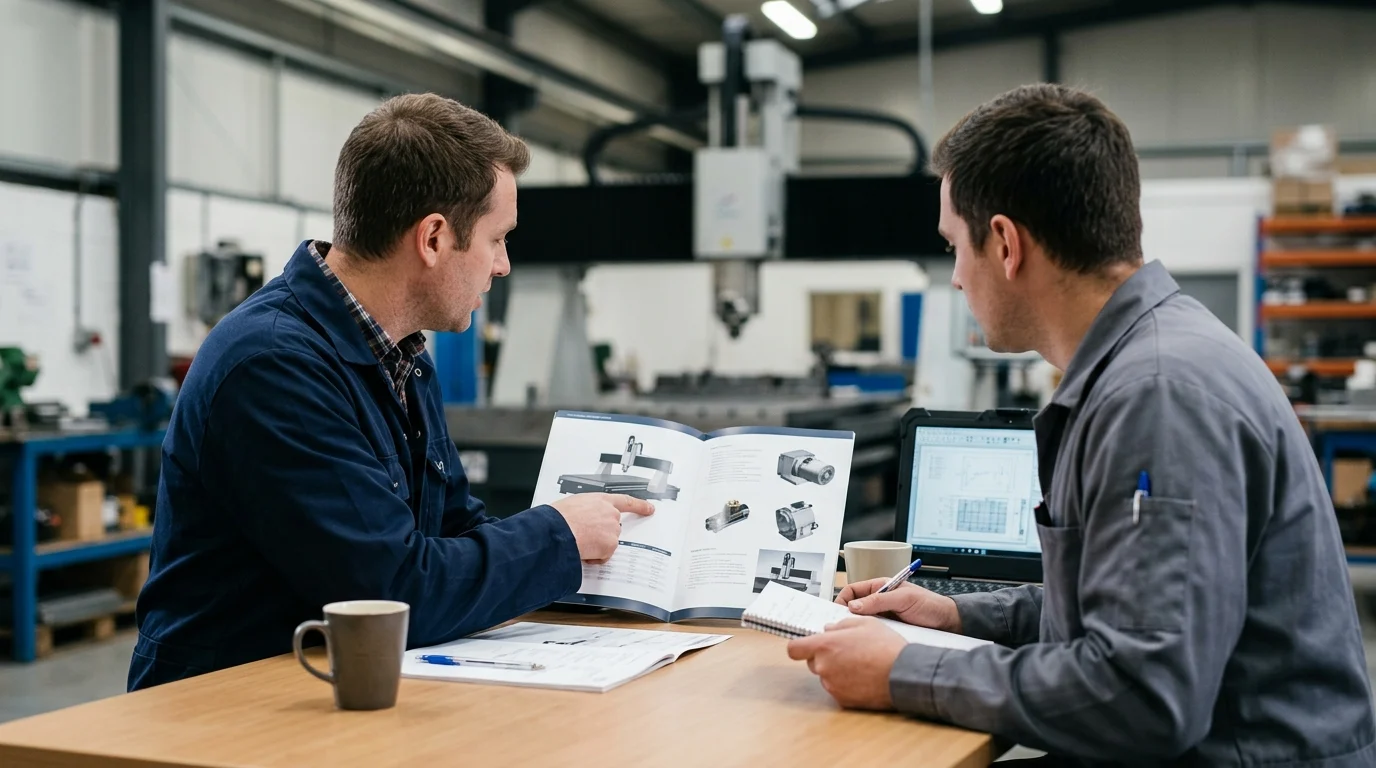
Navigating the final selection process for a CNC gantry milling machine requires synthesizing technical requirements with commercial realities. The objective is to identify a solution that not only meets immediate production tolerances but also offers the scalability and durability required for future manufacturing demands.
By structuring the buying journey through a formalized evaluation framework, procurement teams can objectively compare competing offers, moving beyond base pricing to understand the Total Cost of Ownership (TCO).
What step-by-step buying process to follow
The buying process should initiate with a comprehensive internal needs analysis, defining the maximum workpiece envelope, material hardness, and required throughput. This data forms the basis of a Request for Proposal (RFP) distributed to vetted suppliers. Once proposals are received, teams should conduct a technical leveling exercise to ensure all quotes include equivalent options, such as through-spindle coolant (TSC), tool touch probes, and chip management systems.
Following the technical review, buyers should request live demonstrations or video validations of similar machines in operation. The final steps involve negotiating the commercial contract, finalizing the FAT/SAT protocols, and coordinating site preparation, which often involves pouring specialized concrete foundations to support the immense weight and dynamic loads of the gantry system.
How to compare supplier proposals and after-sales support
Comparing supplier proposals requires a critical look at after-sales support and warranty structures.
Key Takeaways
- Wholesale sourcing and supply-chain implications for CNC gantry milling machine
- Specifications, compliance, and commercial terms buyers should validate
- Actionable recommendations for distributors and procurement teams
Frequently Asked Questions
What is the main benefit of a CNC gantry milling machine?
It machines large, heavy parts with higher rigidity and lower vibration, helping maintain accuracy during deep cuts and reducing multiple setups.
Which industries benefit most from CNC gantry milling machines?
Automotive, aerospace, mold making, energy, and heavy equipment manufacturers benefit most when machining oversized components or multi-ton workpieces.
What specifications should buyers compare first?
Start with X/Y/Z travel, table load, spindle type, spindle power, and guideway design. Match them to your largest parts and toughest materials.
Should I choose box ways or linear guideways?
Choose box ways for heavy-duty, interrupted cutting and maximum damping. Choose linear guideways for faster movement, higher speed machining, and better productivity on lighter cuts.
Why consider OTURN Machinery for a gantry milling solution?
OTURN offers cost-effective CNC gantry and machining solutions from Chinese group factories, with configuration support, broad machine options, and overseas service assistance.
Post time: Apr-16-2026