


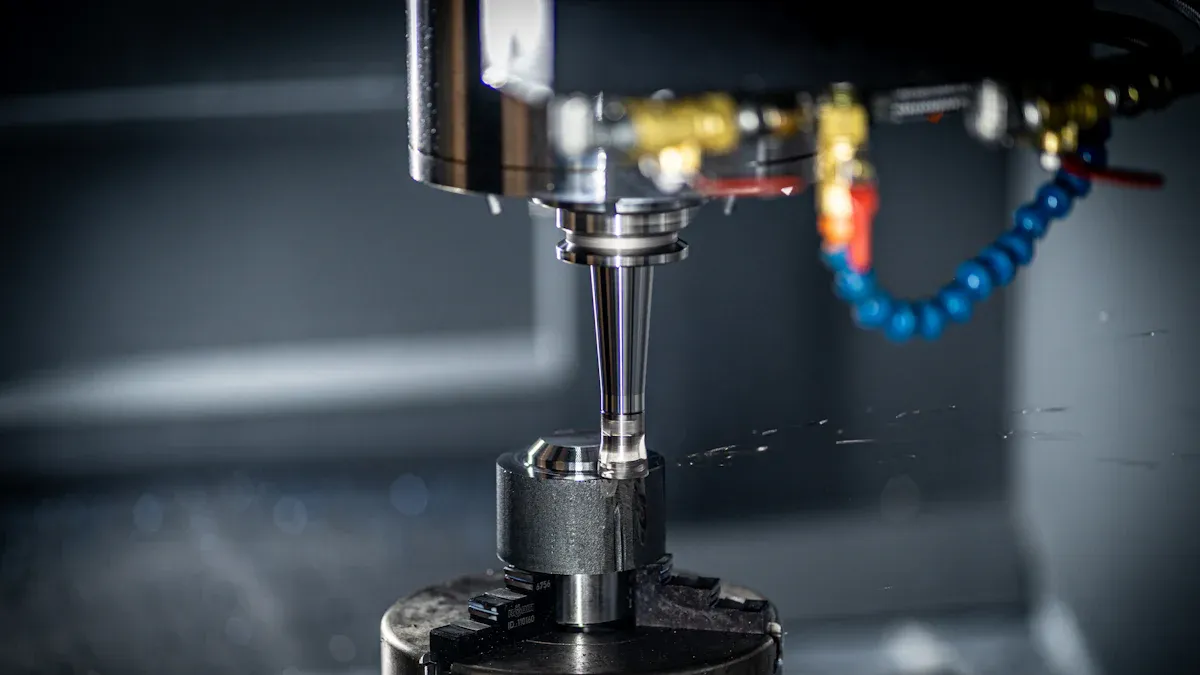
Operators must calibrate a 5-Axis CNC Machine to achieve high-quality parts. Precise calibration directly impacts machining accuracy and operational efficiency, especially for Automotive Component Machining. An ISO 9001 Certified CNC Machine relies on fundamental calibration principles for optimal performance, unlike a standard CNC Turning Center. This ensures a reliable CNC Machining Center.
Key Takeaways
- Calibrate 5-axis CNC machines often. This ensures high-quality parts and efficient work.
- Use special tools like laser interferometers and ballbar systems. These tools help find and fix machine errors.
- Follow a calibration plan. This includes checking linear and rotary parts. It also includes checking the spindle.
Essential Tools for 5-Axis CNC Machining Center Calibration
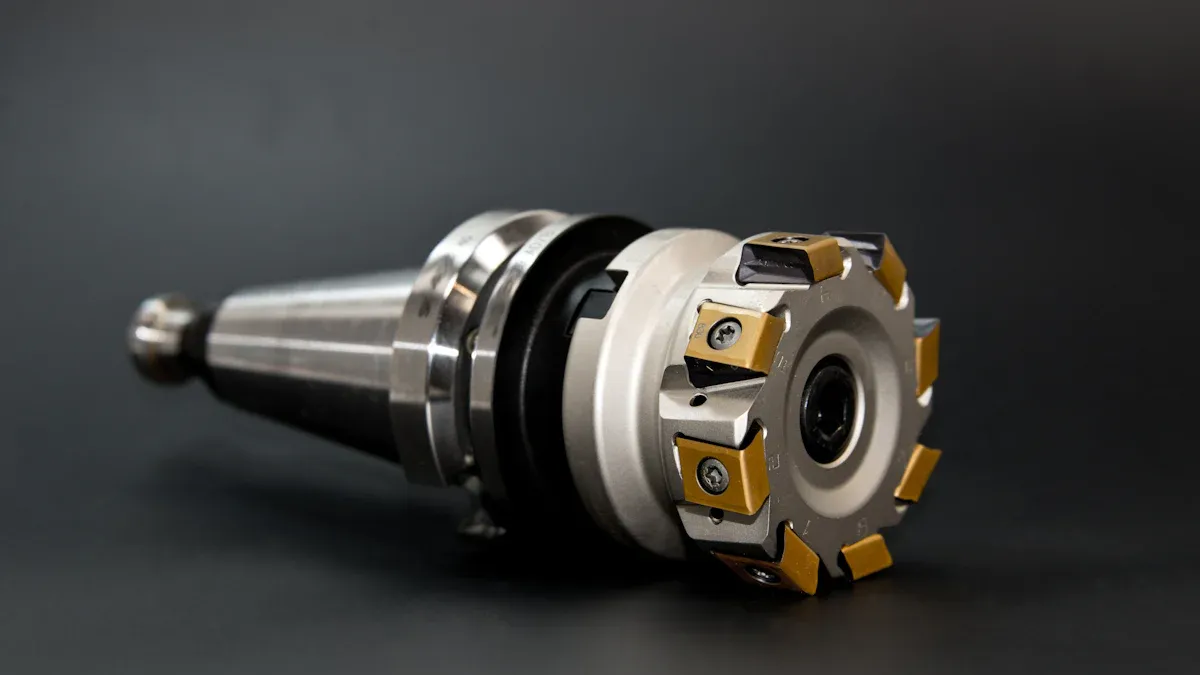
Accurate calibration of a 5-axis CNC Machining Center requires specialized tools. These instruments provide the precision necessary to identify and correct machine errors. They ensure the machine operates within tight tolerances.
Laser Interferometers for Linear Accuracy
Laser interferometers precisely measure linear axis positioning accuracy. They emit a laser beam along the machine’s travel path. The system detects minute variations in distance. This allows technicians to identify and compensate for pitch, yaw, and straightness errors. These devices offer extremely high resolution for linear measurements.
Ballbar Systems for Kinematic Performance
Ballbar systems assess the kinematic performance of a 5-axis CNC machine. They identify kinematic errors in 5-axis CNC machine tools. A significant limitation of ballbar measurements is their range, constrained by the physical length of the bar itself. Double ball bar tests are used in a comprehensive approach. They identify position-independent geometric errors in machine tools with various linear and rotary axis combinations. This involves treating the test setup and worktable as a reconfigurable closed-loop spatial mechanism. Ballbar systems are effective for:
- Testing position-independent geometric errors in rotary axes.
- Conducting total ballbar dynamic tests.
- Performing double ballbar tests for rotary axes.
- Measuring and identifying comprehensive errors of tilt tables.
- Identifying geometric errors of rotary axes using kinematic analysis.
Touch Probes and CMMs for Verification
Touch probes and Coordinate Measuring Machines (CMMs) verify calibration accuracy. Five-axis CMMs, including those with articulated probe heads, perform volumetric accuracy checks. They can simulate measurement uncertainty. A virtual CMM model provides close to real-time analysis of measurement uncertainty. This model gives the uncertainty value immediately after a single measurement. This approach aims to reduce the time and cost associated with estimating measurement uncertainty. The uncertainty analysis for these measurement methods considers the influence of error motions of linear axes on location error calibration. This is crucial for a high-precision CNC Machining Center.
Precision Gage Blocks and Standards
Precision gage blocks and other physical standards establish fundamental reference points. Technicians use them to verify linear dimensions and squareness. These tools provide a known, highly accurate physical dimension. They serve as a baseline for calibrating machine scales and verifying tool offsets. Their use ensures the machine’s internal measurement systems remain accurate.
Fundamental Calibration Techniques for Precision
Achieving high precision in 5-axis CNC machining requires applying fundamental calibration techniques. These methods systematically address various error sources within the machine. They ensure the machine operates with optimal accuracy.
Geometric Accuracy Checks
Geometric accuracy checks identify and quantify physical deviations in a machine’s structure and motion. A 5-axis machine can have at least 41 geometric errors. These errors fall into categories such as intra-axis errors, which occur within a single axis, and inter-axis errors, which happen between different axes. Volumetric errors encompass the entire working volume. Specific geometric errors include offsets in the position of rotary axis average lines and errors in the average relative alignment of axis motions. Angular and linear deviations in each axis’s motion also contribute to these inaccuracies.
Technicians use established procedures to measure and compensate for these geometric errors. They systematically model, measure, and compensate for both position-independent and position-dependent geometric errors. This process involves decoupling two rotary drive errors, measured with a ballbar, into 12 position-dependent and 8 position-independent geometric errors. They combine these decoupled rotary errors with 21 geometric errors of translational axes, measured with a laser interferometer. This comprehensive approach maps all 41 decoupled geometric errors into an error map. Screw theory helps with kinematic modeling and represents errors as error twists. Laser interferometers measure linear axis errors, including positioning, angular, straightness, and squareness. Ballbar systems identify rotary axis errors such as axial, radial, angular positioning, tilt, and position-independent geometric errors (PIGEs). Compensation strategies include filling look-up tables in commercial CNC systems, though these often limit compensation to translational errors. Kinematic models offer comprehensive compensation for all 41 errors, potentially through a Virtual CNC.
Kinematic Calibration Procedures
Kinematic calibration focuses on correcting errors related to the machine’s motion system. Kinematic errors stem from geometric inaccuracies of structural components. These errors lead to significant inaccuracies in the tool’s position and orientation relative to the workpiece. This directly results in an inaccurate machined surface during actual cutting operations. The influence of these errors varies considerably depending on each axis’s position, especially in five-axis machines equipped with a tilting rotary table. Location errors of rotary axes are particularly highlighted for machines with a tilting rotary table.
Industry-standard methods exist for performing kinematic calibration. Many users employ automated probing cycles, such as ’3D Quickset’ or built-in machine cycles. These cycles probe an artifact, like a calibration sphere, to automatically calculate the Machine Reference Zero Point (MRZP) or Center of Rotation (COR). Manual test bar procedures involve using a test bar in the spindle and an indicator to manually find the rotary center, especially for table/table machines. Some shops verify kinematics by cutting test parts and checking them on a CMM, then adjusting based on the results. However, this method often leads to inaccurate tool lengths and offers less precision for true kinematic calibration. Complex probing of an artifact involves detailed probing routines to calculate the COR. Verifying with a probe and calibration sphere after running kinematic calibration cycles involves probing a calibration sphere in various rotary positions to measure deviation and assess volumetric accuracy. Accounting for machine warm-up and thermal growth is crucial, as it significantly affects kinematic calibration accuracy. Understanding the relationship between tool length and probe calibration is a crucial prerequisite before attempting kinematic calibration. The Double Ball Bar (DBB) method helps identify kinematic errors. Machining tests, such as the cone frustum test (described in NAS979), evaluate machining accuracy and the effect of errors on geometric features like circularity, concentricity, and angular errors.
Volumetric Error Compensation
Volumetric error compensation is a technique that identifies and corrects errors throughout the entire working envelope of machine tools. This applies to both new and used machines, especially those with HEIDENHAIN controls. This process involves creating an error model and compensation files based on multiple point measurements. A laser tracer often performs these measurements from various positions. The primary benefit is reducing static geometric errors, which improves the accuracy of the Tool Center Point (TCP) position across the entire machining volume.
Volumetric compensation plays a crucial role in achieving high precision and repeatability in 5-axis CNC machining. Investing in machines with advanced volumetric compensation allows manufacturers to maintain high accuracy over time. This technology supports the ‘one-and-done’ approach of 5-axis machining. This approach eliminates cumulative errors by maintaining a single point of reference. It ensures every feature is machined with precise relationships, meeting tight tolerances required in demanding industries like aerospace and medical devices. The automation and removal of manual re-fixturing, supported by volumetric compensation, mean machine calibration, rather than operator intervention, becomes the dominant factor in achieving consistent, virtually identical parts across an entire production run.
Thermal Compensation Strategies
Thermal compensation strategies address the impact of temperature changes on machine accuracy. Real-time thermal monitoring uses contact sensors, such as RTDs and thermocouples, and non-contact IR sensors. Technicians place these sensors at critical heat-generating zones like spindle bearings, ball screws, linear guides, motor housings, and near thermal expansion zones on the machine structure and workpiece. A typical setup involves 8-12 sensors with sampling rates of 1-10 Hz.
Machine learning, specifically neural networks (LSTM, CNN) and ensemble methods (Random Forest), helps predict thermal drift. These models learn relationships between machining parameters (spindle speed, feed rate, cutting depth, coolant flow, ambient temperature) and thermal displacement. Physics-informed neural networks further improve accuracy. Real-time prediction allows for proactive compensation with 30-60 second look-ahead windows. Dynamic compensation control implements real-time tool path correction by applying coordinate offsets based on predicted thermal displacement vectors. This includes adjusting the Z-axis for spindle growth and XY positioning for bed/column drift. Integrating thermal error maps into the CNC controller and using adaptive control to adjust coolant flow, reduce spindle speeds, or insert cooling pauses are also effective. Closed-loop systems combining sensor feedback with ML predictions can achieve compensation accuracy within 5-10 microns. A self-learning thermal error compensation strategy was evaluated on two different 5-axis machine tools over long-term experiments (700-900 hours). This strategy reduced volumetric thermal errors from 76 µm to 20 µm (a 74% reduction) and from 84 µm to 33 µm (a 61% reduction). Root mean squared errors (RMSEs) were reduced by 84% and 65%, respectively. During simultaneous 5-axis milling of impellers, self-learning thermal error compensation reduced the maximum RMSE of impeller blades by up to 73% (from 32 µm to 9 µm) for temperature variations of about 10 °C. This strategy increases process capability in fluctuating ambient temperatures and significantly enhances accuracy without requiring prior knowledge of the machine tool’s thermal behavior.
Step-by-Step Axis Geometry Calibration
Achieving precise machining requires meticulous calibration of a machine’s geometric axes. This process systematically addresses the physical alignment and movement of each axis. It ensures the machine’s components move accurately relative to one another.
Linear Axis Calibration
Linear axis calibration focuses on the straight-line movement of the machine’s X, Y, and Z axes. Accurate linear motion is fundamental for precise part dimensions. Technicians follow a structured approach to calibrate these axes.
- Home the Machine: Operators move the machine’s cutting tool or spindle to the home position for each axis. This establishes a known reference point.
- Install a Calibration Tool: Technicians mount a calibration tool, such as a laser interferometer or a ball bar, on the machine’s worktable. This tool measures the actual axis movement.
- Run a Calibration Program: The machine’s control system executes a program. This program moves the cutting tool or spindle along each axis in predefined steps. It covers the entire working range.
- Measure the Axis Movement: The calibration tool measures the actual movement of each axis at every step of the program. Technicians compare these values to the programmed values. They record any discrepancies.
- Adjust the Axis Compensation: Based on the recorded differences, technicians modify the axis compensation values within the machine’s control system. This corrects errors and ensures precise movement along the specified axes.
This systematic process ensures the linear axes move with high accuracy across their full travel.
Rotary Axis Calibration
Rotary axis calibration is critical for 5-axis machines. These machines feature additional rotational axes, typically A, B, or C. Errors in rotary axis positioning directly affect the tool’s orientation relative to the workpiece. This impacts the final part geometry.
Technicians often use specialized artifacts and probing routines for rotary axis calibration. They might employ a precision sphere or a calibration cube. The machine probes the artifact from multiple angles and positions. This data helps determine the exact center of rotation for each rotary axis. It also identifies any tilt or wobble in their movement. Software then calculates compensation values. These values correct for deviations in the rotary axes’ kinematic models. Accurate rotary axis calibration ensures the tool maintains its intended orientation during complex 5-axis movements.
Squareness and Perpendicularity Checks
Squareness and perpendicularity checks verify the angular relationships between the machine’s axes. For example, the X-axis should be perfectly perpendicular to the Y-axis. The Z-axis should be perpendicular to both the X and Y axes. Deviations from these ideal 90-degree angles introduce geometric errors. These errors can cause parts to be out of square or have incorrect angles.
Technicians use precision squares, granite squares, or laser systems to perform these checks. They position a reference tool or probe along one axis. Then, they measure its distance from a precisely aligned reference surface on another axis. Any measured deviation indicates an error in squareness or perpendicularity. Compensation involves adjusting parameters in the machine’s control system. This corrects the angular misalignment. Maintaining precise squareness and perpendicularity is essential for producing parts with accurate geometric features and tight tolerances.
Spindle Alignment and Runout Verification
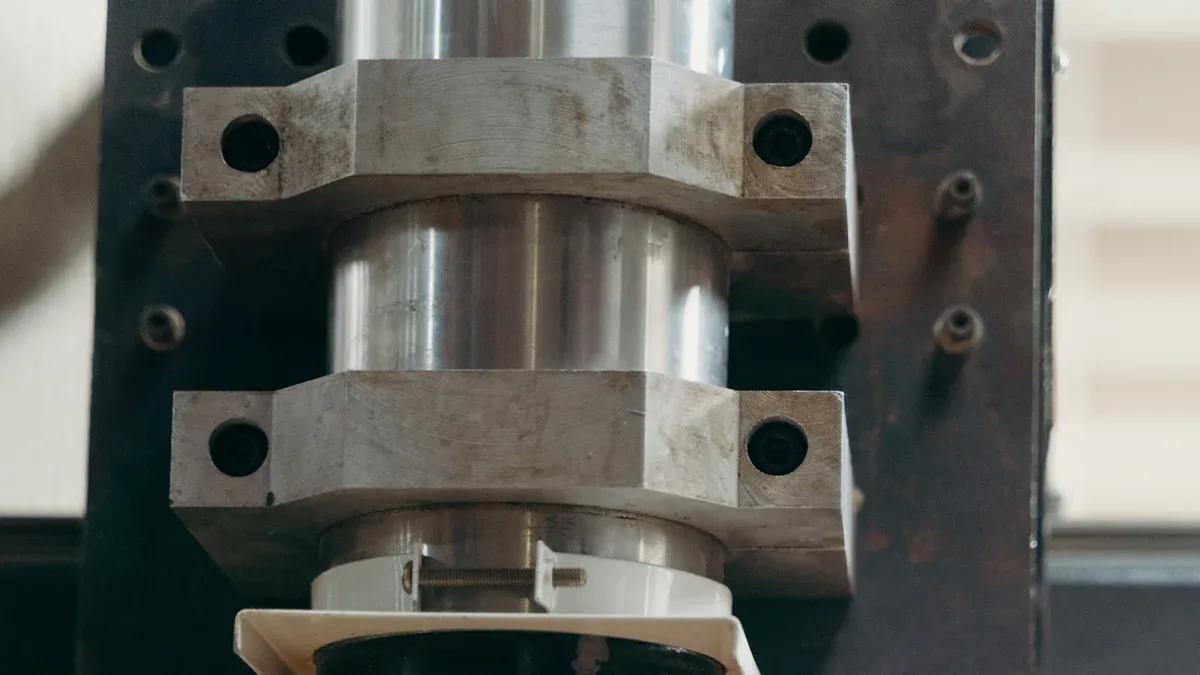
Precise spindle alignment and minimal runout are critical for achieving high-quality machining results. These factors directly influence tool life, surface finish, and part accuracy. Operators must regularly verify these aspects.
Spindle Taper Runout Measurement
Spindle taper runout measurement assesses the concentricity of the spindle’s internal taper. This measurement ensures the tool holder seats correctly and centrally. Technicians use a precision test bar inserted into the spindle taper. They then employ a dial indicator to measure deviations along the test bar’s length. Minimal runout indicates a healthy spindle, which prevents tool wobble during machining.
Spindle Axis Alignment
Spindle axis alignment ensures the spindle’s rotational axis is perfectly perpendicular to the machine’s worktable or linear axes. Misalignment causes conical errors in machined features. Laser alignment systems or precision levels help technicians verify this alignment. Adjustments to the machine’s structure or shimming correct any detected deviations. Proper alignment guarantees the tool cuts true to the machine’s coordinate system.
Tool Holder Runout Inspection
Tool holder runout inspection checks the concentricity of the tool within its holder. Contamination often causes tool holder runout. Debris, coolant residue, or metal chips on the taper or tool shank create gaps. Misalignment of the taper and spindle also contributes to this issue. Improper clamping, either under-torquing or over-torquing, can also lead to runout. Incompatible tool holders or worn components like collets further exacerbate the problem.
Operators perform daily checks for visible damage and clean taper surfaces. They conduct weekly checks to measure runout using a dial indicator. Acceptable runout is typically ≤0.01 mm at three times the diameter for precision holders. Technicians thoroughly clean all components before installation. They ensure correct alignment and apply precise torque settings with a calibrated wrench. Using balanced tool holders and replacing worn parts mitigates excessive runout.
Implementing Compensation Strategies
After identifying machine errors through calibration, implementing effective compensation strategies is crucial. These methods correct inaccuracies and ensure the machine produces precise parts. Manufacturers use software, hardware, and post-processor adjustments to achieve optimal performance.
Software-Based Compensation
Software-based compensation uses algorithms within the CNC control system to correct errors. These algorithms adjust machine movements in real-time or predictively.
- Feedback Control calculates contour errors in each cycle. It then adjusts control inputs in the next cycle. This method handles unknown disturbances well.
- Pre-compensation Control optimizes commands before errors occur. It relies on accurate models.
- Predictive Control forecasts future states. It solves optimization problems to determine optimal commands. This avoids the lag of feedback control.
Specific algorithms like RTCP (Rotation Tool Center Point Control) directly manage the cutter’s position and orientation. 3D Radius Compensation for End-Milling also helps the CNC system execute precise tool path instructions.
Hardware Adjustments
Sometimes, physical adjustments to the machine’s structure are necessary to correct geometric errors. These hardware adjustments provide a fundamental level of accuracy.
- Parallelism Adjustment: Technicians adjust guide rails using laser data. They loosen bolts and tap the rail until it is straight.
- Perpendicularity Adjustment: A granite square or laser level helps ensure axes are at 90 degrees. If the X-axis is not perpendicular to the Y-axis, workers physically move the gantry support structure.
- Spindle Tuning: A test bar and dial indicators sweep the table. If the spindle tilts, technicians add shims to the spindle bearings or adjust the headstock.
Post-Processor Optimization
Post-processor optimization refines the G-code that the machine executes. This step ensures the machine translates CAM instructions into precise movements. A tuned post-processor offers several benefits:
- It avoids invalid motions and potential errors. This leads to smoother tool paths.
- It optimizes tool paths. This minimizes idle strokes and reduces unnecessary tool changes. This can improve overall machining cycles by 15%.
- It detects potential logic errors. This prevents issues like tool collisions and air cuts. Such detection can reduce problems by over 80%.
A novel post-processor using particle swarm optimization (PSO) generates new G-Code. This G-code compensates for geometric errors, including higher-order terms. It also prevents tool-workpiece interference and abrupt axis motion changes. This ensures the real tool path matches the CAM design.
Verifying Calibration Accuracy in Your CNC Machining Center
After calibrating a 5-axis machine, verifying its accuracy is crucial. This step confirms the calibration process successfully corrected errors. It ensures the machine produces high-quality parts consistently. Manufacturers use several methods to validate calibration.
Test Part Machining and Measurement
Machining test parts provides a direct assessment of machine performance. Operators run test programs after calibration to confirm expected machine behavior. They then measure sample parts using precision tools like dial indicators or laser interferometers. These measurements verify cuts match specified dimensions. Benchmarking measurements against industry standards or established specifications ensures accuracy. Thorough documentation of results, calibration procedures, and adjustments is essential.
A standard protocol involves specific hardware and a 4-step process. A precision calibration sphere, certified to ±0.0025mm or better, serves as a reference point. A quality machine probe system, with repeatability of ±0.005mm or better, is also necessary. Calibration software automates measurement and calculation. The protocol begins with an initial measurement setup. Operators mount the calibration sphere and measure its center at rotary axes’ zero positions. They record these coordinates as a reference. Next, they collect multi-position data. They probe the sphere from at least eight different rotary positions. Calibration software then analyzes this data to calculate kinematic parameters. This generates corrected machine parameters. Finally, operators enter these parameters into the machine control. They perform verification measurements by probing the sphere again from multiple positions. This confirms improved accuracy for the CNC Machining Center.
Repeatability and Accuracy Testing
Repeatability and accuracy are key metrics for machine performance. Repeatability refers to the consistency of outcomes when the machine attempts the same task repeatedly under identical conditions. Accuracy describes how well a measurement result aligns with a target value.
Various types of accuracy exist. Geometric accuracy assesses the machine’s design and part qualities. Standards like SN ISO 230-1 specify methods for evaluating geometric errors in rotary and linear axes. Positioning accuracy characterizes the precision and repeatability of positioning in numerically controlled axes. Laser interferometers measure this, comparing the machine’s displayed position to the laser system’s measurement. ISO 230-2/6 and VDI/DGQ 3441 offer guidance. Interpolation accuracy evaluates how closely actual circular paths match programmed paths. SN ISO 230-4 addresses its evaluation. Volumetric accuracy determines the overall accuracy within the machine’s workspace. It aims to minimize tool center point (TCP) deviation.
Statistical Process Control (SPC)
Statistical Process Control (SPC) uses data-driven methods to monitor production. It analyzes metrics like dimensional variation to identify deviations early. A process with a CpK value of ≥1.33 indicates high capability to meet tolerances. SPC software often provides real-time quality management. This ensures calibration remains consistent. Experienced CNC services use SPC to analyze production data. They identify trends or variations before they escalate. This proactive approach reduces defect rates by 15-20%. It enables early corrective actions. This contributes to maintaining machine calibration and overall quality. SPC tracks variations and ensures repeatability through inspection techniques. Probe-based measurement systems allow for online error detection. They provide feedback for machine calibration and process parameter optimization. All operators contribute to maintaining SPC. They enter data during gaging and monitor SPC data hourly. This direct involvement ensures continuous oversight of the calibration process. It allows for timely intervention based on real-time data.
Best Practices for Ongoing Calibration and Maintenance
Maintaining a 5-axis CNC machine’s precision requires consistent calibration and diligent maintenance. These practices ensure the machine delivers high-quality parts over its operational lifespan.
Establishing a Calibration Schedule
A structured calibration schedule is essential for sustained accuracy. Operators should recalibrate rotational errors, including pitch, yaw, and roll, every one to two years. The specific frequency depends on the material hardness and the machine’s stiffness and tolerances. If a machine fails an acceptance check, recalibrate encoders before each critical part. General calibration is recommended every six months during routine maintenance, even if CMM reports show no tolerance issues.
Documentation and Record Keeping
Effective record-keeping is crucial for a comprehensive calibration system. It involves documenting all measurements, adjustments, and calibrations performed. This practice is vital for tracking machine performance over time and serves as a valuable resource for troubleshooting future issues. A comprehensive system should include:
- Date and time of each task
- The individual who performed the work
- Measurements taken and their results
- Parts that were replaced or adjusted
- Any unusual findings or concerns observed
- The time required to complete each task
Operator Training and Skill Development
Well-trained operators are key to maintaining machine accuracy. They must regularly calibrate the machine for accuracy. Operators use dial indicators and other calibration tools. They check for mechanical wear in components like lead screws and bearings. Verifying the correct setting of the work coordinate system (WCS) is also important. Training also covers pivot calibration on 5-axis machines. Operators learn to identify potential failures and prevent equipment damage.
Environmental Control Considerations
Maintaining a controlled and stable environment is vital to minimize thermal effects and ensure consistent machining precision. Fluctuations in temperature and humidity can cause the machine and workpiece to expand or contract, leading to inaccuracies. An ambient temperature between 18–24°C is crucial. Humidity should remain below 70%. A solid, vibration-dampened concrete base is essential, with a floor level tolerance of less than 0.5 mm deviation. This prevents rotational axis errors and compromises to precise geometric relationships in a CNC Machining Center.
Troubleshooting Common Calibration Challenges
Even with regular maintenance, 5-axis CNC machines can encounter calibration issues. Identifying and resolving these challenges quickly minimizes downtime and maintains machining precision. Manufacturers often face specific problems.
Identifying Root Causes of Inaccuracy
Pinpointing the exact cause of inaccuracy requires a systematic approach. Technicians first review recent maintenance logs and calibration records. They check for any changes in machine setup or environmental conditions. Next, they perform diagnostic tests using laser interferometers or ballbar systems. These tools help isolate errors to specific axes or kinematic chains. Operators also inspect the machine’s physical components for visible damage or wear. A thorough investigation ensures they address the correct problem.
Addressing Thermal Drift
Thermal drift significantly impacts machine accuracy. Temperature fluctuations cause machine components to expand or contract. To address this, implement active cooling systems for the spindle and machine structure. Maintain a stable ambient temperature in the workshop. Utilize thermal compensation software within the CNC control. This software predicts and corrects for thermal expansion in real-time. Operators should also allow the machine to warm up sufficiently before critical operations.
Mitigating Mechanical Wear
Mechanical wear inevitably affects machine precision over time. Worn ball screws, linear guides, and bearings introduce play and reduce accuracy. Regular inspection and replacement of these components are crucial. Lubricate all moving parts according to the manufacturer’s schedule. Implement a preventive maintenance program. This program identifies and replaces worn parts before they cause significant errors. Proper machine operation, avoiding excessive loads, also extends component life.
Consistent calibration plays a critical role in maintaining 5-axis CNC machining precision. A well-calibrated machine ensures superior product quality and extends operational longevity. This proactive approach minimizes errors. It guarantees optimal manufacturing outcomes. Calibration is an ongoing process.
FAQ
What makes 5-axis CNC calibration important?
Calibration ensures high-quality parts and precise machining. It directly impacts accuracy and operational efficiency.
How often should a 5-axis CNC machine be calibrated?
Calibrate rotational errors every 1-2 years. Perform general calibration every six months during routine maintenance.
What tools are used for 5-axis CNC calibration?
Laser interferometers, ballbar systems, touch probes, CMMs, and precision gage blocks are essential tools.
Post time: Jan-22-2026