


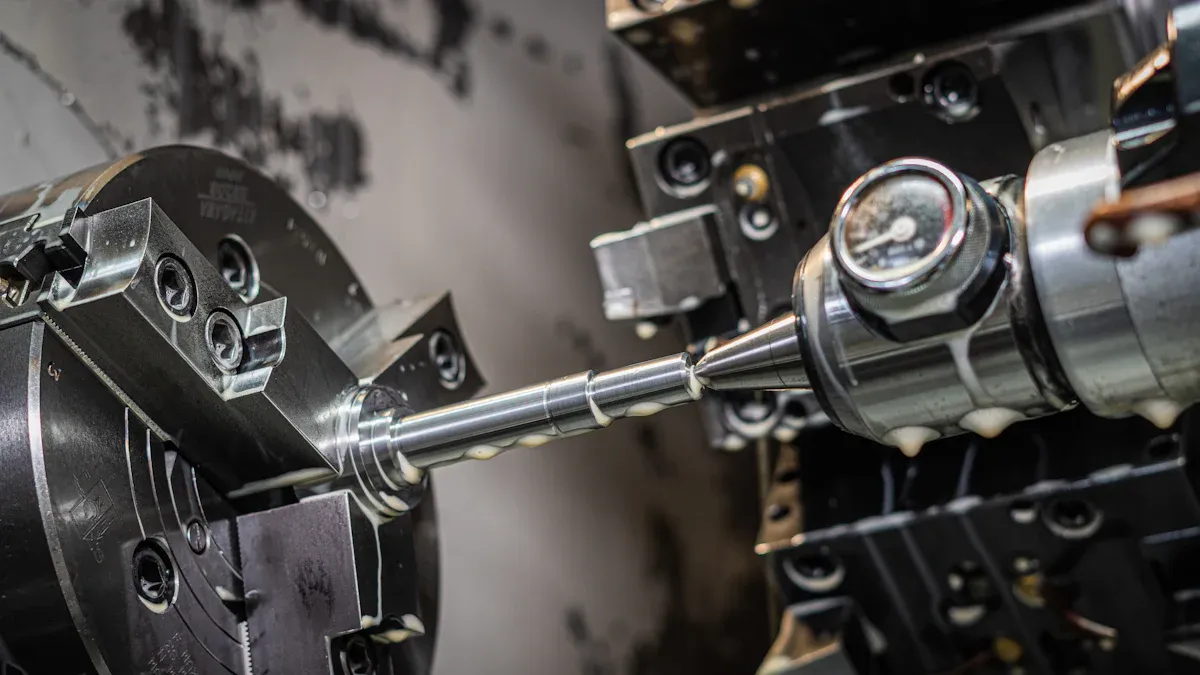
The aerospace industry demands rigorous standards for precision and efficiency, which is where the 5-axis machining center comes into play. These advanced systems provide direct benefits by enhancing part accuracy through high-precision 5-axis milling. With the ability to handle complex geometries, manufacturers can create high-quality components swiftly, leveraging the multi-axis CNC advantages. Cost savings arise from reduced setup times and lower material waste. For instance, switching to a 5-axis approach can decrease setup time from 2-3 hours to just 30-45 minutes, leading to a labor cost reduction of approximately 75%. This efficiency supports the dynamic needs of aerospace design and production, prompting the question: How does 5-axis CNC improve part accuracy? By implementing the best 5-axis machining practices, manufacturers can ensure optimal results in their production processes.
| Method | Setup Time | Labor Cost Reduction |
|---|---|---|
| Traditional methods | 2-3 hours | N/A |
| 5-axis approach | 30-45 minutes | ~75% reduction |
Key Takeaways
- 5-axis machining centers enhance precision, achieving tight tolerances crucial for safety in aerospace components.
- These machines significantly reduce setup times, allowing for faster production cycles and improved efficiency.
- Adopting 5-axis technology leads to lower material waste, resulting in cost savings and a smaller environmental footprint.
- 5-axis machining allows for the creation of complex geometries in a single setup, streamlining the manufacturing process.
- Investing in 5-axis machining centers offers long-term financial benefits, including reduced labor costs and improved product quality.
Enhanced Precision with 5-Axis Machining Centers
Importance of Precision in Aerospace
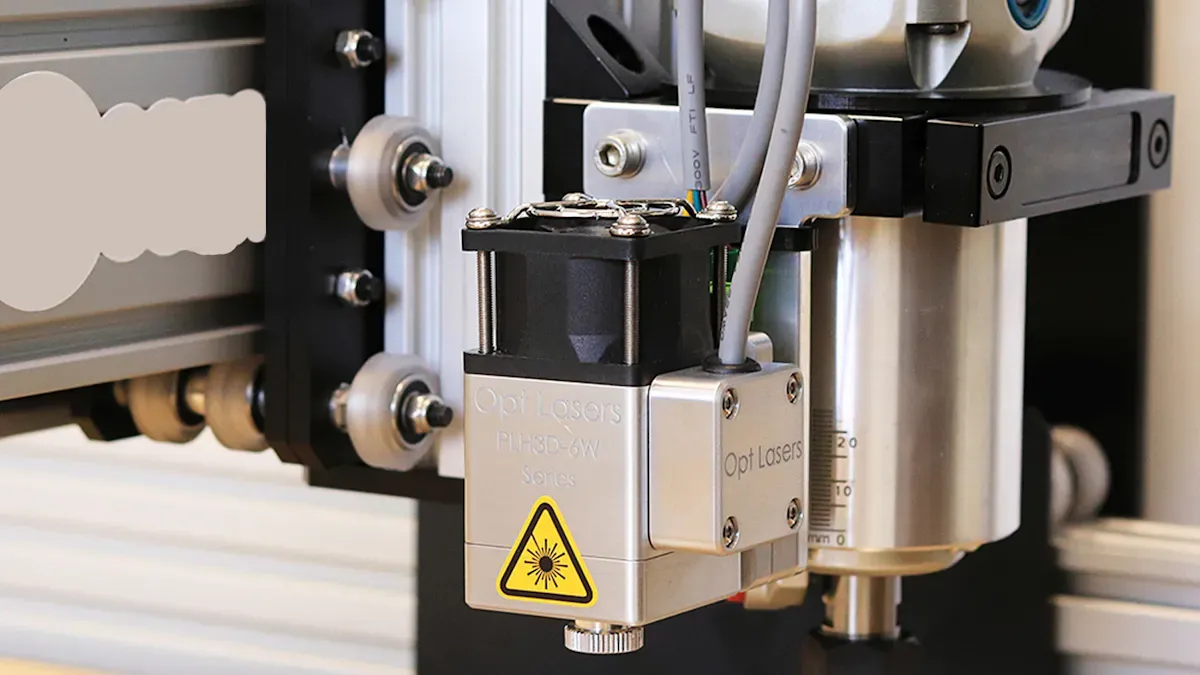
Precision plays a critical role in aerospace manufacturing. Each component must meet stringent tolerances to ensure optimal performance, reliability, and safety. Aerospace Original Equipment Manufacturers (OEMs) often require tolerances within thousandths or even ten thousandths of an inch. Achieving such precision demands advanced equipment and strict process discipline, including regular calibration checks and temperature regulation.
Precision in flight hardware manufacturing is arguably the most critical aspect of safety. Aircraft components must perform flawlessly under dynamic loads, temperature extremes, and long service intervals. Manufacturing defects can cause premature failures that endanger lives.
Key components that exemplify the need for precision include:
- Turbine Blades: These parts must withstand high temperatures and rotational forces while maintaining structural integrity.
- Landing Gear Parts: They support the entire weight of an aircraft during takeoff and landing, requiring precise machining for safety.
- Structural Components: This category includes fuselage frames and wing ribs that need precision for lightweight yet strong designs.
Case Studies of Precision Improvements
Several case studies highlight the precision improvements achieved through 5-axis machining centers. For instance, Airbus has optimized fuselage drilling with automated units that achieve hole tolerances within ±0.01 mm. This precision ensures fastener compatibility and structural integrity. Similarly, TurboTech Machining utilizes multi-axis CNC machines to produce high-precision parts, achieving remarkable accuracy and efficiency in complex geometries.
| Example | Description |
|---|---|
| Airbus | Optimizes fuselage drilling with automated units achieving hole tolerances within ±0.01 mm for fastener compatibility and structural integrity. |
| TurboTech Machining | Utilizes multi-axis CNC machines to produce high-precision parts, achieving remarkable accuracy and efficiency in complex geometries. |
| DC Series | Machining blisk components in jet engines requires simultaneous 5-axis movement to maintain consistent chip load and avoid collisions. |
5-axis CNC machining allows for tighter tolerances compared to conventional 3-axis machining. It enables the creation of complex geometries with premium finishes. Lead times for batch sizes of 1-5 pieces can be reduced by up to 75%, from weeks to days. This efficiency enhances production capabilities and supports the dynamic needs of the aerospace industry.
Increased Efficiency through 5-Axis Machining Centers
Streamlining Production Processes
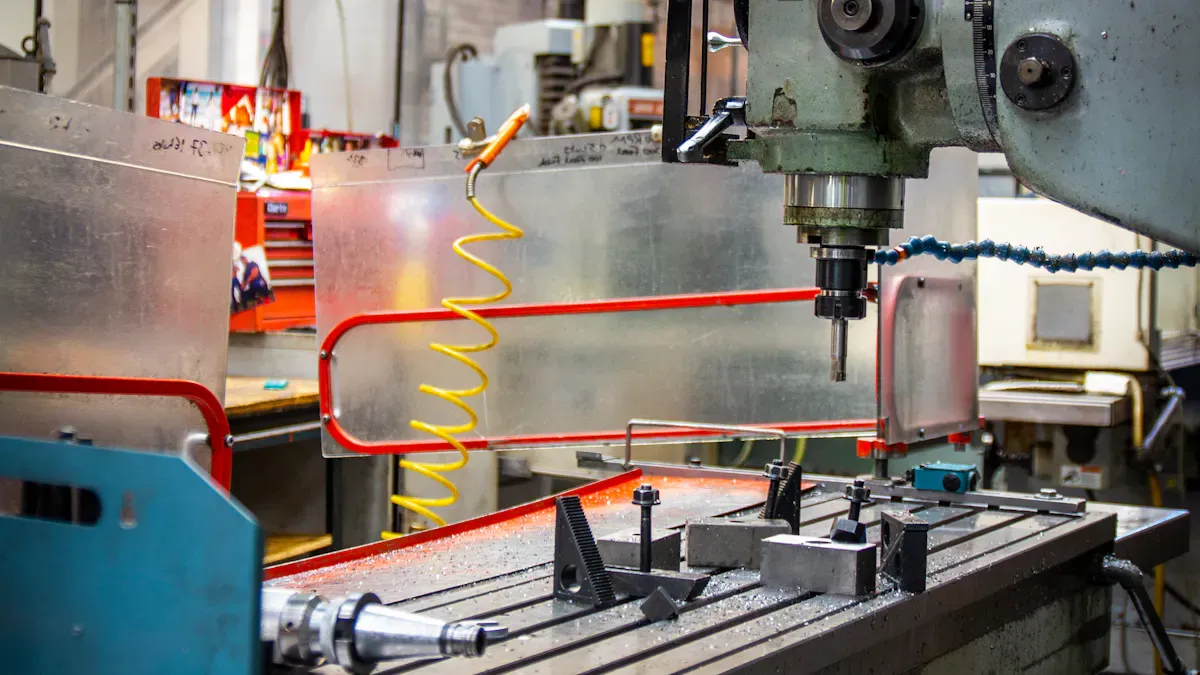
5-axis machining centers significantly enhance efficiency in aerospace manufacturing by streamlining production processes. These advanced machines offer several features that contribute to faster and more effective operations. The following table outlines key features and their corresponding benefits:
| Feature | Benefit |
|---|---|
| High-speed motion performance | Enhances overall production speed and efficiency. |
| Automated tool changes | Reduces downtime, allowing for continuous operation. |
| Robust design | Supports stable and efficient production, enabling 24/7 operation. |
| Excellent acceleration/deceleration | Minimizes non-cutting time, increasing processing efficiency. |
| Integrated spindle structure | Reduces thermal deformation and vibration, ensuring precision and quality. |
By utilizing these features, manufacturers can achieve a more streamlined workflow. The transition from traditional 3-axis machining to 5-axis machining centers alters the typical workflow significantly. The following table illustrates the typical workflow changes:
| Workflow Step | Detailed Action |
|---|---|
| CAD definition | Finalize the 3D CAD model, defining all geometric features and tolerance requirements for complex geometry milling. |
| CAM strategy | Choose the appropriate 5-Axis CNC Milling mode based on part geometry. |
| Single clamping plan + probing approach | Develop a stable single setup clamping plan and design a probing routine for datum alignment. |
| Roughing with stable engagement | Perform rough machining operations efficiently while minimizing tool deflection. |
| Finishing with controlled tool orientation | Conduct finish machining with precise control of cutting tool orientation. |
| Final inspection against datums | Carry out comprehensive part inspection based on defined datums, checking dimensional accuracy and surface quality. |
Reducing Machine Setup Times
One of the most significant advantages of 5-axis machining centers is their ability to reduce machine setup times. Traditional machining methods often require multiple setups, leading to increased labor costs and longer production times. In contrast, 5-axis machining centers can complete complex parts in fewer setups.
The following table compares the setup times and production efficiency between 3-axis and 5-axis machining:
| Manufacturing Approach | Required Setups | Setup Time | Error Potential | Total Production Time |
|---|---|---|---|---|
| 3-Axis Machining | 5-7 setups | 4-6 hours | High | 12-18 hours |
| 5-Axis Machining | 1-2 setups | 1-2 hours | Low | 6-8 hours |
With 5-axis capability, parts that previously required multiple operations can now be completed in a single setup. This fundamentally changes the manufacturing equation:
Traditional Process: Setup + Operation + Re-setup + Operation + Re-setup…
5-Axis Process: Setup + Complete Operation.
In my experience at PTSMAKE, we’ve seen setup time reductions of up to 80% for complex geometries when switching from 3-axis to 5-axis processes. The ability to access five sides of a part in a single setup reduces the need for multiple fixtures and alignment procedures. This leads to minimized error sources, as the part remains fixed in one position, significantly reducing geometric and dimensional errors.
Overall, the efficiency gains from 5-axis machining centers not only enhance production speed but also improve the quality and reliability of aerospace components.
Reduced Lead Times with 5-Axis Machining Centers
Faster Turnaround for Components
5-axis machining centers significantly reduce lead times for aerospace components. Traditional methods often require 6-8 weeks for production. In contrast, 5-axis machining can cut this time down to just 2-3 weeks. This reduction allows manufacturers to respond quickly to market demands and customer needs.
The following table illustrates how 5-axis machining centers enable faster turnaround for complex aerospace parts:
| Benefit | Description |
|---|---|
| Simultaneous Movement | Allows for intricate geometries to be created in a single setup, reducing setup time. |
| Reduced Fixtures | Minimizes the need for multiple fixtures, streamlining the machining process. |
| Machining Multiple Faces | Enables machining of features with various angles without repositioning, saving time. |
| Improved Efficiency | Enhances overall machining efficiency, leading to faster production times. |
| Cost Savings | Reduces production costs by minimizing setup and machining time. |
Additionally, 5-axis machining allows for better surface quality and easier access to undercuts. It extends tool life and offers more economical tool use. These advantages contribute to reduced cycle times and single-clamping setups, leading to significant time savings.
Impact on Project Timelines
Reduced lead times have a profound impact on overall project timelines in aerospace manufacturing. When companies can deliver components faster, they avoid several pitfalls:
- Missed Customer Commitments: Incorrect lead time calculations can lead to late deliveries, disappointing customers and incurring penalties.
- Inefficient Production Scheduling: Weak lead time foundations disrupt production schedules, causing constant expediting and clogged work centers.
- Poor Capacity Planning: Uncertainty in lead times results in underutilization or overloading of resources, leading to inefficiencies.
- Increased Costs: Delays lead to higher costs due to overtime, premium freight, and administrative expenses.
- Erosion of Trust: Consistent delivery failures damage a company’s reputation, affecting future contracts.
Shorter project timelines can lead to over 30% reductions in cycle times. Enhanced compliance with industry standards, such as AS9100 and ISO 9001, becomes achievable. Fewer costly delays contribute to improved operational efficiency, making 5-axis machining centers a vital asset in the aerospace sector.
Improved Design Flexibility via 5-Axis Machining Centers
Accommodating Complex Geometries
5-axis machining centers revolutionize the ability to create complex geometries in aerospace manufacturing. These advanced machines allow engineers to produce parts with intricate designs that were previously challenging or impossible to achieve. The multi-degree-of-freedom movement enables complete machining in a single setup, significantly enhancing efficiency.
Key components that benefit from this flexibility include:
- Jet engine turbine blades with complex curved surfaces.
- Landing gear and structural spars that require precise angles.
- Blisks and other large aerospace components featuring variable wall thicknesses.
5-axis machining allows for the production of parts with aerodynamic surfaces and organic curves, which are essential for optimizing performance. This capability reduces the need for multiple setups, streamlining the machining process and minimizing errors.
| Evidence Description | Source Link |
|---|---|
| 5-axis machining allows for the creation of complex geometries, enhancing design flexibility. | Hubs |
| It supports the production of parts with aerodynamic surfaces and organic curves. | Hubs |
| Reduces the need for multiple setups, streamlining the machining process. | Hubs |
Adapting to Design Changes
The aerospace industry often faces rapid design changes due to evolving requirements and technological advancements. 5-axis machining centers provide the necessary flexibility to adapt to these changes efficiently. Engineers can quickly modify designs without extensive retooling or setup adjustments.
This adaptability fosters innovation by allowing for:
- The production of lightweight designs with complex geometries.
- Rapid prototyping, enabling quick testing of functional prototypes.
- Customization of parts to meet specific performance needs.
As a result, manufacturers can respond to market demands swiftly, maintaining a competitive edge. The design flexibility offered by 5-axis machining centers not only enhances production capabilities but also drives innovation in aerospace manufacturing.
| Evidence Description | Source Link |
|---|---|
| Parts with angled features and undercuts are best suited for 5-axis machining. | Fictiv |
Cost Savings from 5-Axis Machining Centers
Lower Material Waste
5-axis machining centers significantly reduce material waste in aerospace manufacturing. Traditional machining methods often lead to excess scrap due to multiple setups and repositioning. In contrast, 5-axis machining allows manufacturers to complete complex parts in a single setup. This capability minimizes the need for additional fixtures and reduces the likelihood of errors during machining.
By optimizing the cutting process, manufacturers can achieve higher material utilization rates. This efficiency translates into lower costs and a smaller environmental footprint.
Additionally, the precision of 5-axis machining centers ensures that parts meet stringent specifications. This accuracy decreases the chances of producing defective components, further reducing waste. As a result, companies can allocate resources more effectively, enhancing overall profitability.
Long-term Financial Benefits
Investing in 5-axis machining centers yields substantial long-term financial benefits for aerospace companies. The following table outlines key advantages:
| Benefit Type | Description |
|---|---|
| Labor Cost Reduction | Fewer operators can manage more equipment, leading to significant savings over time. |
| Quality Improvements | Reduced scrap rates and fewer customer returns enhance reputation and allow for premium pricing. |
| Business Development | Access to higher-margin opportunities strengthens competitive positioning and reduces price competition. |
The initial investment in a 5-axis machining center may be higher than traditional equipment. However, the long-term savings often outweigh these costs. For instance, while a 3-axis CNC machine may cost between $50,000 and $150,000, a 5-axis CNC machine typically ranges from $200,000 to $500,000. The higher upfront cost can be misleading when considering the overall lifecycle savings.
- Setup and Fixturing Costs: A 5-axis machine often completes complex parts in a single setup, reducing the need for multiple setups and associated costs.
- Cycle Time: The total time from raw material to finished part is shorter with 5-axis machining due to fewer re-fixturing and calibration steps.
- Labor Costs: Fewer setups lead to reduced direct labor costs and allow skilled machinists to focus on other tasks.
Deciding between manufacturing methods requires a comprehensive cost-benefit analysis. The higher hourly rate of a multi-axis machine can be misleading if it eliminates other, more significant expenses, such as setup and fixturing costs, cycle time, and labor costs.
5-axis machining centers offer numerous advantages that significantly enhance aerospace manufacturing. Key benefits include:
- Enhanced Precision: These machines achieve tight tolerances essential for safety-critical components.
- Increased Efficiency: Streamlined processes reduce setup times and improve production speed.
- Cost Savings: Lower material waste and fewer errors lead to substantial financial benefits.
Adopting 5-axis technology is crucial for aerospace companies aiming to stay competitive. Industry stakeholders should consider integrating these advanced solutions to meet the rising demand for complex parts and maintain high-quality standards.
| Key Factors Driving Adoption | Description |
|---|---|
| Demand for Complex Parts | Rising need for high-precision components in aerospace manufacturing. |
| Efficiency Improvements | Enhanced efficiency and reduced setup times. |
| Cost Savings | Significant reduction in errors leading to cost savings. |
Embracing 5-axis machining centers will position manufacturers for future success in an evolving industry landscape.
FAQ
What is a 5-axis machining center?
A 5-axis machining center is a CNC machine that can move a cutting tool or part in five different axes simultaneously. This capability allows for the production of complex geometries and improves precision in aerospace manufacturing.
How does 5-axis machining improve efficiency?
5-axis machining reduces setup times and allows for multiple operations in a single setup. This streamlining leads to faster production cycles and minimizes the risk of errors, enhancing overall efficiency in manufacturing processes.
What are the cost benefits of using 5-axis machining?
5-axis machining centers lower material waste and reduce labor costs by minimizing setup times. Although the initial investment is higher, the long-term savings from increased efficiency and reduced errors often outweigh these costs.
Can 5-axis machining accommodate design changes?
Yes, 5-axis machining centers offer flexibility to adapt to design changes quickly. Engineers can modify designs without extensive retooling, allowing for rapid prototyping and customization to meet specific performance needs.
What industries benefit from 5-axis machining?
While primarily used in aerospace, 5-axis machining also benefits industries such as automotive, medical, and energy. These sectors require high precision and complex geometries, making 5-axis technology essential for their manufacturing processes.
Post time: Mar-16-2026