


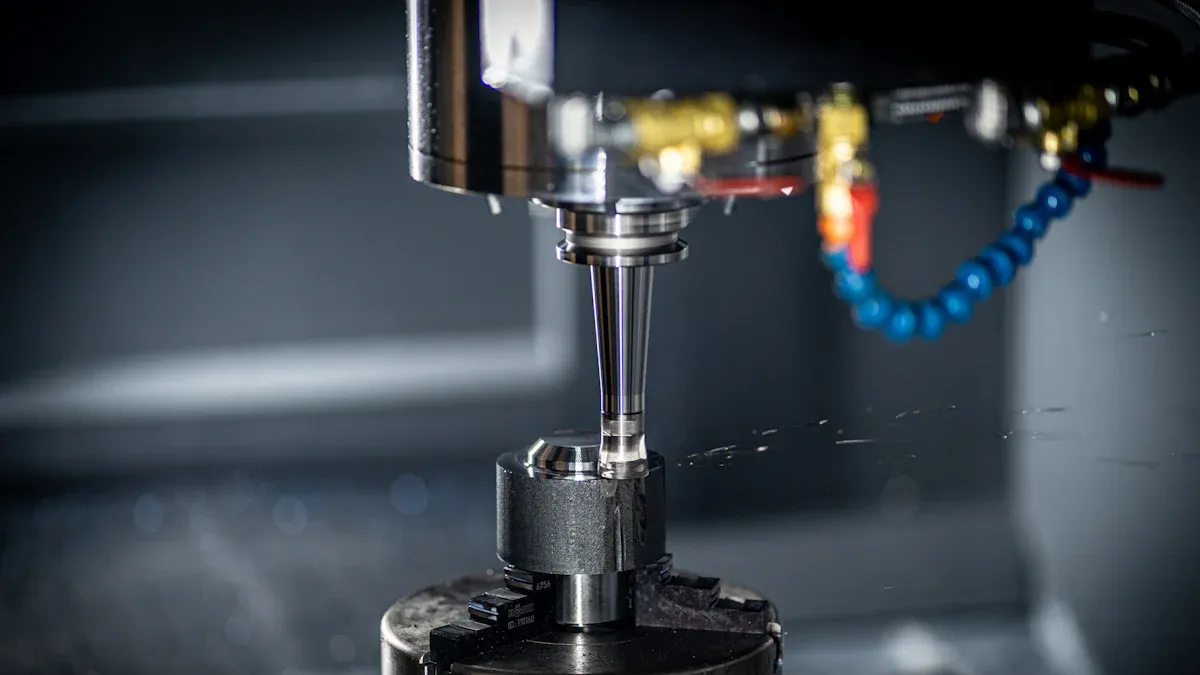
5 Axis CNC Vertical Machining Centers provide significant advantages in manufacturing. These 5 Axis CNC Machines enable the production of complex geometries in a single setup, enhancing efficiency and reducing errors. The integration of advanced CNC Machining Center technology plays a crucial role in modern manufacturing. It boosts productivity by optimizing tool paths and minimizing waste. Additionally, the capabilities of these high precision vertical CNC machines contribute to improved production rates. Recent market analysis indicates that the vertical 5-axis machining market is projected to grow significantly, reflecting the increasing importance of compact 5-axis vertical machines in the industry.
Key Takeaways
- 5 Axis CNC Vertical Machining Centers simplify the production of complex parts, reducing setup times and labor costs.
- These machines enhance machining efficiency by allowing single-run operations, which leads to shorter cycle times and increased productivity.
- Precision and consistency are key benefits of 5 Axis CNC technology, achieving tolerances as tight as ±0.005 mm, crucial for high-precision industries.
- Improved surface quality results from optimal tool engagement, minimizing defects and reducing the need for post-processing.
- 5 Axis CNC machines are versatile, capable of handling various materials and complex geometries, making them essential in modern manufacturing.
Simplified Production of Complex Parts with 5 Axis CNC Vertical Machining Centers
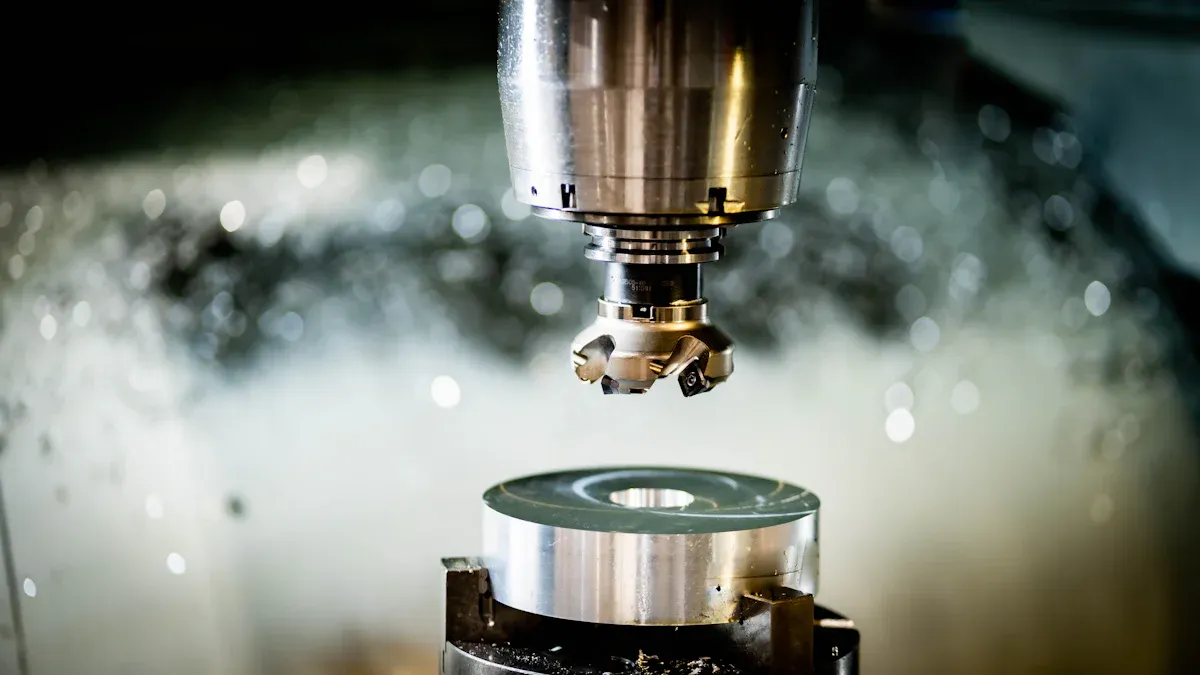
5 Axis CNC Vertical Machining Centers revolutionize the production of complex parts by streamlining processes that traditional 3-axis machines struggle to handle. These advanced machines minimize the number of setups required, significantly reducing both time and labor costs.
| Advantage | Explanation |
|---|---|
| Minimized setups | Fewer setups are needed to create complex geometries, reducing time and labor costs. |
| Elimination of complex fixtures | Parts can be held in one position and rotated, avoiding the need for expensive and time-consuming fixtures. |
| Faster material removal | The cutting tool can remain tangential to the surface, allowing for more efficient material removal. |
| Improved surface finishes | Better finishes are achieved on contoured geometries, reducing lead times compared to 3-axis machining. |
| Enhanced capability for GD&T call-outs | Complex geometric tolerances can be achieved in a single operation, streamlining the production process. |
In industries such as aerospace and automotive, the effectiveness of 5 Axis CNC Vertical Machining Centers is evident. For instance, aerospace manufacturers utilize these machines to produce complex-shaped components like blades and wing panels, which require high precision and superior surface quality. Jet engine turbine blades, known for their intricate curved surfaces, are also manufactured using this technology.
In the automotive sector, 5-axis machining supports the production of engine blocks and transmission housings, which often feature complex geometries. The DC Series 5-axis machining center exemplifies this capability, effectively handling high-mix, low-volume aerospace parts while achieving superior surface finishes.
Overall, the ability of 5 Axis CNC Vertical Machining Centers to simplify the production of complex parts enhances efficiency and quality in manufacturing processes.
Enhanced Machining Efficiency of 5 Axis CNC Vertical Machining Centers
5 Axis CNC Vertical Machining Centers significantly enhance machining efficiency through various mechanisms. These machines optimize production processes, leading to shorter cycle times and improved overall productivity.
One of the primary advantages of 5 Axis CNC technology is its ability to reduce setup times. Traditional machining often requires multiple setups to achieve complex geometries. In contrast, 5-axis machining allows for single-run operations, which minimizes the need for repositioning parts. This efficiency translates into substantial time savings.
Key Benefits of Enhanced Machining Efficiency:
- Single-run machining minimizes setup time, boosting productivity.
- Access to hard-to-reach areas ensures seamless machining of intricate designs.
The following table illustrates the cycle time comparison between conventional machining centers and 5 Axis CNC Vertical Machining Centers:
| Type of Machining Center | Cycle Time Comparison |
|---|---|
| Conventional Machining | Longer due to slower feeds and less efficient toolpaths. |
| 5-Axis CNC Vertical Machining | Shorter due to optimized tool engagement and higher MRR. |
Moreover, manufacturers report notable productivity gains after adopting 5 Axis CNC Vertical Machining Centers. The table below summarizes these benefits:
| Benefit | Description |
|---|---|
| Improved Accuracy | Parts are ‘done in one’, reducing loss of accuracy due to tolerance stacking between operations. |
| Reduced Lead Times | Cutting down on lead times and reduced setup time. |
| Enhanced Surface Finishes | Improved surface finishes due to better tool positioning and rigidity. |
| Longer Tool Life | Shorter cutting tool lengths provide greater rigidity, leading to longer tool life. |
| Overall Better Part Quality | Improved part quality with no variations in loading and machining accuracy. |
Precision and Consistency in 5 Axis CNC Vertical Machining Centers
5 Axis CNC Vertical Machining Centers excel in delivering precision and consistency, making them indispensable in high-precision industries. These machines achieve superior accuracy through simultaneous movement along five axes, which allows for intricate designs without the need for multiple setups. In contrast, traditional 3-axis machines only move along three linear axes, often requiring several setups to complete complex parts.
The following table highlights the differences in features between 5-axis and 3-axis CNC machining:
| Feature | 5-Axis CNC Machining | 3-Axis CNC Machining |
|---|---|---|
| Movement | Simultaneous movement along five axes | Movement along three linear axes |
| Setup Requirements | Fewer setups for complex geometries | Multiple setups required for complex parts |
| Tolerance Maintenance | Maintains tight tolerances across geometries | Limited tolerance maintenance |
| Surface Quality | Improved surface quality | Standard surface quality |
| Efficiency | Higher productivity and consistency | Lower efficiency for complex shapes |
5 Axis CNC Vertical Machining Centers can maintain tolerances as tight as ±0.005 mm under ideal conditions. This level of precision is crucial in industries such as aerospace and medical manufacturing, where even minor deviations can lead to significant issues. The table below illustrates the common tolerances achieved with these machines:
| Tolerance Range | Measurement Unit |
|---|---|
| ±0.05 mm | ±0.002 in |
| ±0.01–0.02 mm | ±0.0004–0.0008 in |
| ±0.005 mm (under ideal conditions) | ±0.0002 in |
The consistency of part production also improves significantly with 5 Axis CNC technology. For example, turbine blades manufactured using these machines exhibit enhanced accuracy and reduced setup errors. This consistency extends to various applications, including engine housings and medical implants, where precision is paramount.
Improved Surface Quality with 5 Axis CNC Vertical Machining Centers
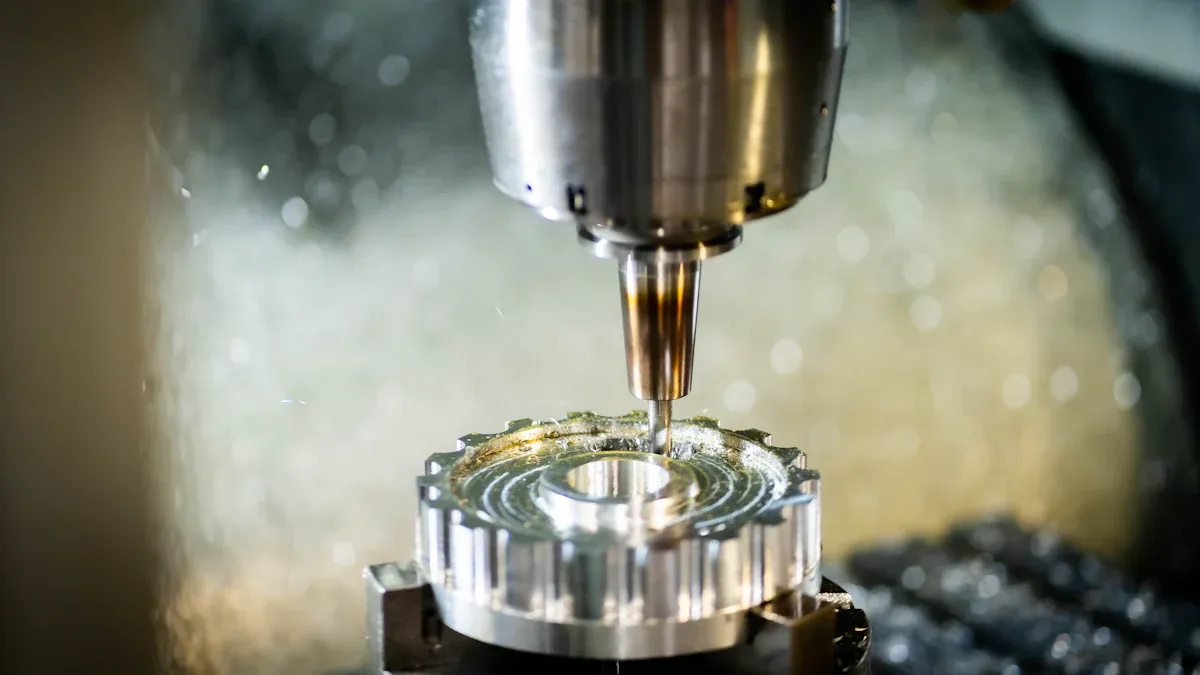
5 Axis CNC Vertical Machining Centers significantly enhance surface quality, making them essential in industries that demand precision. These machines allow tools to engage with workpieces at optimal angles throughout the machining process. This capability minimizes visual flaws and improves overall quality.
The table below illustrates the differences in surface finish between 3-axis and 5-axis machining:
| Surface type (example) | Typical finish risk in 3-axis multi-setup plan | Typical finish advantage in 5-axis plan |
|---|---|---|
| Broad freeform contour | Witness marks at blend zones | Smoother blends with continuous orientation |
| Deep pocket walls | Tool deflection marks, chatter | Shorter stick-out possible by tilting |
| Multi-face cosmetic surfaces | Setup transition lines | More faces finished in one clamping |
The ability of 5-axis machines to maintain constant contact with the workpiece reduces chatter and visual defects. This results in superior surface finishes that often require less post-processing. For instance, surface roughness values during milling can range from 3.2 µm to 12.5 µm, depending on factors such as feed rate and tool geometry.
Industries that benefit most from improved surface quality include:
- Aerospace: Precision parts for military devices and turbines.
- Automotive: High-performance engine parts and components.
- Medical Device Manufacturing: High-quality components for medical applications.
- Mold Making: Complex molds with superior surface finishes.
The enhanced range of motion and cutting tool location in 5-axis machines provide greater flexibility and precision. This flexibility is crucial for achieving high-quality surface finishes on complex designs. Overall, the adoption of 5 Axis CNC Vertical Machining Centers leads to significant improvements in surface quality, which is vital for maintaining competitive advantage in precision-driven industries.
Application Versatility of 5 Axis CNC Vertical Machining Centers
5 Axis CNC Vertical Machining Centers demonstrate remarkable versatility across various industries. These machines excel in producing complex geometries, which enhances design capabilities in automotive components. They improve the accuracy and reliability of parts, crucial for meeting stringent automotive standards. Additionally, the technology reduces lead times by minimizing the need for multiple setups, streamlining the manufacturing process.
The following materials can be effectively processed using 5 Axis CNC Vertical Machining Centers:
- Titanium
- Inconel
- CFRP (Carbon Fiber Reinforced Polymer)
- GFRP (Glass Fiber Reinforced Polymer)
- Ceramics
- Graphite
These machines can handle complex geometric shapes, including inclined surfaces, deep cavities, and intricate curved surfaces. They support various machining processes such as milling, drilling, and tapping. For instance, titanium behaves consistently under machining conditions, while heat-resistant alloys require careful tool engagement. The ability to choose better approach angles enhances machining efficiency.
5 Axis CNC Vertical Machining Centers also support rapid prototyping and custom manufacturing. Their highly flexible rotational axes provide greater machining flexibility, allowing tools to approach from almost any direction. The table below summarizes key features that contribute to their versatility:
| Feature | Description |
|---|---|
| Highly Flexible Rotational Axes | Provides greater machining flexibility, allowing tools to approach from almost any direction. |
| Complex Geometric Shape Machining | Capable of machining complex shapes that traditional machines struggle with. |
| Efficiency and Precision | Reduces the need for multiple clamping, enhancing efficiency and accuracy in machining. |
| Multi-face Machining | Completes complex parts in a single clamping, shortening production cycles significantly. |
| Freeform Shape Machining | Suitable for parts with complex surfaces, like aerospace components and molds. |
| High-Precision Machining | Achieves precise control for high-standard machining demands. |
Overall, the application versatility of 5 Axis CNC Vertical Machining Centers makes them indispensable in modern manufacturing, enabling industries to meet diverse production needs efficiently.
5 Axis CNC Vertical Machining Centers offer numerous advantages that significantly enhance manufacturing processes. These machines simplify the production of complex parts, improve machining efficiency, and ensure precision and consistency. As industries such as aerospace, automotive, and medical devices increasingly demand high-quality components, the adoption of this technology becomes essential.
Key Reasons to Consider 5 Axis CNC Technology:
- Increased demand across various sectors.
- Significant investments in production capacities.
- Future advancements in precision and intelligence.
The future of machining lies in the continued evolution of 5 Axis capabilities. Innovations such as AI integration and hybrid technologies will further enhance efficiency and customization. Manufacturers should embrace these advancements to remain competitive in a rapidly changing landscape.
FAQ
What is a 5 Axis CNC Vertical Machining Center?
A 5 Axis CNC Vertical Machining Center is a machine tool that can move a cutting tool or workpiece along five different axes simultaneously. This capability allows for the production of complex geometries in a single setup.
How does 5 Axis machining improve efficiency?
5 Axis machining reduces setup times by allowing multiple operations in one clamping. This minimizes the need for repositioning parts, leading to shorter cycle times and increased productivity.
What industries benefit from 5 Axis CNC technology?
Industries such as aerospace, automotive, medical device manufacturing, and mold making benefit significantly from 5 Axis CNC technology due to its ability to produce high-precision and complex components.
Can 5 Axis CNC machines handle different materials?
Yes, 5 Axis CNC machines can effectively process various materials, including titanium, Inconel, CFRP, GFRP, ceramics, and graphite. Their versatility makes them suitable for diverse applications.
What are the typical tolerances achievable with 5 Axis CNC machining?
5 Axis CNC machines can achieve tolerances as tight as ±0.005 mm under ideal conditions. This precision is crucial for applications in industries where accuracy is paramount.
Post time: Mar-10-2026