


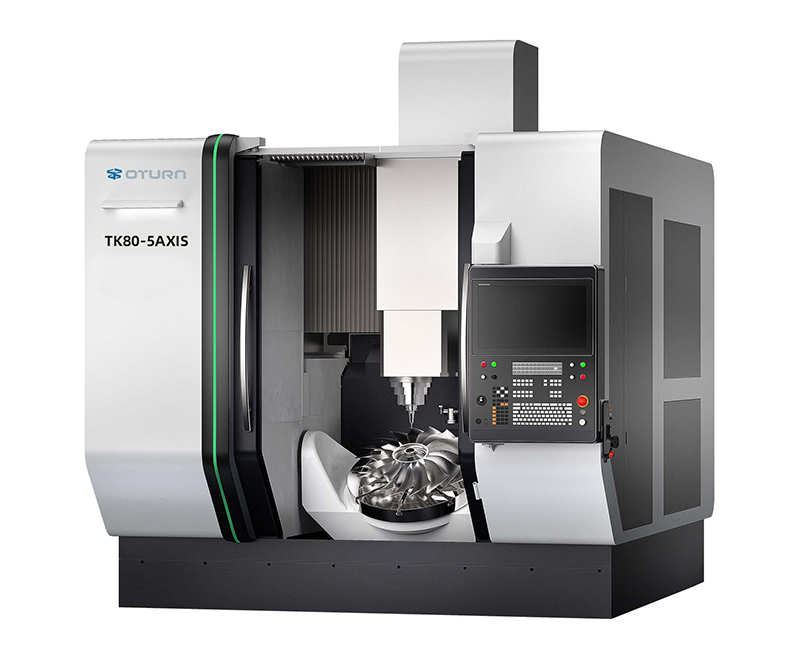
High-precision CNC machine tools are primarily used in fields requiring extremely high surface finish, such as precision molds, optical components, critical aerospace components, and high-end consumer electronics, to achieve mirror-like finishes and eliminate or significantly reduce manual polishing.
1. Aerospace Industry
The aerospace industry demands extremely high reliability for its parts. High-precision machining directly impacts the performance and lifespan of components.
Typical parts: Aircraft engine blades, aerospace bearings, critical landing gear components.
Core value: Precise machining of complex blades ensures surface smoothness, significantly reducing airflow resistance and improving engine combustion efficiency and thrust. Simultaneously, high-precision machining reduces the friction coefficient of parts such as bearings, improving the safety and stability of the entire aerospace system.
2. Automotive Manufacturing Industry
In the automotive industry, the application of high-precision machine tools is not only about aesthetics but also directly affects the performance of the power system.
Typical parts: Engine cylinder blocks, cylinder heads, crankshaft journals, transmission gears.
Core value: Ensuring the smoothness of crankshaft journal surfaces directly impacts engine power output and fuel efficiency. In transmission gear machining, high surface finish reduces noise and wear during meshing, improving shifting smoothness and service life. For exterior parts such as wheel hubs, it is used to achieve high-end, refined surface finishes.
3. Electronic Equipment Manufacturing
Facing the trend of miniaturization and high precision in electronic products, high-precision machine tools are crucial for achieving precise structures and improving appearance quality.
Typical parts: Aluminum alloy casings, frames, and buttons for mobile phones/tablets, semiconductor wafer turning.
Core value: Precision cutting of aluminum alloy casings achieves mirror-grade surface finishes, improving product appearance and durability. In semiconductor manufacturing, high-precision turning of wafers ensures the smoothness of the turn surface, significantly improving the yield rate of chip manufacturing.
4. Mold Manufacturing Field
Molds are the “mother” of mass production, and their surface quality directly determines the quality of the final product.
Typical parts: Injection molds, die-casting mold cavities and cores, optical lens molds.
Core Value: High-precision machining can achieve Ra nanometer-level surface finish requirements for molds, significantly reducing or eliminating subsequent manual polishing processes and shortening the mold manufacturing cycle. Especially in the manufacturing of optical lens molds, it ensures that the produced lenses have excellent optical performance.
5. Medical Device Manufacturing
The unique nature of medical devices requires that their processing accuracy and surface quality meet the highest safety and performance standards.
Typical parts: Artificial joints, syringe needles, surgical instruments.
Core Value: The surface finish of artificial joints directly affects the patient’s postoperative recovery and joint lifespan. High-precision machining ensures a smooth joint surface, reducing wear. For needles and surgical instruments, a high surface finish guarantees product safety and biocompatibility.
6. Precision Instrument Manufacturing
Instruments and meters have fundamental requirements for measurement accuracy and stability.
Typical parts: Lens holders for optical instruments, objective lens mounts for microscopes, high-precision sensor housings.
Core Value: High-precision machining ensures the surface finish and assembly accuracy of parts, reducing friction and assembly errors, thereby directly improving the measurement accuracy and long-term stability of instruments and meters.
7. Jewelry Processing
In high-end jewelry manufacturing, high-precision CNC machine tools can transform designers’ creativity into reality.
Typical applications: Complex engraving of precious metal (gold, platinum) jewelry, precision machining of gemstone setting bases.
Core Value: The machine tools can achieve high-precision replication of complex patterns and delicate shapes, enhancing the artistic value and production efficiency of jewelry. At the same time, precise machining of setting grooves ensures the firmness and aesthetics of gemstone settings.
The core competitive advantages offered by high-precision CNC machine tools are:
Replacing manual labor, reducing costs: Transforming expensive manual polishing into efficient, controllable machine tool processing costs.
Consistent quality: Completely eliminating the influence of manual experience on product quality, ensuring high consistency of mass-produced products.
Driving upgrades: Helping enterprises enter high-barrier, high-value-added precision manufacturing fields such as aerospace and medical devices.
Post time: Feb-26-2026