


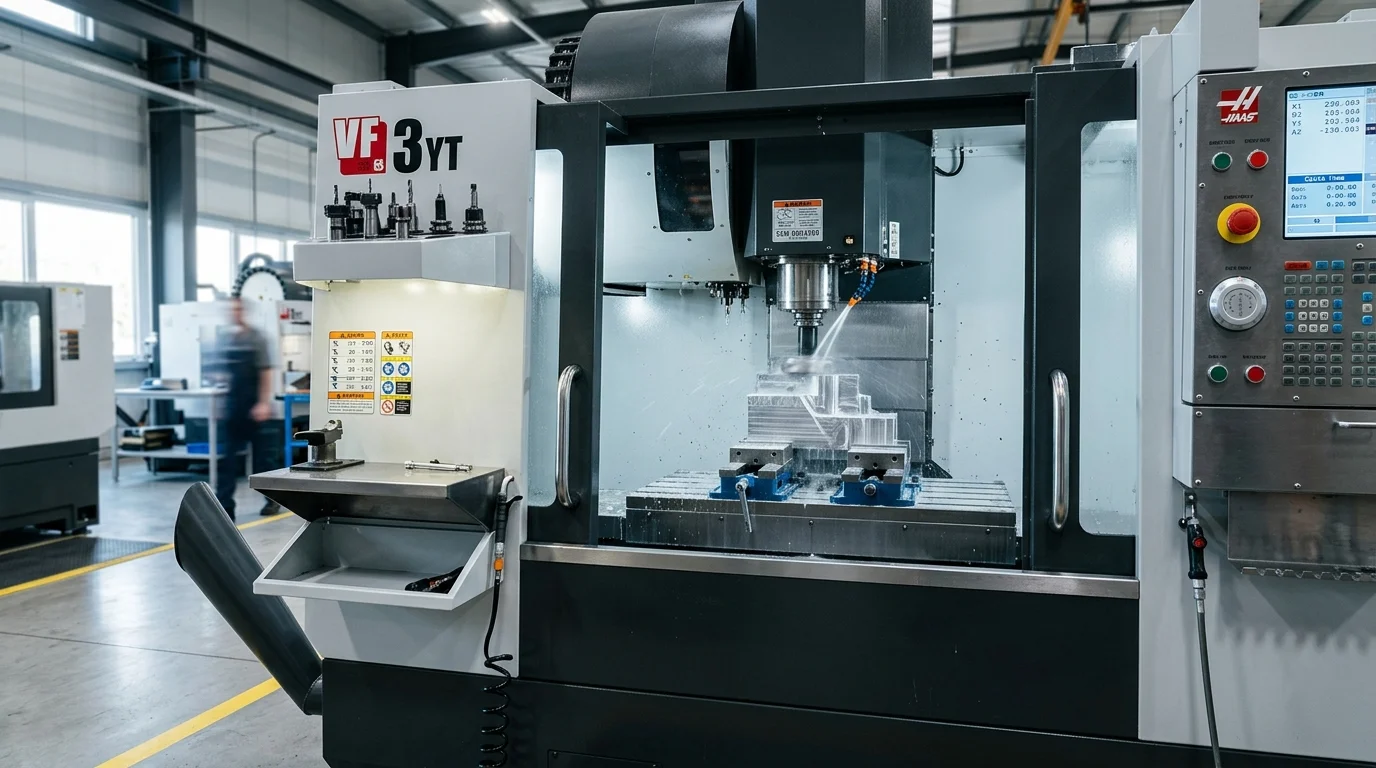
Introduction
Choosing a CNC machining center for precision parts requires more than comparing spindle speed, travel, or price. The right machine must match your tolerance targets, material mix, part geometry, and expected production volume, because each of these factors affects accuracy, stability, cycle time, and long-term operating cost. A poor fit can lead to rework, bottlenecks, and limited process capability, while a well-matched platform supports consistent quality and scalable output. This article outlines the practical criteria that matter most, helping you evaluate machine structure, spindle performance, thermal control, automation readiness, and supplier support before making a capital investment.
Why Choosing the Right CNC Machining Center Matters
Procuring a CNC machining center represents a foundational capital investment that dictates a manufacturing facility’s baseline capabilities. The decision extends beyond basic metal removal rates; it fundamentally anchors the production floor’s operational envelope, directly influencing cycle times, dimensional stability, and ultimately, the profitability of the enterprise.
In modern precision manufacturing, relying on basic specifications is insufficient. Engineering and procurement teams must align the mechanical architecture of the machine with the exact metallurgical and geometric demands of their product lifecycle.
Part tolerance, material mix, and production volume
The intersection of part tolerance, material properties, and production volume establishes the primary constraints for machine selection. Aerospace and medical components frequently demand positional tolerances tighter than 0.005 mm, necessitating machines equipped with active thermal compensation, chilled ball screws, and absolute linear scales. Standard commodity machines without these features will struggle to hold anything tighter than 0.02 mm across a fluctuating temperature shift.
Conversely, processing exotic alloys like Titanium Ti-6Al-4V or Inconel 718 requires high-torque spindles and extreme structural damping rather than purely high-speed capabilities. Volume dictates automation readiness; a high-mix, low-volume (HMLV) environment benefits from rapid changeover features, whereas production runs exceeding 10,000 units annually justify integrated pallet pools and robotic loading interfaces.
Commercial risks of choosing the wrong machine
Misaligning machine capabilities with production realities introduces severe commercial risks. Under-speccing a machine can lead to excessive tool wear, chatter-induced surface defects, and scrap rates exceeding the industry baseline of 2% to 5%, eroding profit margins rapidly. Weak spindle bearings or inadequate mass will vibrate under heavy cuts, destroying expensive carbide tooling prematurely.
Conversely, over-speccing ties up capital unnecessarily, extending the target return on investment (ROI) from an optimal 24 to 36 months to an unsustainable 7 to 10 years. Facilities must perform a rigorous cost-benefit analysis to ensure they are not paying a 40% premium for sub-micron precision or 5-axis simultaneity if their core product line consists of simple 3-axis aluminum brackets.
Key CNC Machining Center Specifications
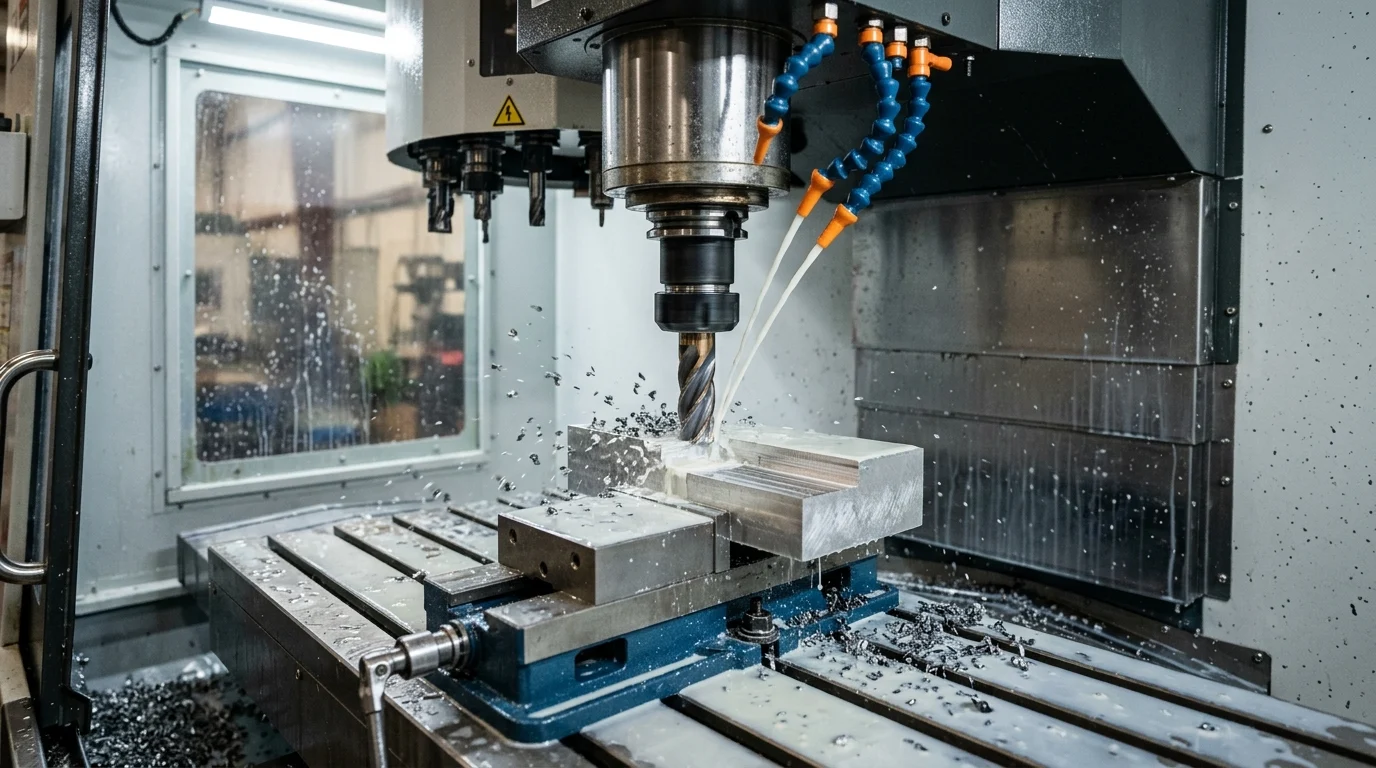
Evaluating a CNC machining center requires a granular analysis of its mechanical and electronic architecture. Engineers must look past marketing specifications to understand how the machine’s subsystems interact under heavy cutting loads and dynamic contouring.
A holistic evaluation ensures that the spindle, axes, and control unit operate in harmony, preventing data starvation or mechanical deflection from compromising the finished part.
Axis configuration, spindle performance, and rigidity
The axis configuration directly dictates the complexity of geometries the machine can produce in a single setup. While 3-axis vertical machining centers (VMCs) suffice for prismatic parts, 5-axis simultaneous machines eliminate multiple setups for complex impellers or blisks, significantly reducing cumulative fixturing errors. The trunnion or articulating head must possess robust braking mechanisms to maintain rigidity during heavy off-center cutting.
Spindle performance must align with the material mix: high-speed spindles operating at 20,000 to 30,000 RPM with HSK-A63 tapers are optimal for high-feed aluminum aerospace frames. In contrast, high-torque, gear-driven spindles running at 6,000 to 8,000 RPM with CAT50 or BT50 tapers are mandatory for heavy hogging of tool steels. Structural rigidity, often achieved through massive Meehanite cast iron or polymer concrete bases weighing upwards of 8,000 kg, is critical to absorb the kinetic energy generated during aggressive material removal.
Control system, tool magazine, and probing
The control system serves as the central nervous system of the CNC machining center, governing path interpolation and servo response. Advanced controllers from Fanuc, Siemens, or Heidenhain offer look-ahead capabilities processing over 1,000 blocks per second, which is essential to prevent axis stuttering and data starvation during complex 3D surface machining.
The automatic tool changer (ATC) capacity must accommodate the facility’s part mix without requiring manual intervention mid-cycle. A 24-tool magazine may suffice for dedicated, repetitive runs, but a 120-tool matrix is often required for lights-out HMLV manufacturing. Additionally, integrated spindle probing and laser tool measurement systems are now standard requirements, allowing for automated offset adjustments, breakage detection, and in-process verification down to a 1-micron resolution.
Using comparison tables to evaluate options
Utilizing comparison matrices allows procurement teams to benchmark competing models objectively. By standardizing the evaluation criteria, engineers can normalize performance metrics against capital expenditure, ensuring an apples-to-apples comparison of machine capabilities across different tiers of builders.
| Specification Category | Standard 3-Axis VMC | Advanced 5-Axis Universal Center |
|---|---|---|
| Typical Base Cost | $60,000 – $120,000 | $250,000 – $600,000+ |
| Axis Travel (X/Y/Z) | 1000 x 500 x 500 mm | 750 x 600 x 500 mm (plus A/C rotary) |
| Spindle Taper & Speed | CAT40 / 10,000 RPM | HSK-A63 / 20,000 RPM |
| Volumetric Accuracy | 0.015 mm | 0.008 mm |
| Target Application | Prismatic parts, simple plates | Aerospace components, medical implants |
Evaluating Accuracy and Total Cost of Ownership
Beyond the initial purchase price, the true value of a CNC machining center is measured by its sustained accuracy over time and its total cost of ownership (TCO). Procurement decisions must account for the operational expenses incurred throughout the machine’s expected 10-to-15-year lifecycle.
Focusing purely on the capital expenditure (CapEx) often blinds buyers to the operational expenditure (OpEx) realities, where inefficiencies in power, tooling, and maintenance can quickly eclipse initial savings.
Acceptance criteria for repeatability and surface finish
Machine tool accuracy is typically validated using ISO 230-2 standards. Buyers must establish strict acceptance criteria for both positioning accuracy (often requiring a deviation of 5 micrometers or less) and bidirectional repeatability (2 micrometers or less). These metrics ensure that part number 1 and part number 1,000 are dimensionally identical.
For mold-making and fluid dynamic applications, surface finish capabilities are equally critical. The machine’s servos and guideways must be smooth enough to consistently achieve an Ra of 0.4 micrometers or better without secondary manual polishing. These metrics must be proven during a factory runoff, utilizing the actual materials and cutting tools intended for production, to ensure the machine geometry and servo tuning meet the operational demands.
Maintenance, uptime, tooling, and energy costs
The TCO encompasses maintenance, tooling consumption, energy usage, and the financial impact of unplanned downtime. Spindle power requirements can range from 15 kW for light aluminum work to over 40 kW for heavy steel cutting, significantly impacting industrial electricity costs over a decade of multi-shift operation. Buyers should evaluate machines with regenerative drives that feed braking energy back into the grid.
Annual maintenance costs typically average 2% to 5% of the initial capital expenditure. Furthermore, a highly rigid machine with superior vibration damping will extend carbide cutting tool life by 20% to 30%, yielding massive consumable savings. To maximize ROI, facilities must target an Overall Equipment Effectiveness (OEE) exceeding 85%, making machine reliability, predictive maintenance sensors, and overall uptime paramount.
Comparing Suppliers and Support
The operational success of a CNC machining center relies heavily on the infrastructure and responsiveness of the supplier. A technically superior machine can become a financial liability if the original equipment manufacturer (OEM) or local distributor lacks the capability to support it.
Evaluating the partnership is just as critical as evaluating the iron. High-performance machining demands a robust support network to mitigate the risks of catastrophic downtime.
Supplier assessment and application support
Supplier assessment must rigorously evaluate post-sale support infrastructure. Critical metrics include guaranteed service technician response times—ideally under 24 hours for machine-down scenarios—and local spare parts availability, targeting a first-pass fill rate of 95% or higher. Buyers should specifically inquire about the availability and cost of spindle rebuild programs.
Furthermore, buyers should investigate the supplier’s application engineering support. The ability of the supplier to assist with complex macro programming, custom post-processor development, and cycle time optimization can drastically reduce the integration timeline. A supplier that offers turnkey engineering solutions accelerates the path to profitability by months compared to a builder that simply drops the machine on the loading dock.
A practical selection process for procurement and engineering
A disciplined selection process aligns both procurement and engineering requirements. This begins with a comprehensive Request for Quotation (RFQ) that clearly defines the scope of supply, including automation interfaces, high-pressure coolant systems (e.g., 1,000 PSI through-spindle coolant for deep hole drilling), and integrated chip management solutions.
The process must culminate in a rigorous runoff test. During this test cut, engineering teams should require statistical proof of capability, demanding a Process Capability Index (Cpk) of 1.33 or greater on critical dimensions over a sample size of at least 30 parts before authorizing final payment and machine shipment.
Decision Framework for Final Selection
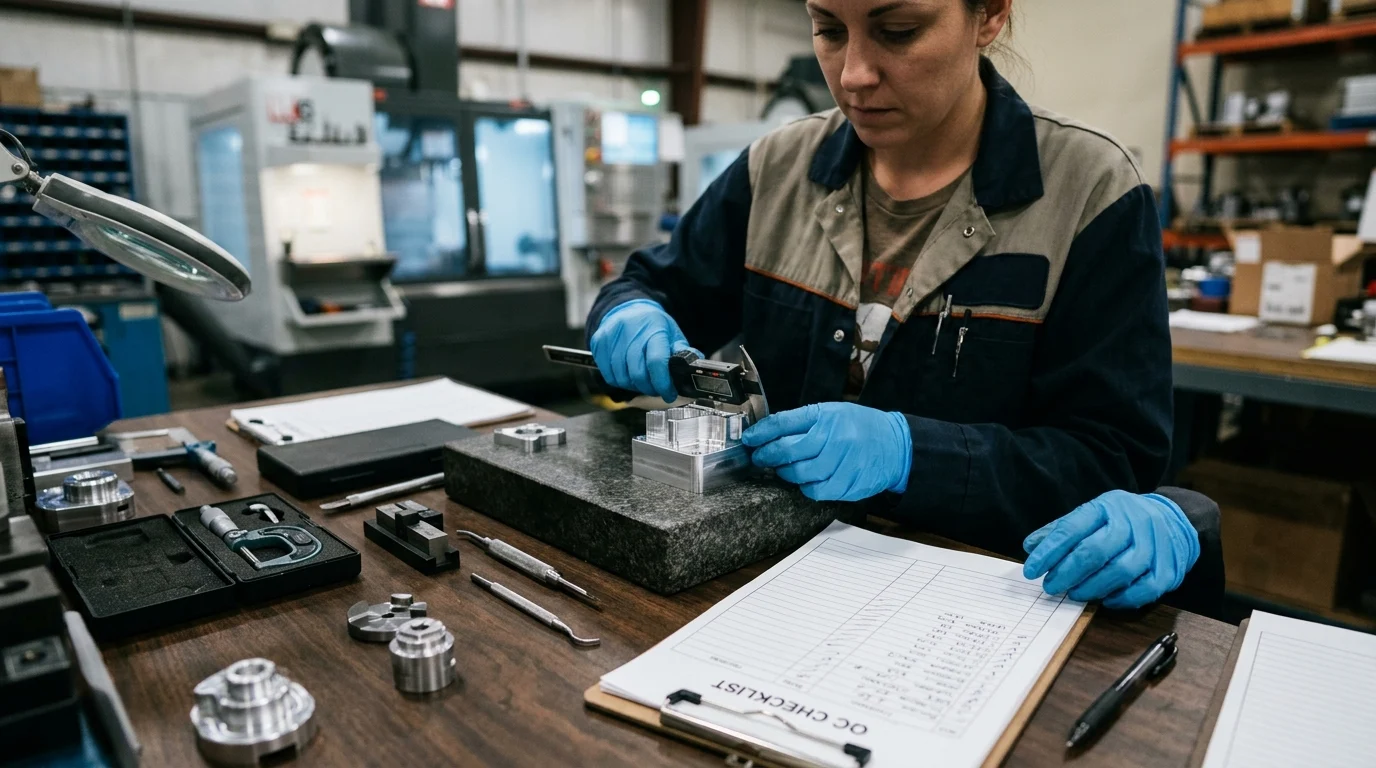
The final stage of selecting a CNC machining center requires synthesizing technical specifications, commercial terms, and long-term strategic alignment. A structured decision framework ensures that subjective preferences do not override objective data.
By utilizing quantifiable metrics, cross-functional teams can defend their capital equipment requests to executive boards, proving that the chosen machine maximizes operational output while minimizing financial risk.
Balancing technical fit and compliance requirements
Balancing technical fit with regulatory and facility compliance is the first hurdle in the final selection. Machines must meet regional safety and electrical standards, such as CE marking in Europe or UL/CSA certification in North America. Failure to verify this can result in expensive retrofits or failed safety audits.
Facility constraints, including floor load-bearing capacities—often requiring reinforced concrete foundations of 300 mm or thicker for large horizontal machining centers—and ambient temperature control, must be verified prior to signing a purchase order. Additionally, reliability metrics like a documented Mean Time Between Failures (MTBF) exceeding 5,000 hours serve as quantitative indicators of long-term stability and build quality.
Final criteria for choosing the best CNC machining center
Employing a weighted decision matrix allows cross-functional teams to score competing machines systematically. By assigning priority weights to variables such as initial cost, volumetric accuracy, supplier service network, and automation readiness, organizations can clearly identify the machine that offers the best aggregate value.
| Evaluation Criteria | Weight (%) | Machine Option A Score (1-5) | Machine Option B Score (1-5) | Weighted Score A | Weighted Score B |
|---|---|---|---|---|---|
| Dynamic Accuracy & Rigidity | 30% | 4 | 5 | 1.20 | 1.50 |
| Total Cost of Ownership (5 Yrs) | 25% | 5 | 3 | 1.25 | 0.75 |
| Supplier Service & Parts | 20% | 3 | 5 | 0.60 | 1.00 |
| Automation Readiness | 15% | 4 | 4 | 0.60 | 0.60 |
| Delivery Lead Time | 10% | 5 (12 weeks) | 2 (36 weeks) | 0.50 | 0.20 |
| Total Weighted Score | 100% | - | - | 4.15 | 4.05 |
In this framework, even if Option B possesses slightly superior dynamic accuracy and service support, Option A may ultimately represent the more strategic investment. Its superior TCO and significantly shorter 12-week lead time enable faster market entry, allowing the facility to generate revenue months before Option B would even arrive on the shop floor.
Key Takeaways
- The most important conclusions and rationale for CNC Machining Center
- Specs, compliance, and risk checks worth validating before you commit
- Practical next steps and caveats readers can apply immediately
Frequently Asked Questions
How do I choose between a 3-axis and 5-axis CNC machining center?
Choose 3-axis for simple prismatic parts and lower investment. Choose 5-axis when parts need multiple angles, fewer setups, tighter positional accuracy, or complex aerospace and medical geometries.
What spindle setup is best for precision parts?
Match spindle speed and torque to your material. High-speed spindles suit aluminum; high-torque BT50/CAT50 spindles are better for steel, titanium, and heavy cutting.
Why is machine rigidity so important in a CNC machining center?
Higher rigidity reduces chatter, improves surface finish, extends tool life, and helps hold tight tolerances consistently, especially during heavy cuts or hard-material machining.
Which CNC machining center types does OTURN Machinery offer?
OTURN supplies vertical, horizontal, gantry, double-column, and 5-axis machining centers, plus heavy-duty and high-speed configurations for molds, valves, aerospace, and medical parts.
How can I avoid overspending on a CNC machining center?
Base the machine on your real tolerance, material, and annual volume needs. Don’t pay for 5-axis or sub-micron features if your parts only require standard 3-axis precision.
Post time: Apr-28-2026